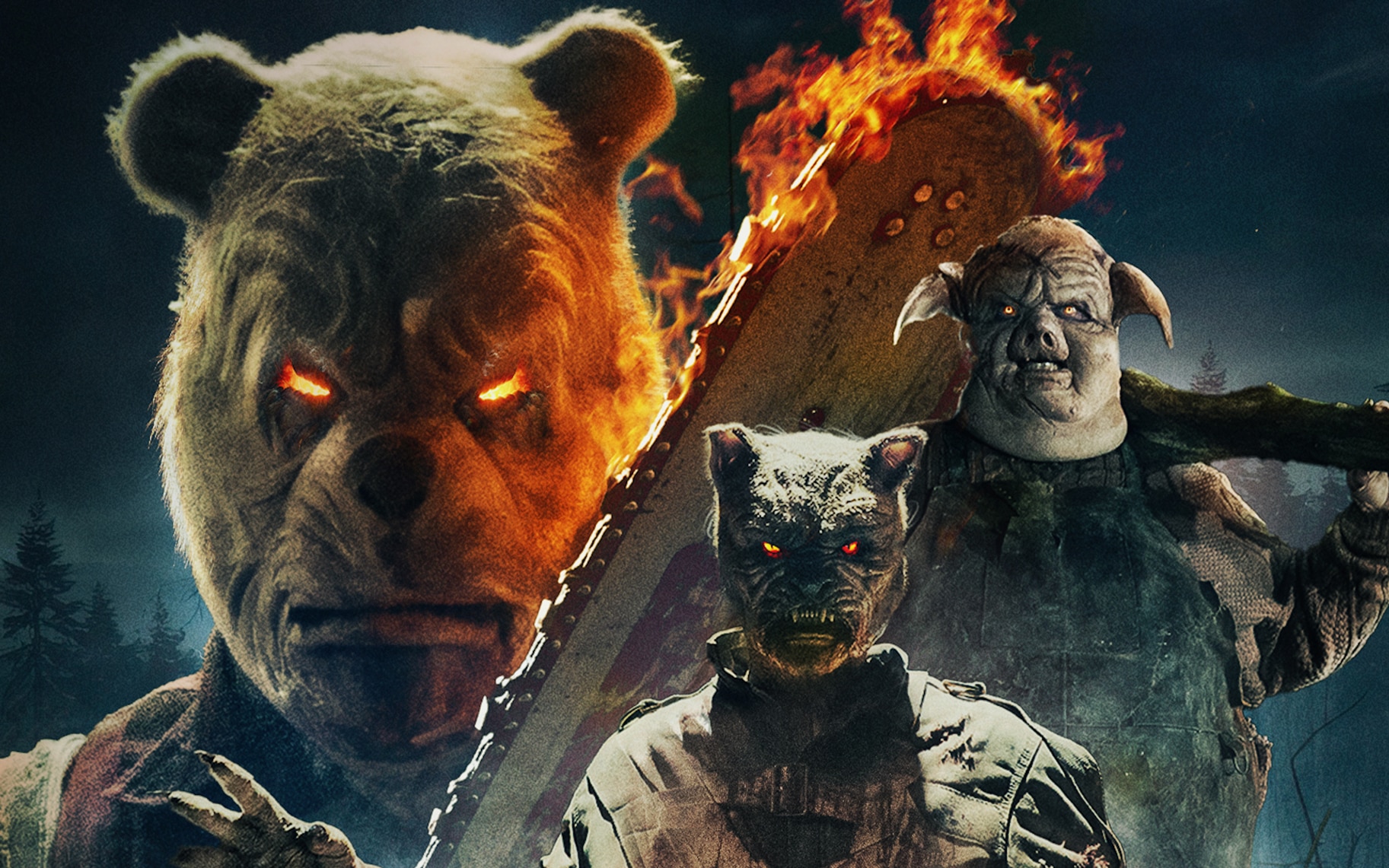
Winnie the Pooh is having a bit of a mid-life crisis. Or maybe it's a rebirth? Honestly, it depends on whether you're a parent looking for a quiet afternoon with Disney+ or a horror fan waiting to see a childhood icon swing a sledgehammer.
People think they know what a winnie the pooh movie is. You probably picture a soft, yellow bear, a red shirt, and a very slow-paced search for a pot of honey. But the landscape of the Hundred Acre Wood has basically fractured into two very different universes.
On one side, you have the "Disney Pooh." That's the one we've known since 1966. On the other, you have the "Public Domain Pooh," which is currently fueling a weird, bloody cottage industry of indie horror.
The Disney Stalemate: Is a New Animated Movie Actually Coming?
For years, Disney seemed to have shoved the bear into a corner. After the 2011 Winnie the Pooh movie—which was gorgeous but unfortunately got steamrolled by Harry Potter at the box office—the studio shifted toward the live-action Christopher Robin in 2018.
But things are shifting again.
Just recently, Jim Cummings—the legendary voice of both Pooh and Tigger since the late 80s—dropped a massive hint. He mentioned that Disney is finally developing a brand-new feature-length winnie the pooh movie.
We don't know if it's 2D, 3D, or another live-action hybrid. Disney is keeping their cards close. If you've watched Playdate with Winnie the Pooh on Disney Jr. lately, you know they’re leaning hard into a younger aesthetic. Fans are split. Some want the classic hand-drawn look of the 77 film, The Many Adventures of Winnie the Pooh. Others are just happy the bear is still getting work.
The Horror Explosion: Blood, Honey, and Legal Loopholes
If you had "Slasher Movie Pooh" on your 2020s bingo card, you're a liar.
The original A.A. Milne book, Winnie-the-Pooh, entered the public domain in 2022. This basically meant that anyone could use Pooh, Piglet, and Eeyore without asking Disney for permission. The only catch? They had to stick to the 1926 versions.
No red shirts. No Tigger (at first). No specific Disney-invented quirks.
Enter Rhys Frake-Waterfield. He directed Winnie-the-Pooh: Blood and Honey on a shoestring budget of about $100,000. It was objectively panned by critics, but it made over $5 million. People clearly wanted to see the "silly old bear" go feral.
What's next for the "Poohniverse"?
The sequel, Blood and Honey 2, actually got much better reviews (at least by horror standards). Now, the "Twisted Childhood Universe" is expanding. Here is what's on the horizon:
- Winnie-the-Pooh: Blood and Honey 3: Confirmed for a late 2026 release. It's supposed to introduce Rabbit and the Heffalumps.
- Poohniverse: Monsters Assemble: Think of it as the Avengers, but with a murderous Pooh, Peter Pan, and Bambi. This is slated for 2026 too.
- Pinocchio: Unstrung: Part of the same shared world, keeping the momentum of these public domain icons.
It's a bizarre time. You can literally walk into a theater and see a winnie the pooh movie that looks like a nightmare, while your kid is at home watching a version of the same character learning about sharing.
The Tigger Problem: Why He Was Missing
You might have noticed Tigger was a late arrival to the horror party.
That wasn't an artistic choice. It was a legal one. Tigger didn't appear until the 1928 book The House at Pooh Corner. Because he was born two years later than Pooh, his copyright didn't expire until January 1, 2024.
The second the clock struck midnight on New Year's Day 2024, filmmakers were free to use him. That’s why he suddenly showed up in the second Blood and Honey film.
Why a Winnie the Pooh Movie Still Matters
There is a psychological reason we keep coming back to these characters. A.A. Milne didn't just write for kids; he wrote about types of people. We all know an Eeyore. We all have days where we feel as anxious as Piglet.
When Disney makes a winnie the pooh movie, they lean into that comfort. They use the "Sherman Brothers" style music and the gentle pacing to create a safe space.
The horror versions work because they subvert that safety. It’s "childhood trauma: the movie." Whether you think it’s a cheap cash grab or a brilliant use of public domain, it has forced Pooh back into the cultural conversation in a way he hasn't been in decades.
What You Should Watch Right Now
If you're looking for the "essential" Pooh experience, don't just wait for the 2026 releases.
Start with The Many Adventures of Winnie the Pooh (1977). It’s actually three different shorts stitched together, and it remains the gold standard for animation and tone. If you want something that hits you right in the feelings, the 2018 Christopher Robin is surprisingly deep. It deals with adult burnout and the loss of imagination.
And if you want the gore? Well, you already know where to find the Blood and Honey films. Just don't accidentally put them on for the toddlers.
Actionable Next Steps for Pooh Fans
If you're tracking the future of the Hundred Acre Wood, keep an eye on these specific dates and projects.
- Check Disney+ for the 100th Anniversary: 2026 marks 100 years since the original book was published. Disney is expected to announce a massive celebration, likely including a formal reveal of the new animated feature.
- Monitor the "Twisted Childhood Universe": Pinocchio: Unstrung is the next big milestone in the horror branch before the massive Poohniverse crossover in late 2026.
- Read the Original Books: Since they are public domain, you can read the 1926 Winnie-the-Pooh and 1928 The House at Pooh Corner for free online at sites like Project Gutenberg. It’s worth seeing how different Milne’s original text is from both the Disney and the horror adaptations.
The Hundred Acre Wood is no longer just a place for honey and friendship. It’s a battleground for copyright law, independent filmmaking, and corporate legacy. Whatever happens next, it won't be boring.