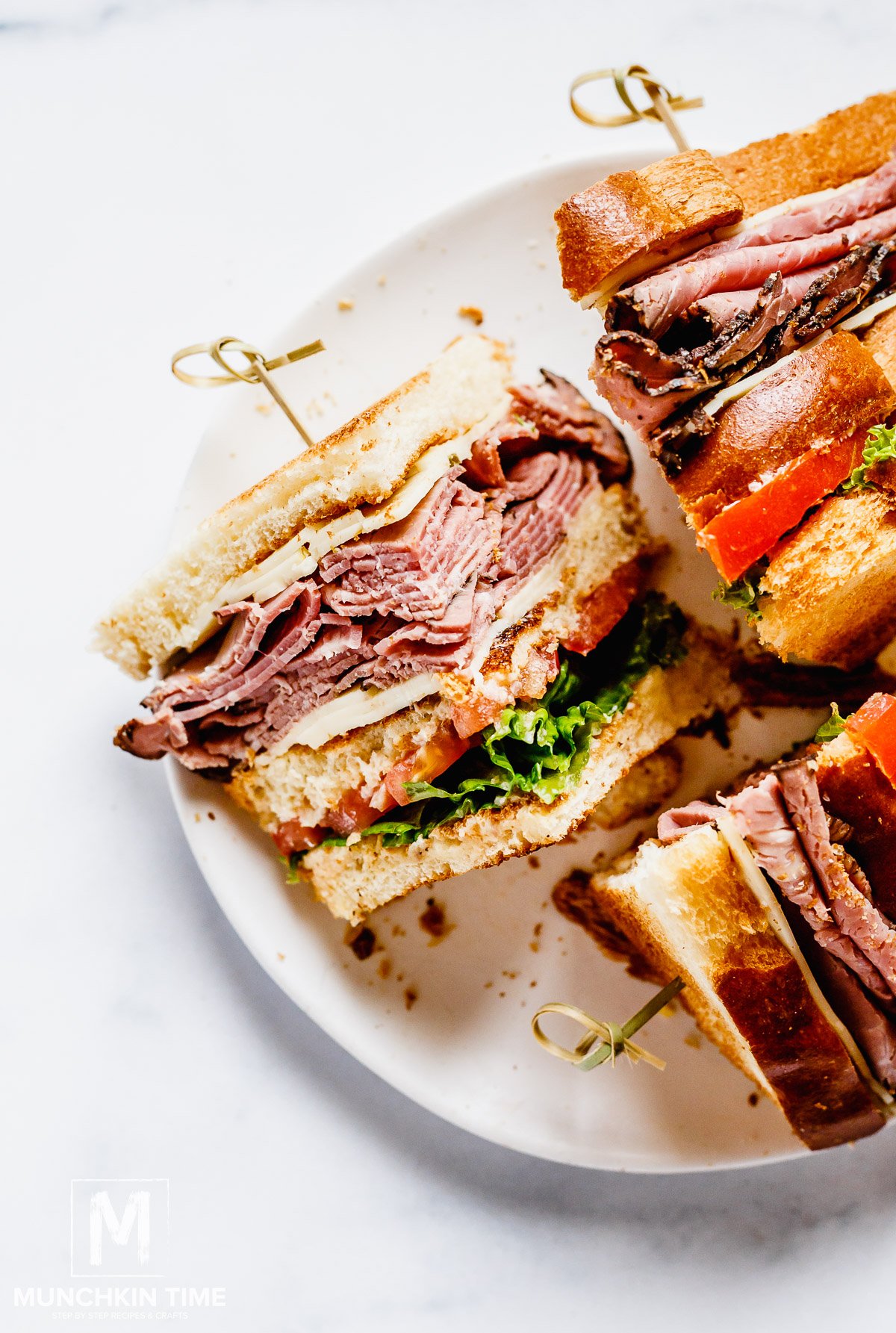
Most people think they know how to make a decent sandwich. You grab some bread, slap on some cold cuts, and call it a day. But if you’re trying to replicate that legendary deli-style bite at home, a standard sandwich roast beef recipe usually falls flat. It’s either too dry, too gray, or it tastes like a salt lick.
It’s frustrating.
You spend twenty dollars on a decent eye of round or top round, roast it until it looks okay, and then you slice it. Suddenly, it’s tough. You can’t even bite through the sandwich without pulling the whole slab of meat out of the bread. We’ve all been there. Honestly, the secret isn't just the meat; it's the thermal physics and the way you treat the muscle fibers after the heat turns off.
The Cut of Meat Matters More Than the Seasoning
Stop buying expensive ribeye for sandwiches. Seriously. It’s too fatty. While fat is usually flavor, in a cold or room-temperature sandwich, that ribeye fat turns into waxy, unappealing streaks. You want lean. You want muscle.
Expert butchers like Pat LaFrieda have long advocated for the top round or the "inside round." It’s a huge, lean muscle from the hindquarter. It’s affordable. It’s also what the pros at places like Kelly’s Roast Beef in Massachusetts use to get those thin, pink ribbons of joy. If you can’t find top round, go for bottom round or eye of round. Just know that eye of round is significantly leaner and easier to overcook into a shoelace texture.
Temperature Control: The 115-Degree Rule
If you take your beef out of the oven at 135°F, you’ve already lost the battle. Carryover cooking is a real beast. For a perfect sandwich roast beef recipe, you need to pull that roast when the internal temperature hits 115°F to 120°F.
Physics doesn't lie.
As the meat sits on your counter, the heat from the outer edges continues to migrate toward the center. This can raise the internal temp by another 10 or 15 degrees. If you want that edge-to-edge pink—the kind that makes people stop scrolling on Instagram—you have to be brave enough to pull it out when it still looks "too raw" to the untrained eye.
The Prep Strategy
- Salt it early. Salt doesn't just season; it denatures proteins. Rub that roast down with kosher salt (Diamond Crystal is the gold standard for a reason) at least 24 hours before you plan to cook. Put it on a wire rack in the fridge. Leave it uncovered. The air dries out the surface, which is exactly what you want for a proper crust.
- Skip the oil. You don't need a gallon of olive oil. A dry rub sticks better to a dry surface. Use heavy cracked black pepper, maybe some garlic powder, and a hint of dried thyme. Keep it simple.
- Low and slow. Forget 400°F. Set your oven to 225°F. This slow crawl allows the enzymes in the meat (cathepsins) to break down connective tissue before the heat gets high enough to denature them. It’s basically a controlled aging process happening in real-time.
The Slicing Secret No One Tells You
You can have the best-cooked beef in the world, but if you slice it with the grain, it will be chewy. Period. You have to find the direction the muscle fibers are running and cut perpendicular to them.
But here is the real kicker: you need a deli slicer.
Okay, maybe you don't need one, but a knife rarely gets that "shaved" texture. If you’re using a knife, put the cooked, cooled roast in the freezer for 45 minutes before slicing. This firms up the proteins and fats, allowing you to get those paper-thin sheets that pile up high and airy. Air is an ingredient. When you pile shaved beef loosely, it creates pockets of space that hold onto horseradish sauce and au jus. A thick slab of meat just lets the sauce slide off.
Why Your Bread Choice is Sabotaging You
A sourdough boule is great for toast, but it's a nightmare for a roast beef sandwich. If the bread is harder than the meat, the filling will squish out the sides the moment you take a bite. You need a soft roll.
Think Brioche, Onion rolls, or a classic Kaiser. In Buffalo, they use "Kimmelweck" rolls—topped with kosher salt and caraway seeds. It’s a game changer. The bread should be a vessel, not a barrier. You want a "squish" factor. If you aren't lightly steaming your bun or toasting only the inside faces, you're missing out on the textural contrast that makes a sandwich roast beef recipe legendary.
Let's Talk About the "Pink" Controversy
Some people see pink juice and think "blood." It’s not blood. It’s myoglobin, a protein that delivers oxygen to muscle cells. When you cook beef to medium-rare, you’re keeping that myoglobin intact. If you cook it until it's gray, you've squeezed out all the moisture, leaving behind a literal sponge of protein fibers.
If someone in your house insists on "well-done," don't cook the whole roast to death. Slice the rare beef and dip the individual slices into simmering beef broth for 30 seconds. It will turn gray/brown but stay tender because it hasn't been roasted into oblivion.
The Horseradish Factor
A roast beef sandwich without horseradish is just a sad pile of meat. But don't use that creamy, mild stuff in the plastic squeeze bottle. Get the raw, grated horseradish in the refrigerated section.
Mix it yourself:
- Two tablespoons of raw horseradish.
- A dollop of sour cream (not mayo, sour cream adds a necessary tang).
- A splash of lemon juice.
- A pinch of salt.
This "Tiger Sauce" (as some call it) cuts through the richness of the beef. It clears your sinuses. It makes the sandwich feel alive.
The Chemistry of the Crust
When you roast at a low temperature, you don't get that dark, caramelized crust (the Maillard reaction). To fix this, you have two choices. You can sear the meat in a cast-iron pan before it goes in the oven, or you can do a "reverse sear."
I prefer the pre-sear. Why? Because it builds flavor from the start, and you don't risk overcooking the center at the very end when you're tired and hungry. Get that pan screaming hot. Use a high-smoke point oil like avocado oil. Sear every side for 2 minutes until it's dark brown. Then, and only then, apply your pepper and herbs before sliding it into the low-temp oven.
Storage and Longevity
Homemade roast beef actually tastes better on day two. The flavors settle. The salt moves deeper into the center. If you’re meal prepping, keep the roast whole until you’re ready to eat. Slicing it exposes more surface area to oxygen, which leads to "warmed-over flavor" (WOF)—that weird, metallic taste that happens when fats oxidize.
Keep it wrapped tightly in plastic wrap, then foil. It’ll last four days in the fridge, but let's be honest, it'll be gone by tomorrow lunch.
Actionable Steps for Your Next Sandwich
Stop overcomplicating it. Follow these specific steps for your next attempt:
- Dry-brine your top round for 24 hours in the fridge. No excuses.
- Invest in a digital probe thermometer. If you're guessing, you're losing. Set the alert for 115°F.
- Let it rest for at least an hour. If you cut it hot, the juice runs onto the board, not into your mouth.
- Chill before slicing. If you want deli-thin results, the meat must be cold.
- Focus on the "Three Pillars": High-quality lean beef, a soft toasted roll, and a high-acid condiment like horseradish or pickled red onions.
This isn't just about making lunch. It's about mastering the variables of temperature and texture. When you get that perfect ratio of salt, zingy sauce, and tender pink beef, you'll realize why people wait in line for hours at the famous delis. You just brought that experience into your own kitchen. Keep the leftovers for a French Dip the next day by simmering the bones and scraps with some store-bought stock to create a quick dipping jus. No waste, just pure flavor.