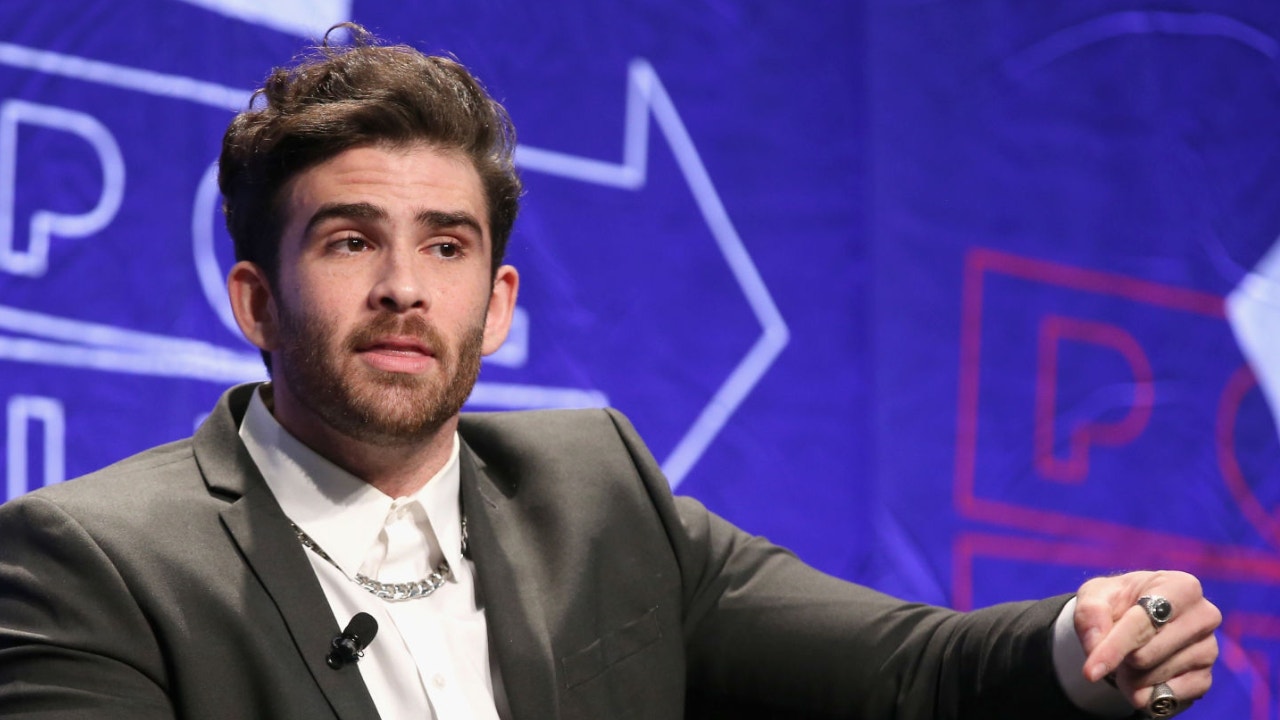
It was August 2019. Hasan Piker, then a contributor for The Young Turks and a rising star on Twitch, sat in front of his camera, reacting to a clip of Representative Dan Crenshaw. Crenshaw was discussing foreign policy, and Hasan was... well, he was heated.
Suddenly, it happened. The phrase that would follow him for the next seven years—and counting—slipped out. "America deserved 9/11," he said.
He didn't just whisper it. He yelled it. He doubled down.
The clip went nuclear. It wasn't just a Twitch drama; it was on Fox News. It was on the lips of every major political commentator in the country. It changed the trajectory of his career forever, turning him from a niche political streamer into a household name for all the wrong reasons in the eyes of many.
The Context: Why Did He Even Say It?
To understand the Hasan Piker America deserved 9/11 moment, you have to look at what he was actually arguing before the soundbite took over. He wasn't just randomly shouting at a wall. He was criticizing U.S. foreign policy, specifically the concept of blowback.
His argument, which he’s tried to clarify roughly ten thousand times since, was based on the idea that American interventionism in the Middle East created the material conditions that led to the rise of Al-Qaeda. Basically, he was saying that if you spend decades destabilizing regions, you shouldn't be shocked when a tragedy happens at home.
But "America deserved 9/11" is a hell of a way to phrase "the geopolitical consequences of our foreign policy are predictable."
The specific catalyst was Dan Crenshaw. Hasan was mocking Crenshaw for losing his eye in Afghanistan, calling the person who did it a "brave soldier." It was a chaotic, high-energy stream where the edge-lord dial was turned up to eleven.
The Immediate Fallout and the Twitch Ban
Twitch didn't find the "satire" particularly funny. They hit him with a one-week ban for "hateful conduct."
It was his first major suspension.
At the time, Hasan was still working for The Young Turks, the progressive news network founded by his uncle, Cenk Uygur. The network had to go into full damage control mode. Cenk publicly rebuked Hasan on-air, calling the comments "wrong" and "offensive."
Hasan eventually apologized for the delivery of the message, admitting that his choice of words was "inappropriate" and "crass." But he didn't really back down from the core sentiment—the idea that the U.S. bears responsibility for its global actions.
"I should have used more precise language," Hasan said later. "I was using a heavy dose of satire and hyperbole."
Whether you buy that or not usually depends on which side of the political aisle you sit on.
Why the Controversy Won't Die in 2026
You'd think a comment from 2019 would be buried by now. Nope.
In early 2026, we’re still seeing this clip used in political attack ads. Most recently, it surfaced during local elections in New York to discredit candidates associated with Hasan. It's the "evergreen" controversy.
Recent Escalations
- The Border Incident: Just last year, in May 2025, Hasan was detained at O'Hare International Airport by Customs and Border Protection. He claimed agents questioned him specifically about his political views and his past Twitch bans.
- The Canadian "Ban" Push: As recently as January 2025, groups like the CIJA in Canada have lobbied to keep Hasan from entering the country for speaking engagements, citing the 9/11 comments as evidence of "extremist rhetoric."
- The Flaherty Endorsement: Even high-level political figures aren't safe from the splash zone. A top aide to Kamala Harris faced massive backlash for suggesting the Democratic party needs "more Hasan Pikers," leading to a week-long news cycle where the 2019 clip was replayed on loop.
The Impact on His Brand
Honestly, the Hasan Piker America deserved 9/11 incident might be the best and worst thing that ever happened to him.
On one hand, he’s a pariah to the American right. He’s been labeled a "terrorist sympathizer" and "anti-American."
On the other hand, it solidified his brand as the "unfiltered" voice of the radical left. He didn't lose his audience; he grew it. During the 2024 election, his stream peaked at 7.5 million total viewers. People clearly want to hear what he has to say, even if they have to sift through the occasional PR nightmare.
He’s moved into a Los Angeles studio, bought a (very controversial) Porsche, and became the de facto face of political Twitch. The "Woke Bae" of the 2010s is gone, replaced by a guy who is comfortable being hated by half the country.
Actionable Takeaways for Navigating "Cancel Culture"
If you're looking at this as a case study in digital media, there are a few real-world lessons to pull from the Hasan saga:
- Clips are Forever: In the era of short-form video, your worst 10 seconds will always outlive your best 10 hours. If you say something "edgy" for 30,000 live viewers, expect it to reach 30 million on Twitter within an hour.
- Double Down vs. Apologize: Hasan's strategy has always been a mix. He apologizes for the "tone" but rarely the "truth" of his positions. This keeps his core audience loyal because they feel he’s being "authentic."
- Platform Power: Twitch's policies are inconsistent. Hasan has survived four bans. Understanding the Terms of Service (TOS) of the platform you build on is the difference between a career and a hobby.
- Context is a Luxury: No one cares about your 20-minute explanation of geopolitical history when the headline says you "praised 9/11." If you're going to use provocative language, you have to be prepared for the literal interpretation to win the day.
The reality of the Hasan Piker America deserved 9/11 situation is that it wasn't a one-off mistake; it was a defining moment of a new kind of political media—one where being loud, wrong, or offensive is often more profitable than being careful.
Check your local political landscape to see how these "digital ghosts" are being used to influence real-world policy and voter perception today.