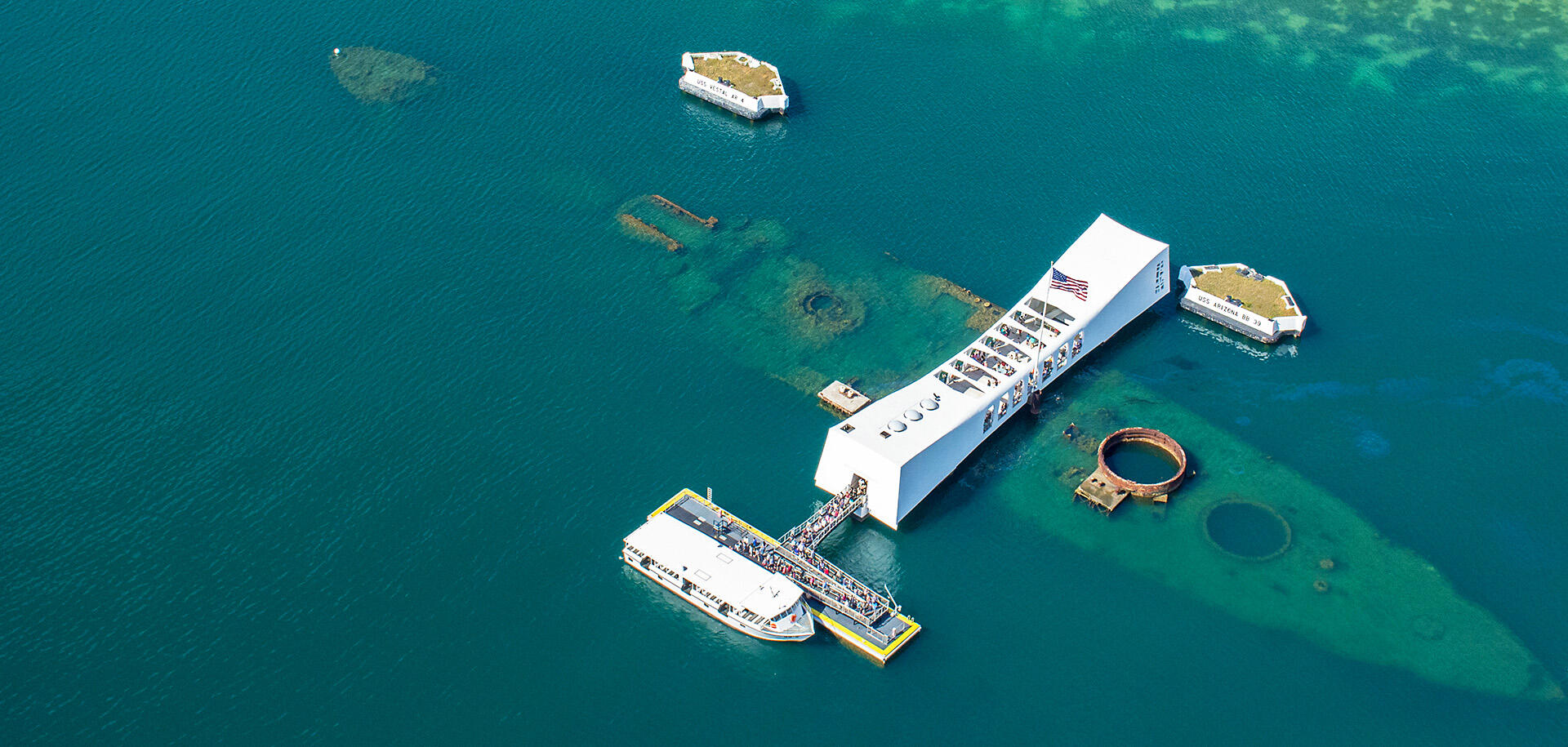
The smoke hadn't even cleared from the wreckage of the USS Arizona when the phone lines in Washington D.C. started melting down. It was December 7, 1941. Most Americans were finishing Sunday dinner or listening to the radio when the news broke. The shock was physical. Honestly, it's hard to wrap our heads around the sheer panic of that afternoon. People didn't just feel sad; they felt vulnerable in a way the United States hadn't felt since the War of 1812.
So, what did the US do after the Pearl Harbor attack?
They didn't just declare war. They rebuilt the entire concept of what it meant to be an American citizen, an American worker, and an American soldier—all within a matter of weeks. The response was a chaotic, brilliant, and sometimes dark pivot that turned a Great Depression-era country into a global superpower. It wasn't a smooth transition. It was messy. It was loud. And it changed everything.
The Immediate Political Firestorm and the Declaration
On December 8, Franklin D. Roosevelt didn't waste time. He went to Congress. His "Infamy" speech lasted less than ten minutes. You’ve probably heard the recording—the gravelly voice, the deliberate pacing. But what’s often forgotten is how unified the government became in a heartbeat. The Senate vote was 82-0. The House was 388-1.
Jeannette Rankin was the only "no" vote. She was a lifelong pacifist from Montana. The crowd outside the chamber was so angry they actually trapped her in a phone booth until the police could escort her away. That’s the vibe of the country at that moment. Intense. Unified. Borderline volatile.
But the declaration against Japan was just the start.
A few days later, on December 11, Hitler and Mussolini declared war on the U.S. This was actually a huge relief for Roosevelt. He knew the bigger threat was in Europe, but he couldn't easily convince the American public to fight Germany when Japan was the one who pulled the trigger in Hawaii. Hitler basically did him a political favor by making it a "Total War."
Flipping the Economic Switch: Goodbye Sedans, Hello Shermans
If you want to understand the sheer scale of the response, look at the factories.
Before Pearl Harbor, the U.S. military was ranked roughly 18th in the world—somewhere behind Romania. By 1942, that was a joke. FDR created the War Production Board (WPB). Their job was simple but brutal: stop making stuff for civilians.
Think about this. In February 1942, the last civilian car rolled off a Detroit assembly line. For the rest of the war, the big three automakers—Ford, GM, and Chrysler—produced exactly zero private vehicles. Instead, they built tanks. They built B-24 Liberator bombers. They built engines for PT boats.
The numbers are staggering.
- Henry Ford’s Willow Run plant eventually churned out one B-24 every 63 minutes.
- Shipyards like Kaiser Permanente started building "Liberty Ships" in days rather than months.
- One ship, the SS Robert E. Peary, was famously assembled in just four days, fifteen hours, and twenty-six minutes.
It was "The Arsenal of Democracy." Basically, the U.S. realized it couldn't outmaneuver the Japanese Navy or the German Luftwaffe immediately, so it decided to just out-build them until they drowned in American steel.
The Dark Side: Executive Order 9066
We have to talk about the part of the story that isn't usually in the patriotic montages. About two months after the attack, Roosevelt signed Executive Order 9066.
Fear was a literal poison in the air. People on the West Coast genuinely thought a Japanese invasion was coming. There were reports of "signals" being sent from the shore—most of which were later proven to be flashlights or just paranoid delusions.
The result? Roughly 120,000 people of Japanese descent, the majority of whom were American citizens, were rounded up. They were given days to sell their homes and businesses—usually for pennies on the dollar—and sent to "internment camps" in the interior of the country. Places like Manzanar in California or Topaz in Utah.
It’s a massive stain on the era. Even the FBI Director at the time, J. Edgar Hoover, admitted there was no evidence of a "fifth column" or mass sabotage. But the public demand for "action" was so high that the government chose security over the Constitution. It took decades for the U.S. to formally apologize and pay reparations under the Civil Liberties Act of 1988.
How Life Changed for Everyone Else: Rationing and Rosie
If you lived through 1942, your kitchen looked different. The Office of Price Administration (OPA) started rationing almost everything.
Sugar was first. Then coffee. Then gasoline, tires, meat, and even shoes. You didn't just need money to buy things; you needed stamps from your ration book. If you ran out of stamps, you didn't eat steak. Period.
People started "Victory Gardens." They turned their backyards into mini-farms so the commercial crops could go to the troops. By 1944, these home gardens were producing 40% of all the vegetables grown in the United States.
And then there’s the workforce.
With millions of men heading to the Pacific and Europe, the factories were empty. Enter "Rosie the Riveter." This wasn't just one woman; it was a movement of six million women who entered the workforce for the first time. They weren't just doing "pink collar" jobs. They were welding. They were operating heavy cranes. They were proving that the old Victorian ideas of "women’s work" were complete nonsense.
When the men came back, things didn't just go back to "normal." The seeds of the 1960s women's movement were planted in the grease and grime of 1942 aircraft factories.
What Did the US Do After the Pearl Harbor Attack on the Military Front?
The military response was actually quite desperate at first. The Pacific Fleet was crippled. The Battleship Row was a graveyard.
The first major move was the Doolittle Raid in April 1942. It was a suicide mission, basically. Sixteen B-25 bombers took off from the deck of the USS Hornet—a feat many thought was impossible because the runway was too short—and bombed Tokyo.
Did it do much physical damage? No.
Did it freak out the Japanese high command and boost American morale? Absolutely.
It showed that Japan wasn't untouchable. It forced the Japanese to pull back some of their fighter planes to protect the home islands, which set the stage for the Battle of Midway.
Midway is where the tide really turned. Because the U.S. had broken the Japanese naval codes (thanks to the incredible work of Joseph Rochefort and his team in a basement in Hawaii), Admiral Nimitz knew exactly where the Japanese fleet was going. In a single afternoon in June 1942, the U.S. sank four Japanese aircraft carriers.
Japan never recovered from that loss. From then on, the U.S. strategy was "Island Hopping." They didn't try to take every island. They just took the ones with airfields, bypassed the rest, and let the Japanese garrisons starve.
The Scientific Leap: The Manhattan Project
While the tanks were rolling and the ships were sailing, something much quieter was happening in places like Los Alamos, New Mexico, and Oak Ridge, Tennessee.
Immediately after Pearl Harbor, the U.S. ramped up its research into atomic energy. They were terrified that German scientists were already building a "super bomb." This became the Manhattan Project.
It was the most expensive and secretive scientific endeavor in history. It cost about $2 billion (in 1940s money) and employed 130,000 people. Most of the people working on it didn't even know what they were making. They just knew they were "processing material."
This response to Pearl Harbor didn't just win the war; it ushered in the Atomic Age. It changed the very nature of global diplomacy and turned the U.S. into one of two "superpowers" that would dominate the next 50 years.
The Cultural Pivot: Hollywood and Propaganda
The government didn't just want your scrap metal; they wanted your mind.
The Office of War Information (OWI) worked directly with Hollywood. Directors like Frank Capra (who made It's a Wonderful Life) were recruited to make the Why We Fight series. These were documentary-style films shown to every soldier and many civilians to explain exactly why the U.S. had to get involved.
Even Disney got in on the act. Donald Duck appeared in "Der Fuehrer's Face," a piece of propaganda aimed at mocking the Nazi regime.
Music changed too. "Boogie Woogie Bugle Boy" and "Praise the Lord and Pass the Ammunition" were the hits of the day. The culture became a feedback loop of patriotism and sacrifice. You couldn't go to a movie or turn on the radio without being reminded of the "boys overseas."
The Lasting Legacy of the Post-Pearl Harbor Response
The U.S. that emerged in 1945 was unrecognizable compared to the one that woke up on December 7, 1941.
The middle class exploded because of the wartime jobs. The GI Bill was passed to make sure the returning veterans didn't fall back into the poverty of the Great Depression. The United Nations was formed to replace the failed League of Nations, with the U.S. taking a leading role this time.
Essentially, the answer to what did the US do after the Pearl Harbor attack is that it grew up. It stopped being an isolationist country hiding behind two oceans and started being the "Leader of the Free World."
Actionable Insights for History Enthusiasts
If you really want to understand the scale of this transformation, don't just read a textbook. Do these three things to get a "boots on the ground" perspective:
- Visit a "Home Front" Museum: The National WWII Museum in New Orleans is incredible, but even local history museums often have exhibits on how your specific town contributed to the war effort.
- Dig into the Oral Histories: Check out the Library of Congress "Veterans History Project." Hearing a 90-year-old talk about the day they heard the news on the radio is infinitely more powerful than reading a list of dates.
- Research your Family Tree: Most families have a "war story." Find out where your grandfather or grandmother was in 1942. Were they in the Pacific? Were they welding in a shipyard? Were they a "Victory Girl" or a WAAC?
The response to Pearl Harbor wasn't just a military maneuver. It was a total, 100% commitment of a nation's soul. It was the moment the "American Century" truly began. Through a mix of industrial might, scientific breakthroughs, and massive civil rights failures, the country forged a new identity that still defines us today.