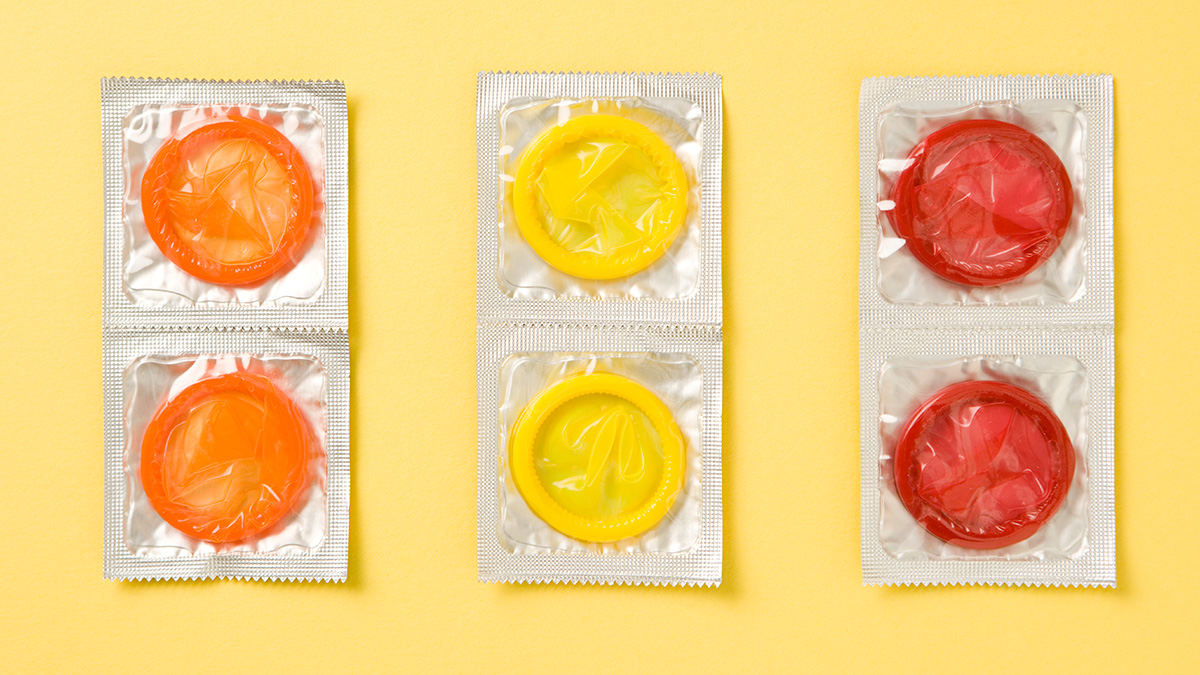
You're in the heat of the moment and realize the box is empty. It's a panic-inducing second. Your brain starts racing, trying to figure out what can I use instead of a condom right now. Honestly? If you are looking for a DIY physical barrier like a plastic bag or a balloon, stop. Just stop. Those are terrible ideas that will likely end in a trip to the doctor or a pharmacy run for Plan B anyway.
Protection isn't just about a thin layer of latex. It’s about science, intent, and knowing what actually works when the "standard" option isn't on the table. When people ask about condom alternatives, they are usually looking for one of two things: a way to prevent pregnancy or a way to stay safe from STIs. You've got to be real about the fact that very few things do both at the same time.
The Dangerous Myth of the DIY Barrier
Let's get the scary stuff out of the way first. People get creative in ways that are genuinely dangerous. I’ve seen forums where folks suggest using plastic wrap, sandwich bags, or even disposable gloves. This is a massive mistake.
These materials aren't engineered for human skin, let alone the friction of sex. They tear. They leak. Worse, the chemicals used in industrial plastics or household items can cause severe allergic reactions or chemical burns on sensitive tissue.
If you don’t have a condom, there is no "household object" that safely replaces it. Period. If you need a barrier to prevent the transmission of fluids, and you don't have one, the only safe move is to pivot. Switch to outercourse. Focus on manual stimulation or other activities that don't involve the exchange of fluids. It's better to have a slightly frustrated night than a lifelong medical complication or an unplanned pregnancy.
Long-Term Alternatives for Pregnancy Prevention
If your main concern is "what can I use instead of a condom" because you hate the way they feel or you're in a committed relationship, you have options. Lots of them. But you need to understand that these do zero to protect you from STIs like chlamydia, gonorrhea, or HIV.
The LARC Revolution
Long-Acting Reversible Contraception (LARC) is basically the "set it and forget it" of the medical world. The most famous is the IUD. You've probably heard of the Copper IUD (ParaGard) or hormonal versions like Mirena or Kyleena. These are over 99% effective.
Then there’s the Nexplanon implant. It’s a tiny rod they put in your arm. It lasts for three years and is actually more effective than a vasectomy in some statistical models. If your goal is strictly birth control, these are the gold standard. They remove the "human error" factor. You don't have to remember a pill at 9:00 AM every single day.
The Hormonal Buffet
The Pill is the classic. But it's finicky. If you miss a day, the efficacy drops. For people who struggle with a daily routine, the Depo-Provera shot is an option every three months. There’s also the patch (Xulane) or the ring (NuvaRing).
The NuvaRing is interesting because you handle it yourself once a month. You put it in, leave it for three weeks, take it out for one. It’s discreet. Your partner usually can't even feel it.
What About "Natural" Methods?
Some people want to avoid hormones and latex entirely. This brings us to Fertility Awareness-Based Methods (FABM).
This isn't your grandma's "rhythm method." Modern FABM involves tracking basal body temperature, cervical mucus, and cycle length. Apps like Natural Cycles (which is actually FDA-cleared) help with this.
However—and this is a big however—it requires discipline. You have to track every single morning. If you have an irregular cycle, this is a risky game. According to the CDC, the "typical use" failure rate for fertility awareness is around 24%. That’s high. If you aren't okay with the possibility of a pregnancy, this shouldn't be your only line of defense.
Withdrawal (The Pull-Out Method)
We have to talk about it because everyone does it. Is it an alternative? Sorta. Is it reliable? Not really.
The issue is pre-ejaculate. Studies, including those cited by Planned Parenthood, show that "pre-cum" can contain live sperm. Even if the guy has perfect timing, you're still rolling the dice. With perfect use, it's about 96% effective, but in the real world, it's closer to 78% or 80%. Those aren't great odds if you're trying to avoid a life-changing event.
Internal Condoms: The Overlooked Hero
If you hate external condoms (the "traditional" kind), have you tried internal condoms? They used to be called "female condoms," but that's a bit of a misnomer since anyone can use them for various types of sex.
They are made of nitrile (usually), so they are great for people with latex allergies. You can put them in up to eight hours before sex. This takes away that awkward "hold on, let me find the wrapper" moment that kills the mood. They also cover more of the external genitalia, which provides a bit more protection against STIs that spread via skin-to-skin contact, like HPV or herpes.
Non-Latex Options
Sometimes the "I hate condoms" argument is actually a "latex makes me itchy" argument.
Polyisoprene condoms (like the SKYN brand) are a game changer. They feel much more like actual skin and don't have that distinct rubbery smell. There are also polyurethane condoms, which are thinner and conduct heat better, making the experience feel more "natural."
The Reality of STI Protection
This is where the conversation gets tough. If you are asking what can I use instead of a condom because you are worried about STIs, the list of alternatives is incredibly short.
- Dental Dams: These are for oral-vaginal or oral-anal sex. If you don't have one, you can actually cut a non-lubricated condom down the side and lay it flat. It’s a DIY that actually works because it's the right material.
- PrEP (Pre-Exposure Prophylaxis): If your primary concern is HIV, PrEP is a daily pill (or an injection) that is incredibly effective at preventing infection. It’s a miracle of modern medicine, but again, it doesn't stop syphilis or crabs.
- Regular Testing: The best "alternative" to the fear of STIs is knowledge. If both partners have been tested recently and haven't had other partners since, the need for a barrier for STI protection is lowered—but you still have the pregnancy issue to deal with.
Phexxi and Spermicides
There’s a newer player called Phexxi. It’s a vaginal gel you use right before sex. It isn't a hormone; it basically changes the pH of the vagina so sperm can't swim.
It sounds great, but the efficacy is lower than the pill or IUDs (around 86% with typical use). Spermicides alone are even less effective and can actually cause irritation that makes it easier to catch an STI. Use them as a backup, not a primary.
Summary of Actionable Steps
Stop looking for household substitutes. If you're in a pinch right now, your best bet is to avoid penetrative sex or head to a 24-hour pharmacy.
If you are looking for a long-term change because you're tired of condoms, here is your checklist:
- Book a consult: Talk to a healthcare provider specifically about LARC (IUD or Implant) if you want the highest level of pregnancy protection.
- Try Polyisoprene: If the "feel" is the issue, buy a pack of non-latex SKYN condoms before giving up on barriers entirely.
- Get Tested: Go to a clinic like Planned Parenthood or your GP. Knowing your status (and your partner's) changes the math on what protection you actually "need."
- Emergency Backup: Keep a dose of Plan B (levonorgestrel) or Ella in your medicine cabinet. It’s better to have it and not need it than to be searching for a pharmacy at 3:00 AM on a Sunday.
- Internal Condoms: Order a few online or pick them up at a health center. They offer a totally different physical sensation that many people actually prefer.
Protection isn't a one-size-fits-all thing. It's a combination of tools. If you're ditching the condom, just make sure you aren't leaving yourself completely exposed. Pick a real, scientifically backed alternative instead of a "hack" that doesn't work.