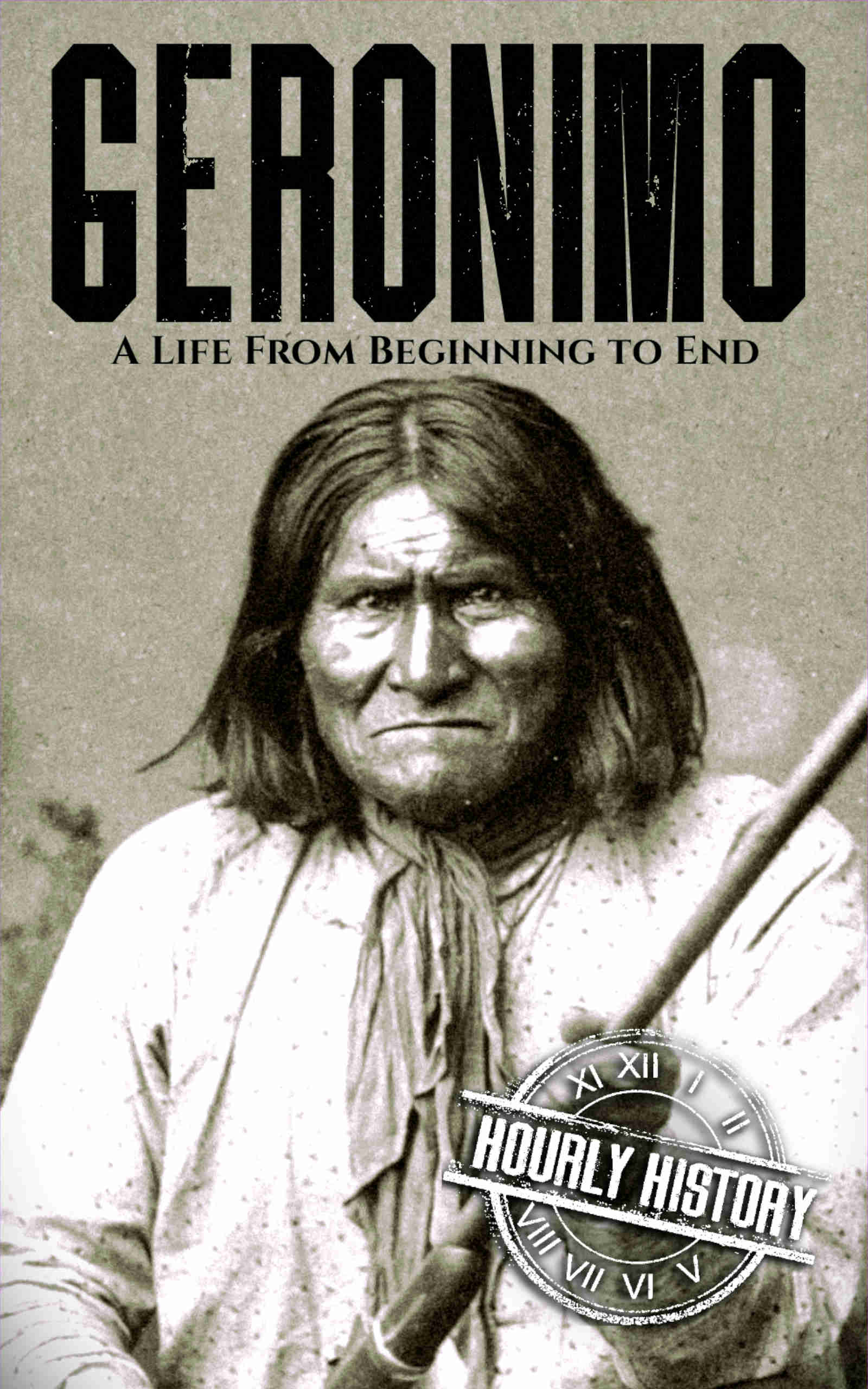
If you ask a random person on the street what tribe Geronimo was from, they’ll probably bark back "Apache" before you even finish the sentence. They aren't wrong. Not exactly. But saying Geronimo was just "Apache" is a bit like saying someone is "European" when they are actually a very specific flavor of Sicilian from a tiny mountain village. It’s too broad. It misses the texture of who the man actually was.
Geronimo wasn't a chief. He wasn't a king. He was a medicine man and a raider who belonged to the Bedonkohe band of the Chiricahua Apache.
Most history books gloss over those specific distinctions. They treat the Apache as one giant monolith, but in reality, the Apache were a loose collection of independent bands that sometimes got along and sometimes... didn't. To understand what tribe Geronimo was from, you have to look at the geography of the Gila River and the brutal politics of the 19th-century Southwest.
The Specific Answer: The Bedonkohe Band
Geronimo was born around 1829. His birthplace was near the headwaters of the Gila River, in what we now call New Mexico but was then technically Mexican territory. He was born into the Bedonkohe, the smallest of the four Chiricahua bands.
Think of it this way.
The Chiricahua were the "tribe," but the Bedonkohe were his people. His family. His social circle. His name at birth wasn't even Geronimo; it was Goyaałé, which translates roughly to "The One Who Yawns." It’s an ironic name for a man who would eventually become the most restless nightmare of the U.S. and Mexican governments.
The Chiricahua were divided into four main groups:
- Chihenne (The Red Paint People)
- Chokonen (The Central Chiricahua)
- Nednhi (The Enemy People, who lived mostly in Mexico)
- Bedonkohe (Geronimo’s people)
Because the Bedonkohe were so small, they often lived and fought alongside the other bands. Geronimo eventually married into the Chokonen band, which is why you’ll often see him associated with the great Chief Cochise. But his roots? Those belong to the Bedonkohe.
Why the World Calls Him "Geronimo"
If his name was Goyaałé, where did "Geronimo" come from? It wasn't a tribal name. It was a cry of terror.
During a battle in 1858, Mexican soldiers began screaming "Gerónimo!"—the Spanish name for Saint Jerome—either in a plea for divine help or because they were terrified of the man charging them with a knife. He liked the sound of it. He kept it.
This period of his life is what defined his relationship with his tribe. In 1851, while the men were away trading, Mexican soldiers under Colonel José María Carrasco slaughtered Geronimo's mother, his young wife Alope, and his three children.
He didn't just get angry. He broke.
He retreated into the mountains, claimed he heard voices telling him no bullet could ever kill him, and began a decades-long campaign of vengeance. This is where the distinction of what tribe was Geronimo from becomes vital. He wasn't acting on behalf of a "nation." He was leading a splinter group of various Apache bands who were tired of being pushed onto reservations.
Life on the San Carlos "Hell's Forty Acres"
By the 1870s, the U.S. government decided all Chiricahua Apaches needed to be in one place: the San Carlos Reservation in Arizona.
It was a nightmare.
The land was dry, the water was alkaline, and the heat was oppressive. They called it "Hell’s Forty Acres." Geronimo hated it. He broke out of that reservation multiple times. Every time he left, he took a handful of followers with him—mostly Bedonkohe and Chokonen warriors—and headed for the Sierra Madre mountains in Mexico.
What’s fascinating is that not all Apaches liked him. In fact, many Apaches served as scouts for the U.S. Army to help hunt him down. To the "Peace Policy" Apaches who were trying to farm and survive, Geronimo was a troublemaker who brought the wrath of the military down on everyone.
The Surrender and the Long Exile
When Geronimo finally surrendered for the last time in 1886 to General Nelson Miles, he was part of a tiny group. Only 38 people were left—including women and children.
The government didn't just move them back to a reservation. They declared the Chiricahua "prisoners of war."
This is the darkest part of the story. Even the Apache scouts who had helped the Army catch Geronimo were rounded up and sent to prison in Florida. They were all shipped off in train cars. Geronimo spent the rest of his life in exile—first in Florida, then Alabama, and finally at Fort Sill, Oklahoma.
He never saw his homeland again.
He became a celebrity, ironically. He was at the 1904 World’s Fair. He rode in President Theodore Roosevelt’s inaugural parade in 1905. He sold buttons off his coat and autographed photos for money. But he was always a prisoner.
Common Misconceptions About His Identity
People often confuse the Apache with the Navajo or the Sioux.
The Apache are Athabaskan speakers. They migrated from the far north (think Canada/Alaska) centuries ago. By the time Geronimo was born, they were the undisputed masters of guerrilla warfare in the desert.
Another big mistake? Calling him a Chief.
Geronimo never held that political title. In Bedonkohe culture, authority was earned through prowess and spiritual power. He was a diyin—a medicine man who had "Power." His followers believed he could slow down time, stop the sunrise, or track enemies through psychic intuition. You didn't follow Geronimo because he was the son of a king; you followed him because you believed he was bulletproof.
How to Respect the Heritage Today
If you're researching Geronimo's lineage or want to learn more about the Apache people today, it’s important to look at the federally recognized tribes that carry on this legacy.
- The Fort Sill Apache Tribe (Oklahoma): These are the direct descendants of the Chiricahua prisoners of war.
- The Mescalero Apache Tribe (New Mexico): Many Chiricahua were eventually allowed to move here.
- The San Carlos and White Mountain Apache (Arizona): These groups represent different branches of the Apache family tree, like the Western Apache.
Understanding what tribe was Geronimo from isn't just a trivia point. It’s a window into a complex social structure that was nearly wiped off the map. He wasn't just a "Native American hero" or a "villain." He was a Bedonkohe man who lost everything and decided to make the world bleed for it.
Actionable Steps for Deepening Your Knowledge
If you want to move beyond the surface-level history of Geronimo and the Apache people, here is how you can actually engage with the history accurately:
- Read the Primary Source: Pick up Geronimo's Story of His Life. It was dictated by him to S.M. Barrett while he was a prisoner at Fort Sill. While some historians argue about the editing, it is the closest we have to his own voice.
- Visit the Locations: If you are in the Southwest, visit the Gila Wilderness in New Mexico. Standing in the rugged canyons where the Bedonkohe lived gives you an immediate understanding of why they were so hard to catch.
- Support Tribal Enterprises: Instead of buying "Apache-style" trinkets, look for authentic beadwork or art from the Fort Sill Apache or Mescalero Apache artists.
- Ditch the Hollywood Version: Forget the old Westerns. Watch documentaries or read books like The Apache Wars by Paul Andrew Hutton for a gritty, unvarnished look at the tactical genius of the Chiricahua.
- Acknowledge the Nuance: When talking about indigenous history, stop using broad terms. Use specific band names like Bedonkohe or Chokonen. It honors the specific identity of the people who actually lived the history.
The story of Geronimo is a story of survival, brutality, and an incredible refusal to fade away. He died in 1909 after falling off his horse and lying in a damp ditch all night. He was buried at Fort Sill, still a prisoner of war, thousands of miles from the Gila River headwaters where his life began.