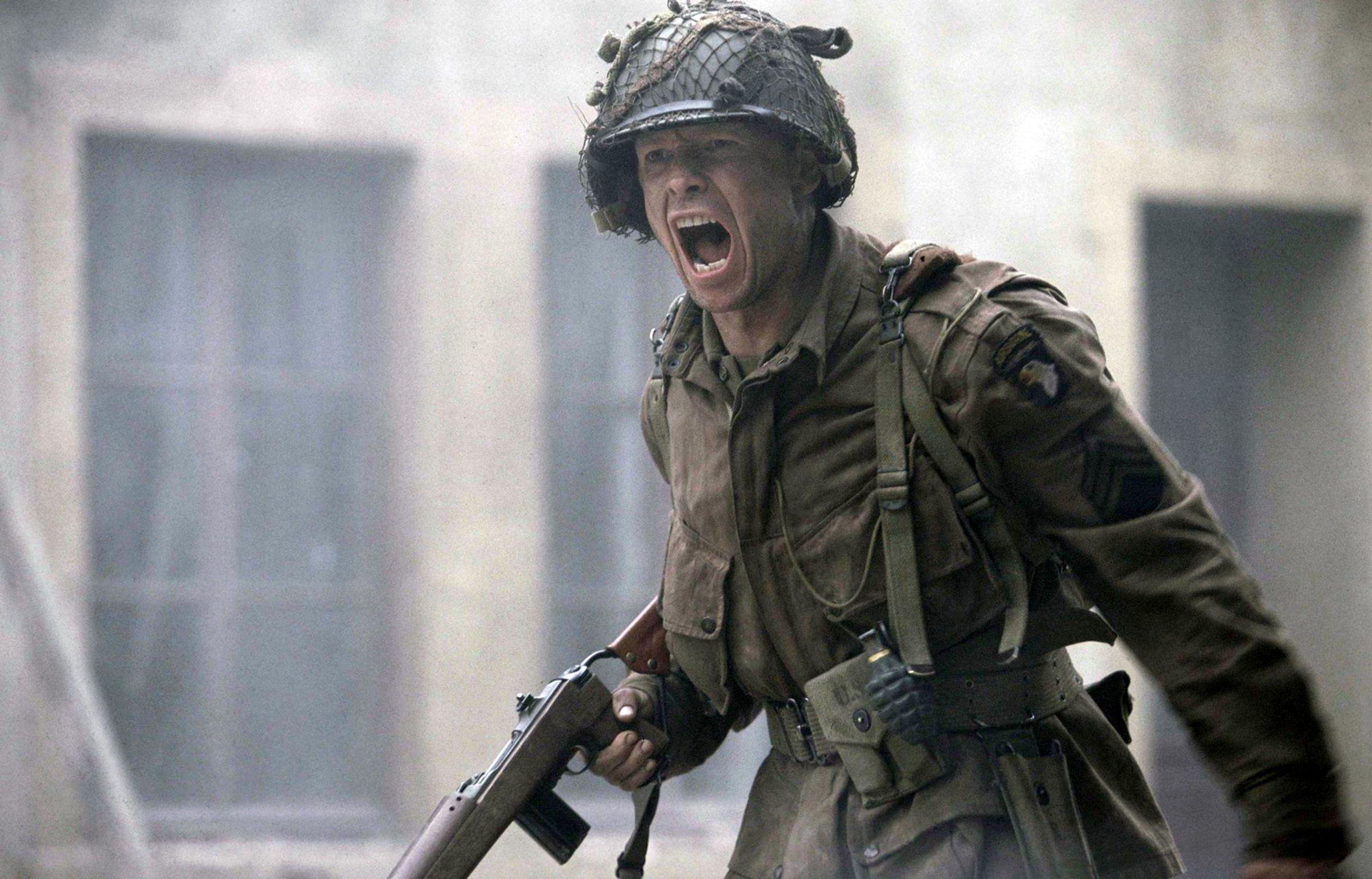
You probably remember the scene. It’s late in the war. The tension in Easy Company has shifted from the terror of combat to the messy, unpredictable danger of the occupation. A drunk replacement from another company wanders into the frame, brandishing a pistol, and shoots a well-liked non-commissioned officer in the head for seemingly no reason. That officer was Sgt Grant. Specifically, Sergeant Charles "Chuck" Grant.
It's one of those moments in the HBO miniseries Band of Brothers that feels almost too senseless to be real. After surviving the jump into Normandy, the frozen foxholes of Bastogne, and the push into Germany, getting taken out by a drunk GI from the 27th Armored Infantry Battalion feels like a cruel joke by the universe. But for those who knew Grant, it wasn't just a plot point. It was a tragedy that nearly robbed Easy Company of one of its most capable, albeit quieter, leaders.
Who Was the Real Sergeant Charles Grant?
Most viewers know Sgt Grant as the guy who got shot in the final episodes, but his history with the 506th Parachute Infantry Regiment goes way back. He wasn't a "replacement" himself. Grant was an original Toccoa man. He was there for the three-mile runs up Currahee. He was there for the tactical training at Camp Mackall and the long wait in England.
In the show, he's portrayed by actor Nolan Hemmings. While he doesn't get the same amount of "confessional" screen time as Carwood Lipton or "Wild Bill" Guarnere, Grant was a pillar of the unit's NCO backbone. Within the actual Easy Company, Grant was respected for being steady. He wasn't a loudmouth. He just did the work. By the time the unit reached Austria and the surroundings of Berchtesgaden, Grant was a seasoned vet who had survived some of the worst fighting in human history.
Then came July 23, 1945.
The war in Europe was over. The men were waiting to see if they’d be shipped to the Pacific. Boredom was the new enemy. And boredom, mixed with liberated schnapps and a loaded weapon, is a lethal combination.
The Incident: What Really Happened to Sgt Grant
The show sticks fairly close to the historical record here, but the nuance of the chaos is worth digging into. A private from the 27th Armored, a guy named I.V. Levy, was drunk and driving a jeep around in a restricted area. He had already shot and killed two Germans—a civilian and a policeman—before Sgt Grant tried to intervene.
Grant wasn't looking for a fight. He was doing his job as an NCO, trying to restore order. He approached the jeep to settle things down. Without warning, Levy fired. The bullet hit Grant in the head.
In the series, we see Captain Ronald Speirs and Major Richard Winters react with a cold, focused fury. That’s not Hollywood dramatization. The real men of Easy Company were beyond livid. There is a specific kind of rage that happens when you lose a brother to "friendly" stupidity after the "enemy" failed to kill him for years.
The Medical Miracle
One of the most intense sequences in the episode "Points" involves the search for a brain surgeon. If you’re a fan of the show, you know the drill: Speirs finds a German surgeon and basically tells him that if Grant dies, the surgeon’s life isn't going to be worth much.
The surgeon was a German civilian named Dr. Hans Graf.
Honestly, it’s a miracle Grant survived. In 1945, a gunshot wound to the brain was almost universally a death sentence. The surgical techniques were primitive compared to today. No CT scans. No advanced neuro-monitoring. Just a skilled surgeon, some basic tools, and a lot of luck.
Dr. Graf performed the surgery, removing the bullet and bone fragments. Surprisingly, the surgery was a success. While the show leaves his fate slightly ambiguous as he's loaded into the ambulance, the real Sgt Grant didn't just survive the night—he began a long, grueling recovery.
The Aftermath of the Shooting
What happened to the shooter? In the show, Speirs stands the guy up and you think he’s going to execute him right there. In reality, I.V. Levy was court-martialed. He didn't just get a slap on the wrist. He was sentenced to a long stretch of hard labor, though accounts vary on exactly how much of that sentence he actually served before being released in the post-war shuffle.
For Grant, the war ended in a hospital bed. He suffered from various neurological issues for the rest of his life, including some paralysis and speech difficulties. But he was alive.
He eventually moved back to the States. He lived in Pennsylvania. He got married. He lived a life. It’s easy to forget that these "characters" were actual men who had to go home and try to be normal after seeing things no one should see. Grant died in 1984, years before the book Band of Brothers by Stephen Ambrose or the HBO series made him a household name for military history buffs.
Why the Story of Sgt Grant Matters
His story is the perfect example of the "unnecessary" casualties of war. We often focus on the grand battles—D-Day, Market Garden, the Bulge. We count the dead in thousands. But the individual tragedy of a man like Grant highlights the sheer randomness of survival.
He survived the 88mm shells. He survived the MG-42s. He survived the freezing cold that took the toes and feet of his friends. Only to be nearly killed by a fellow American who couldn't handle his liquor.
It also highlights the complexity of the "peace" that followed the surrender of Germany. The occupation wasn't just "The Sound of Music" and scenic vistas. It was a volatile, dangerous environment where thousands of armed, traumatized young men were suddenly told to stop fighting.
Misconceptions About Grant's Rank and Role
There is a common misconception among casual fans that Grant was a junior NCO or a replacement. Because he isn't featured heavily in the early episodes (like the training at Toccoa or the jump into Normandy), people assume he wasn't "one of the originals."
That’s incorrect.
Grant was a Sergeant in the Second Platoon. He was part of the core group that held the company together when officers were being rotated or killed. His peers—men like Joe Liebgott and Bull Randleman—viewed him as a contemporary. When you see Liebgott crying in the show after Grant is shot, that's not just "acting." It reflected the genuine bond these men had. They had spent years together.
Modern Perspectives on the Incident
If you talk to historians like those at the World War II Foundation, they’ll tell you that the Grant incident is one of the most requested topics when people visit the E Company sites in Austria. Why? Because it feels relatable. We’ve all seen someone lose control and cause damage to those around them.
It also brings up the ethical dilemma of the German surgeon. At that point in the war, the Americans were the occupiers. They held the power of life and death. The way Speirs "convinced" the doctor to operate is a dark reminder of the reality of military occupation. It wasn't always "liberation" in the way we see it in movies; sometimes it was raw, naked pressure.
Digging Deeper into the Records
If you want to verify these details, the morning reports of the 506th PIR are the best place to look. These are the daily logs kept by the unit. You can see Grant’s name appear and disappear as he moves through the ranks and eventually is listed as "SWA" (Seriously Wounded in Action).
Interestingly, some memoirs from other Easy Company members suggest that Grant’s recovery was even more difficult than the "official" histories let on. He had to relearn basic functions. He wasn't the same man who jumped into Normandy. But the fact that he made it back to the States at all is a testament to the skill of that German surgeon and Grant's own physical toughness.
Actionable Insights for History Buffs
If you're interested in the real history of the men of Easy Company beyond the TV screen, there are a few things you can do to get the full picture of men like Sgt Grant.
- Read the memoirs of the men who were there. While Stephen Ambrose’s book is the most famous, the individual memoirs by guys like Don Malarkey (Easy Company Soldier) or Shifty Powers offer a much more granular, less polished look at the NCOs like Grant.
- Check the 506th Airborne Infantry Regiment Association archives. They maintain incredibly detailed records of the men who served, including those who didn't get a "main character" edit in the HBO series.
- Visit the memorial sites with context. If you ever find yourself in Zell am See, Austria, look past the beautiful lake. That area was where these men were trying to find a version of peace while dealing with the fallout of the Grant shooting and the looming uncertainty of the Pacific.
- Avoid the "Replacement" Trap. When researching WWII vets, always look for their "date of entry" into the unit. Many men who seem like background characters in movies were actually "Originals" who simply didn't seek the spotlight or write their own books later.
The story of Sgt Grant isn't just a footnote in a TV show. It's a reminder that the "End of the War" wasn't a clean cut. It was a messy, dangerous transition where heroes like Charles Grant almost didn't make it home because of the very things they were trying to stop: chaos and senseless violence. He survived the war, survived the shooting, and eventually found the quiet life he had fought for. That, more than any battle, is a victory worth remembering.