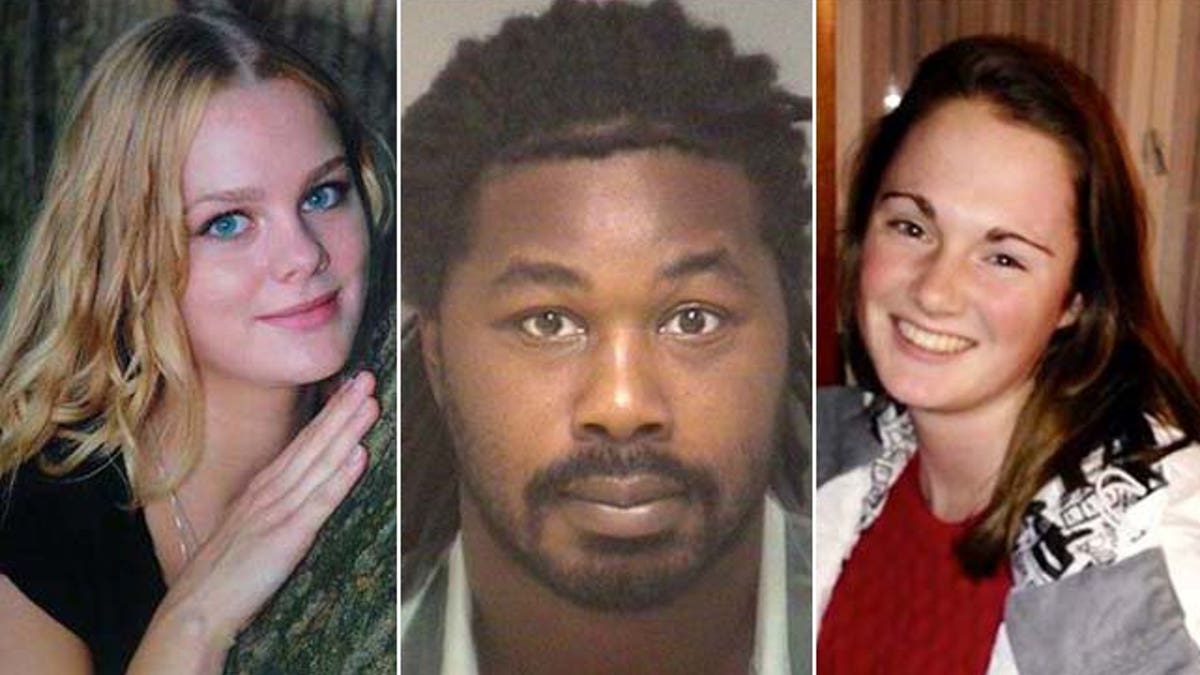
It was a warm September night in Charlottesville, Virginia, back in 2014. Hannah Graham, a bright 18-year-old University of Virginia sophomore with a shock of blonde hair and a promising future in the school's ski team, went out for a night with friends. She never made it home. This wasn’t just another missing person case. It became a sprawling, multi-city forensic puzzle that eventually linked a single man to years of terror across the state.
The murder of Hannah Graham didn't just break a family; it shattered the sense of safety in a quintessential college town. You’ve probably seen the grainy surveillance footage. It shows Hannah, appearing disoriented, walking through the Downtown Mall. Then, Jesse Matthew Jr. appears. He puts his arm around her. They walk into the darkness together.
What Happened on the Downtown Mall?
People often wonder how a predator like Jesse Matthew operated in broad daylight—or at least under the bright lights of a popular pedestrian mall. On September 13, 2014, Hannah had been drinking. She was separated from her friends. Witnesses later testified they saw Matthew buy her alcohol at Tempo, a local restaurant.
Jesse Matthew Jr. was a large man. Over 6 feet tall and weighing 270 pounds, he was nicknamed "LJ" (Long John) and worked as a patient transport tech at the UVA Medical Center. He had a history that the public didn't know about yet—allegations of sexual assault at two different colleges where he played football. But that night, he was just a guy at a bar.
The search for Hannah lasted five agonizing weeks. It was one of the largest search efforts in Virginia history. Thousands of volunteers combed through woods and fields. Finally, on October 18, her remains were discovered on an abandoned property in rural Albemarle County, specifically on Old Lynchburg Road. The site was roughly eight miles from where she was last seen.
The DNA Link: A Serial Predator Unmasked
The murder of Hannah Graham was the "smoking gun" that investigators needed to solve older, colder cases. When police finally caught up with Jesse Matthew in Galveston, Texas—he’d fled there in a desperate attempt to escape—they took his DNA.
The results were chilling.
Matthew’s DNA was a forensic match for the 2009 disappearance and murder of Morgan Harrington, a Virginia Tech student who vanished after a Metallica concert at UVA’s John Paul Jones Arena. For years, Morgan’s parents, Gil and Dan Harrington, had pleaded for answers. It turns out the monster they were looking for had been living in Charlottesville the whole time.
But it didn't stop there.
Forensics also linked him to a 2005 sexual assault in Fairfax. In that case, the victim survived and was later able to provide testimony that solidified the prosecution's hand. It became clear that Jesse Matthew wasn't a one-time offender who snapped. He was a calculated, opportunistic hunter of young women.
The Legal Aftermath and the "No-Contest" Plea
The legal proceedings were heavy. They were exhausting for the families. Initially, Matthew faced the death penalty. However, in a move to provide closure and ensure he would never walk free again, prosecutors struck a deal.
In March 2016, Jesse Matthew Jr. pleaded guilty to the murder of Hannah Graham and the murder of Morgan Harrington. He received four consecutive life sentences. No chance of parole.
Some people felt the death penalty was the only just outcome. Others, including the Grahams and Harringtons, found a sliver of peace knowing the legal circus was over. They didn't have to endure years of appeals. Matthew later died in prison in 2019 from complications related to colon cancer, effectively ending the story of his life, but not the impact of his crimes.
Why This Case Changed Virginia Laws
If you live in Virginia or send a kid to college there, you’ve felt the ripple effects of this case. It changed how campus security operates. It changed how we think about "Blue Light" systems and late-night transport.
- The "Hannah’s Law" discussions: There was a massive push for better information sharing between universities regarding student misconduct. Matthew had been investigated for sexual assault at Liberty University and Christopher Newport University but was allowed to withdraw without a permanent mark on his record that would have alerted UVA.
- Increased Surveillance: Charlottesville dramatically increased the number of high-definition cameras in public spaces.
- Safe Ride Programs: UVA and other state schools overhauled their "Safe Ride" apps to ensure no student is ever left walking alone because they can't find a taxi or an Uber.
The reality is that Hannah’s death was preventable. If the systems meant to track predatory behavior had worked a decade earlier, she might still be here.
Safety Realities and Lessons Learned
Honestly, looking back at the murder of Hannah Graham, it’s a reminder that predators often hide in plain sight. Matthew wasn't a "creepy guy in a van." He was a coworker, a former athlete, and a local resident.
The biggest takeaway from the forensic evidence and witness testimony is the "predatory grooming" that happened in just a few minutes. Matthew identified a vulnerable, intoxicated person and used a "helper" persona to isolate her.
If you are ever in a situation where a friend is intoxicated, the "buddy system" isn't just a cliché. It’s a life-saving protocol.
Actionable Steps for Personal and Community Safety
- Audit Your Tech: If you're a student or live in a city, ensure your phone has "Emergency SOS" features enabled (holding the side buttons on an iPhone, for example). Set up your "Medical ID" so first responders can see your emergency contacts without unlocking your phone.
- Use "Check-In" Features: Apps like Life360 or even simple Google Maps location sharing are vital. If you're going out, share your live location with one trusted person who isn't out with you.
- The "Never Leave" Rule: If you go out with three people, you return with three people. If someone is too drunk to stay, everyone leaves. No exceptions. Predators look for the "straggler."
- Support Legislative Transparency: Advocate for laws that require universities to disclose disciplinary records for violent offenses when a student transfers. The "loophole" that allowed Jesse Matthew to move from school to school without a paper trail is something that still needs vigilance in many states.
- Trust the "Gut" Feeling: Witnesses saw Matthew with Hannah and felt something was "off" but didn't intervene. If you see someone who looks vulnerable being led away by someone who doesn't seem to know them well, notify staff or security immediately. It is better to be wrong and embarrassed than to stay silent.
The murder of Hannah Graham remains a dark chapter in Virginia's history, but the legacy of the case is found in the lives saved by the changes it sparked. Hannah’s parents, John and Susan Graham, have shown incredible grace, focusing on their daughter's life rather than just the way she died. By staying informed on the specifics of this case, we can better understand the patterns of predatory behavior and work to ensure that "Virginia is for Lovers" remains a reality, rather than a mask for tragedy.