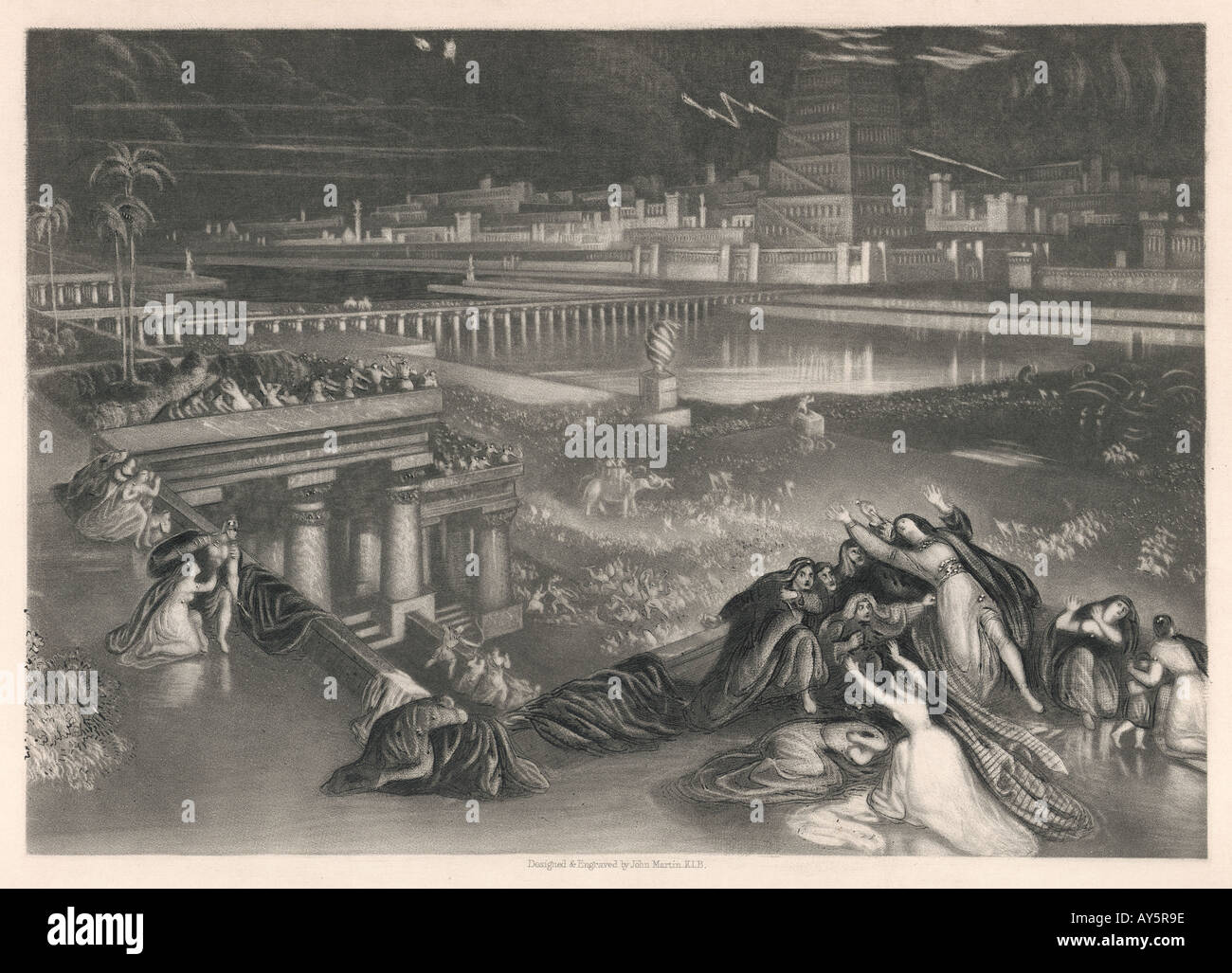
History is usually written by the winners, but in the case of the fall of Babylon, it was written by the people who were bored of the losers. It’s 539 BCE. Imagine a city so massive and so well-fortified that the inhabitants literally laughed from the top of the walls at the army outside. They had enough food stored for twenty years. They had the Euphrates river flowing right through the center of the city like a giant, liquid life-support system. They felt untouchable. Then, in a single night, the greatest empire in the world basically just... stopped existing. It wasn’t a ten-year siege like Troy. It wasn't a bloody, dragged-out massacre that leveled every building. It was a tactical heist of such massive proportions that half the city didn’t even realize they had been conquered until the next morning.
The King Who Cared More About Old Statues Than New Problems
To understand why Babylon collapsed, you have to look at Nabonidus. He was the last king of the Neo-Babylonian Empire, and honestly, he was a terrible fit for the job. While the Persian Empire was growing like a wildfire to the east under Cyrus the Great, Nabonidus was busy being an amateur archaeologist. He spent a decade living in the Tayma oasis in the Arabian desert, leaving his son, Belshazzar, to run things in the capital.
This created a massive PR nightmare.
The people of Babylon loved their gods, specifically Marduk. But Nabonidus was obsessed with the moon god, Sin. He stopped showing up for the New Year festivals—the Akitu—which was a huge deal back then. If the king didn’t hold the hand of the statue of Marduk, the year wasn't "blessed." By the time Cyrus and the Persians showed up, a huge chunk of the Babylonian priesthood was already secretly rooting for the invaders. They figured a Persian king who respected their traditions was better than a Babylonian king who ignored them.
Internal rot usually precedes the external crash. You see this in business, in modern politics, and definitely in ancient Mesopotamia. The economy was struggling with inflation, and the central administration was fractured. Belshazzar was a decent soldier but a bad diplomat. He lacked the "vibe check" skills needed to keep a multi-ethnic empire together when a charismatic liberator like Cyrus was knocking on the door.
How Cyrus the Great Pulled Off the Impossible
The actual fall of Babylon is a masterclass in engineering over brute force. The Greek historian Herodotus—who, admittedly, liked a good story and might have exaggerated some bits—details a plan that sounds like something out of a heist movie. The Persians knew they couldn't climb the walls. They couldn't batter them down either; they were too thick. So, they looked at the river.
The Euphrates ran under the walls.
Cyrus had his engineers dig a series of canals and basins upstream to divert the river into a nearby marsh. As the water level dropped, it became shallow enough for soldiers to wade through. They literally walked into the city under the gates while the Babylonian elite were, quite famously, having a massive party.
- The October 12 Entry: The Nabonidus Chronicle, a real clay tablet you can go see in the British Museum, tells us that the Persian army entered Babylon "without battle."
- The Belshazzar Factor: While the army was sneaking in through the mud, the Crown Prince was hosting a banquet. This is where the whole "writing on the wall" thing comes from in the biblical Book of Daniel. Whether or not a literal hand appeared to write a prophecy, the metaphorical writing was definitely there.
It was a bloodless coup for the most part. Cyrus wasn't a genocidal maniac. He was a savvy politician. When he walked into the city, he didn't burn it. He went straight to the temple of Marduk. He told the people he was there because Marduk invited him to save the city from the "heretic" Nabonidus. It was brilliant. He flipped the narrative from "foreign conqueror" to "divine liberator" in about forty-eight hours.
Why This Wasn't Just Another War
Most people think the fall of Babylon was just about who got to wear the crown. It wasn't. It was a fundamental shift in how empires functioned. Before this, the Assyrian and Babylonian models were based on "deport and destroy." If you conquered a people, you dragged them away from their homes so they couldn't rebel.
Cyrus did the opposite.
The Cyrus Cylinder, often called the first charter of human rights (though that's a bit of a modern over-simplification), records his decree allowing displaced people to go back to their homelands. This included the Jews, who had been in the "Babylonian Captivity" for decades. By letting them go home and rebuild their temple in Jerusalem, Cyrus secured a loyal buffer state on his border and a legacy as a "Messiah" figure in the Hebrew Bible.
This move effectively ended the "Age of Mesopotamia" as the sole center of the world. Power shifted to the Persians, then eventually to the Greeks under Alexander. Babylon stayed important for a while—Alexander actually died there—but the spark was gone. The city eventually crumbled into the dust of the Iraqi desert, becoming a series of mounds known as Tell Amran ibn Ali.
Common Misconceptions About the Ending
People love to think the city was destroyed. It wasn't. It didn't "fall" like Rome fell, with fires and Goths running through the streets. It was more like a corporate takeover. The CEO was replaced, the branding changed, but the office stayed open.
Another big mistake is thinking the Babylonians were weak. They weren't. They had the best tech of the era. Their astronomers could predict eclipses. Their mathematicians were using a base-60 system that we still use today to tell time (60 seconds, 60 minutes). They fell because of a leadership vacuum and a failure to adapt to a new kind of psychological warfare.
Cyrus didn't just have more spears; he had a better story. He understood that if you convince a population you are their friend, you don't have to fight their soldiers.
Actionable Insights from the Babylonian Collapse
You can't go back and save Belshazzar, but the fall of Babylon offers some pretty stark lessons for anyone managing a team, a business, or even just their own life.
- Don't ignore the "priesthood": In any organization, there are people who hold the cultural keys. If you alienate the people who maintain the "spirit" of the place, they will open the gates for your competitors. Nabonidus ignored the religious elite, and it cost him everything.
- Watch your "river": The very thing that provides you life and security (like the Euphrates did for Babylon) can be used as your greatest entry point for failure if you stop monitoring it. Your biggest strength is often your biggest vulnerability.
- Culture eats strategy for breakfast: Cyrus didn't have to out-fight the Babylonians because he out-cultured them. He presented a vision of religious tolerance and return-to-home that was more attractive than the status quo.
To really dig deeper into this, you should check out the Nabonidus Chronicle translations online or look up the work of Dr. Irving Finkel at the British Museum. He’s one of the world’s leading experts on cuneiform and makes the era feel incredibly alive. Understanding the fall of Babylon isn't just about memorizing dates; it's about recognizing that even the most "impenetrable" systems can vanish in a night if the foundation is already rotten. For a more visual look, search for the recreations of the Ishtar Gate—it gives you a sense of the scale of what was lost.