You’ve probably heard the story about Ellis Island. A confused immigrant steps off a boat, a tired clerk can’t spell "Przybyszewski," and—poof—the family is suddenly the "Smiths." It’s a great story. It's also mostly a myth. Surnames in the USA are way more chaotic than a simple clerical error at a port of entry. Your last name is basically a fossil. It’s a leftover piece of history that tells us who your ancestors were, what they did for a living, or even how much they wanted to fit in (or hide).
Most people assume their last name is a static, unchanging anchor to the past. Honestly, it’s usually the opposite. Names in America have always been fluid. They’ve been translated, chopped up, and reinvented to the point where "Miller" might have started as "Müller," "Meunier," or even something completely unrelated from a totally different language.
The Massive Shift in the Top 10
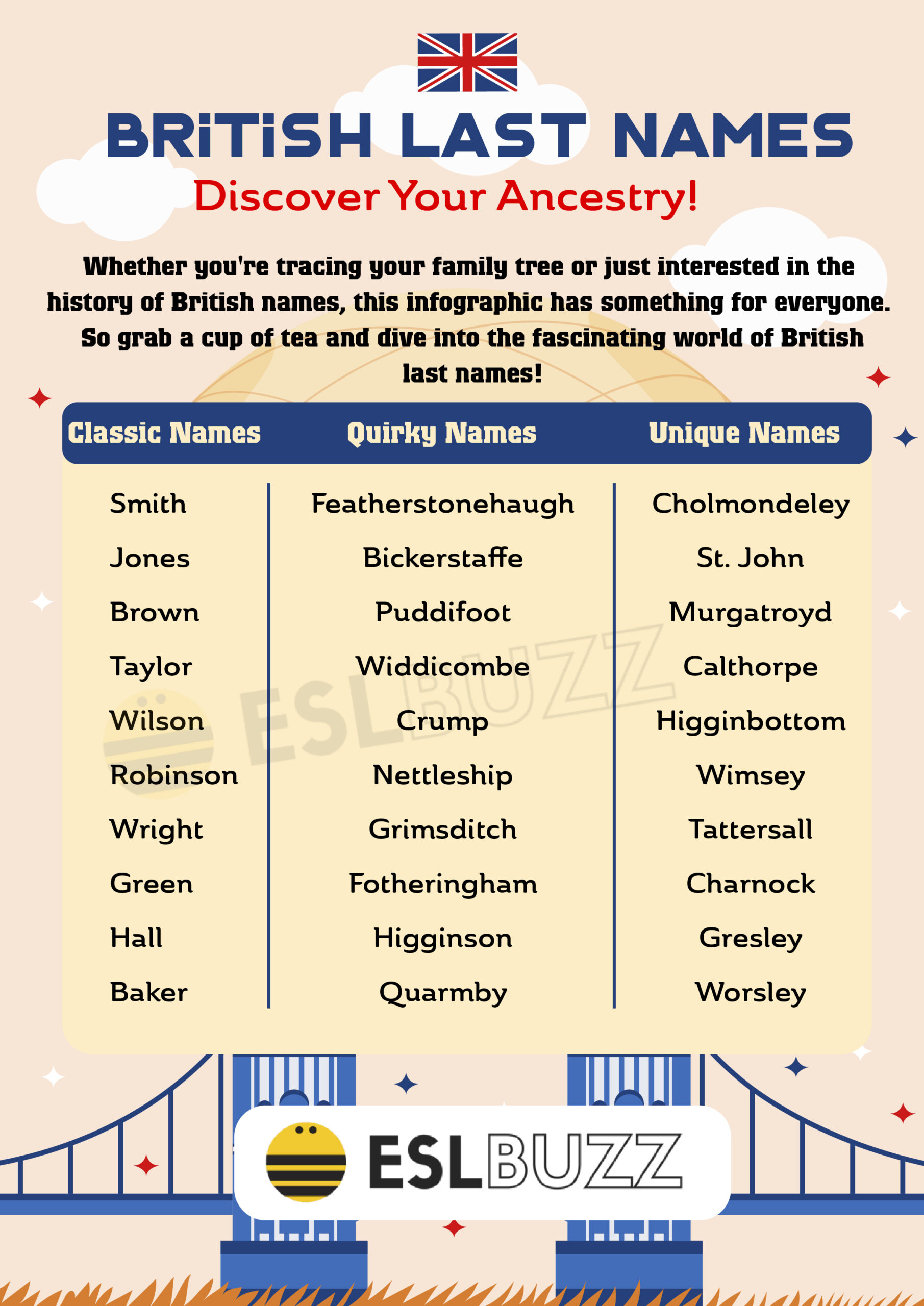
For decades, the list of the most common surnames in the USA looked like a British phone book. Smith. Johnson. Williams. Brown. Jones. While those heavy hitters are still at the top, the landscape is shifting. Fast.
If you look at the U.S. Census Bureau data from 2000 to 2010, and then the preliminary data moving into the mid-2020s, the fastest-growing names aren't Anglo-Saxon. They’re Hispanic and Asian. Garcia and Rodriguez have crashed into the top 10, knocking out names like Wilson or Taylor. This isn't just a fun trivia point; it's a massive demographic shift reflecting how the country’s identity is evolving.
Garcia, for example, is now the sixth most common surname in the country. Think about that. A name with roots in the Basque region of Spain is now more prevalent in America than Miller or Davis.
Why the "Smith" Dominance persists
Smith is still #1. It’s been #1 forever. There are over 2.4 million Smiths in the United States. Why? Because "Smith" wasn’t just a name for people who made horseshoes. It was a functional title. In the Middle Ages, almost every village had a smith. Blacksmiths, goldsmiths, silversmiths, coppersmiths. When the British came over, they brought a lot of Smiths with them.
But there's a darker, more complex reason for its volume too. Enslaved people were often forced to take the surnames of their owners. After the Civil War and the Emancipation Proclamation, many formerly enslaved people kept those names, while others chose names like Freeman or Washington. This is why "Washington" is statistically the "Blackest" name in America today, with roughly 90% of people carrying the name identifying as African American.
The Great American Translation
Language is messy. When immigrants arrived in the 19th and early 20th centuries, they faced immense pressure to "Americanize." This wasn't usually the government forcing them to change their names. It was the immigrants themselves. They wanted jobs. They wanted their kids to blend in.
If your name was "Zimmermann," you became "Carpenter."
If your name was "Sjöberg," you became "Seaborg" or "Sjoberg" (dropping the umlaut). This process, known as anglicization, happened at the kitchen table, not the customs desk. People would literally look for the closest English equivalent or a phonetic spelling that wouldn't make a store manager squint during a job interview.
My own friend's family came over from Italy with the name "Martello." The grandfather realized that in his neighborhood, "Hammer" sounded more "professional." So, he just started writing "Hammer" on his paychecks. That’s how surnames in the USA work—they are often survival strategies turned into permanent identities.
Phonetic mangling and "Sound-Alikes"
Sometimes, it wasn't a direct translation. It was just about how things sounded.
- Piekarski becomes Baker.
- Goldschmidt becomes Goldsmith.
- Vukovic becomes Wilson (sometimes, just because it starts with the same letter).
This makes genealogical research a nightmare. You're looking for a "White" in 1890, but in 1880, they were "Weiss." You have to track the linguistic evolution alongside the physical movement of the family.
Hidden Histories: Spanish and Asian Surnames
We can't talk about surnames in the USA without looking at the Southwest. Names like Martinez, Hernandez, and Lopez didn't "arrive" in the same way European names did in the East. They were already here. The 1848 Treaty of Guadalupe Hidalgo essentially turned thousands of Mexican citizens into Americans overnight. Their surnames are the oldest "non-indigenous" names in the country.
Then there’s the Asian American experience. Many Chinese surnames like "Wong" or "Chen" are incredibly common, but the spelling can vary wildly based on whether the family immigrated from mainland China, Hong Kong, or Taiwan. A "Lee" could be English, but it could also be the Cantonese romanization of "Li."
The Rise of the Hyphen and the "Smush"
We’re in a new era of name creation now. The old patriarchal tradition where the woman always takes the man’s name is fading. Slowly, but it's happening. You see more hyphens. You see "blended" names where a couple takes pieces of both last names to create something entirely new.
It’s a bit like the 1700s again. Back then, names were fluid because literacy was low and spelling didn't really matter. Today, names are fluid because identity is personal. We're seeing a rise in people reclaiming "original" spellings that were dropped by their great-grandparents. People are adding back the "O'" to their Irish names or restoring the "de" to their French ones.
The 10 Most Common Surnames Right Now
If you stopped 1,000 people on the street, you'd likely hit several of these. This data is pulled from the most recent comprehensive Census analysis:
- Smith: English origin, meaning occupational (the smith).
- Johnson: Son of John.
- Williams: Son of William.
- Brown: Descriptive (complexion or clothing).
- Jones: Welsh version of "John’s son."
- Garcia: Spanish/Basque (uncertain origin, possibly meaning "young").
- Miller: Occupational (milling grain).
- Davis: Son of David.
- Rodriguez: Spanish, meaning "Son of Rodrigo."
- Martinez: Spanish, meaning "Son of Martin."
Notice the pattern? Most are either "patronymic" (son of someone) or "occupational" (what they did). It’s a very literal way of identifying people that we just stopped questioning about 200 years ago.
Surnames and the Digital Shadow
In 2026, your surname isn't just about your ancestors; it's about your data. Algorithms often group people by surname density to predict everything from voting habits to creditworthiness. Marketing firms use "surname analysis" to guess your ethnicity if you haven't provided it.
There are limitations to this, obviously. You can't assume someone’s background just by a name anymore. A "Rodriguez" could be a third-generation American who doesn't speak a word of Spanish, or someone who married into the name. This nuance is something that even the most advanced AI struggles to map out accurately because the "human" element of surnames in the USA is so unpredictable.
How to Trace Your Name Properly
If you're looking at your own last name and wondering where it actually came from, don't just trust those "Family Crest" websites. They’re mostly scams designed to sell you a $40 printed shield. Most "peasants" (which 99% of us are descended from) didn't have crests.
Instead, look at the Social Security Death Index or Passenger Arrival Lists.
The real gold is in the "Intent to Naturalize" papers. That’s where you’ll see the original name next to the "new" name. It’s the moment the transformation became official.
- Check the 1950 Census: It’s recently been released and is a goldmine for seeing how names were spelled just a few generations ago.
- Look for phonetic variations: Search for how your name sounds, not how it’s spelled.
- Analyze the "FAN" club: Friends, Associates, and Neighbors. People usually traveled in groups from the same village. If your ancestor's neighbor has a clearly Polish name, and your ancestor’s name is "Smith," there’s a good chance your ancestor was "Kowal" (the Polish word for Smith).
Actionable Insights for Your Name Search
If you want to understand the history of surnames in the USA as it pertains to your own life, stop looking at your name as a fixed label. Start looking at it as a clue.
- Audit your "official" history: Go to FamilySearch or National Archives and look for the earliest mention of your surname in America.
- Compare with the 2020 Census data: See if your name is becoming more or less common. This can give you a sense of the "density" of your lineage in certain states.
- Research the "Occupational Root": If your name is something like "Webb" (weaver) or "Fletcher" (arrow maker), look into the guilds of the 1600s. It tells you more about your family's social class than a fake coat of arms ever will.
- Watch for the "Great Vowel Shift": In English-speaking countries, the way we pronounce vowels changed drastically over a few hundred years. This often changed the spelling of surnames as people moved from the UK to the US colonies.
The names we carry are basically just the "greatest hits" of our ancestors' choices. Whether they changed a name out of fear, necessity, or just a desire for a fresh start, that name is now yours. It’s less about where the name started and more about what it survived to get to you today.