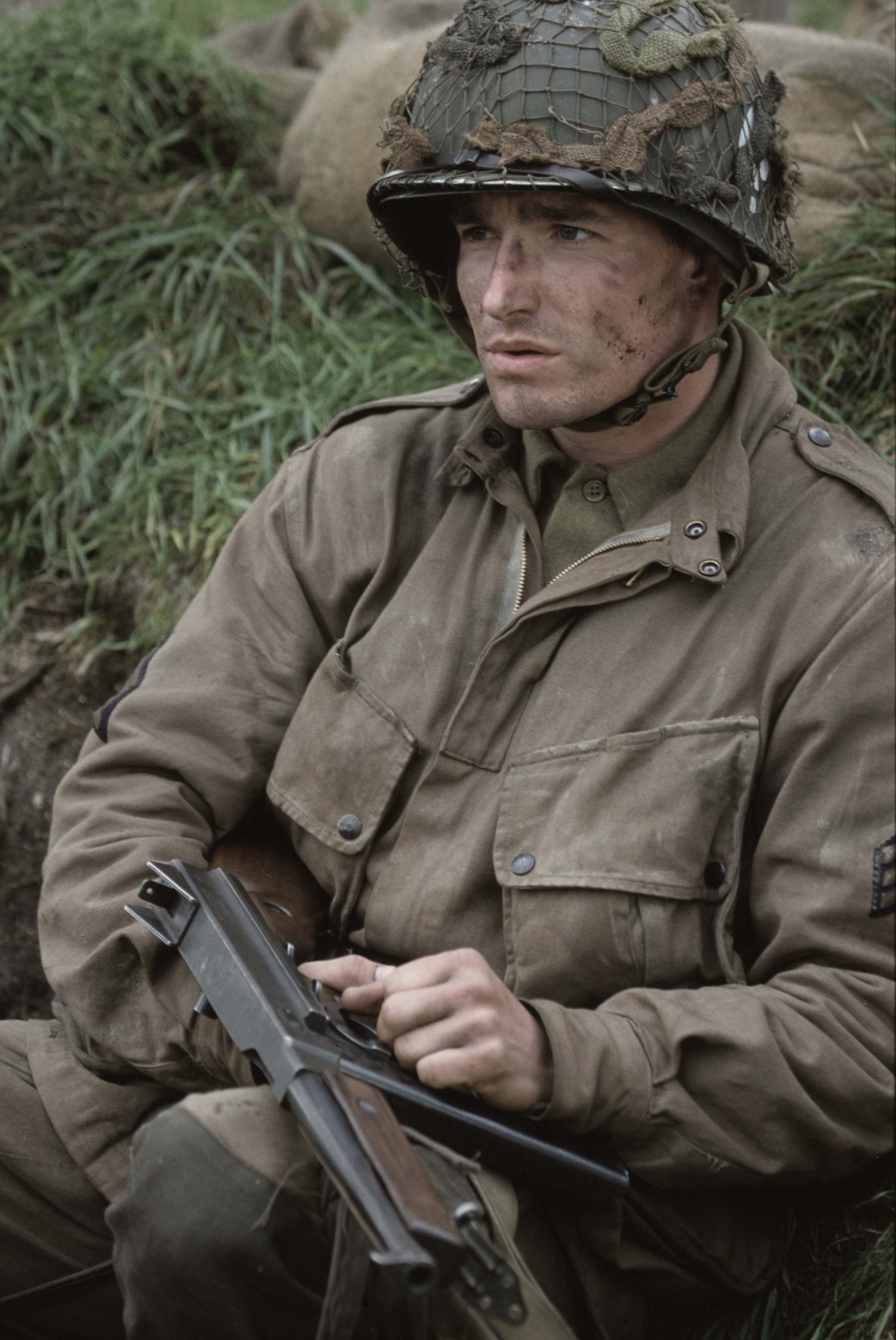
If you’ve watched the HBO miniseries Band of Brothers a dozen times, you probably remember the scene. It’s late in the war. Occupied Germany. A replacement, drunk on "liberated" schnapps and spiraling out of control, shoots a senior NCO in the head. That NCO was Sgt Grant.
Most viewers see that moment and think it’s just another beat of tragedy in a series full of them. But Charles E. "Chuck" Grant wasn't just a background character used for a plot point about the dangers of restless troops in a post-combat zone. He was a "Toccoa man." That matters. In the world of Easy Company, 506th Parachute Infantry Regiment, being a Toccoa man meant you were the bedrock. You were there when Captain Sobel was screaming at everyone on Currahee. You jumped into Normandy. You survived Market Garden. You froze in Bastogne.
To have survived all of that, only to be shot by one of your own men while the war was basically over? It's gut-wrenching. Honestly, it’s one of the most misunderstood moments in the show, mostly because the series breezes past what actually happened to him afterward.
Who Was Sgt Grant from Band of Brothers?
Charles Grant wasn't some fresh-faced kid. By the time Easy Company was moving through Austria and Germany in 1945, Grant was a seasoned Sergeant. He was respected. You can see this in how the "Old Soldiers" of the unit reacted when he was hit. Guys like Carwood Lipton and Ronald Speirs didn't just see a casualty; they saw a piece of their history being bled out on a dirt road by a drunk kid who didn't know any better.
Grant was part of the original core. When we talk about Sgt Grant Band of Brothers fans often focus on the shooting, but his real legacy was his stability. In Stephen Ambrose’s book, and the subsequent memoirs by guys like Dick Winters and Malarkey, Grant is remembered as a solid, dependable leader. He wasn't a "glory hound." He was the kind of guy who kept the machine running.
The show casts him as a quiet, authoritative figure. That’s pretty accurate. In a unit where the casualty rate was astronomical—remember, Easy Company started with about 140 men and suffered 150% casualties over the course of the war due to replacements being hit too—Grant was a statistical anomaly. He had made it. He’d beaten the odds.
The Incident: What Really Happened at Zell am See?
It happened in July 1945. The war in Europe was over. The men were waiting to see if they’d be shipped to the Pacific to fight the Japanese. Morale was a weird mix of relief and total boredom. Boredom is dangerous for men who have been trained to kill for three years straight.
A replacement private from another company—not Easy, though the show simplifies some of these dynamics—had gotten his hands on a lot of booze. He was driving a captured German vehicle and causing a scene. Sgt Grant went out to handle it. He did what any NCO would do: he tried to de-escalate and get the soldier under control.
The kid pulled a pistol. He shot Grant in the head.
The Medical Miracle
In the miniseries, Speirs finds a German brain surgeon. This isn't Hollywood fluff. That actually happened. Major Ronald Speirs, who was commanding Easy at the time, was famously "intense." When he heard Grant had been shot, he was livid. He found a local Austrian doctor, but the wound was so severe that it required a specialist.
Speirs basically forced a German surgeon—a man who had likely been treating Wehrmacht soldiers days earlier—to perform the operation at gunpoint (or at least under heavy threat). It’s one of those "truth is stranger than fiction" moments. The surgeon managed to save Grant’s life, which, considering 1940s neurosurgery and the fact that he’d been shot in the head, is nothing short of a miracle.
Why the Sgt Grant Story Matters for SEO and History Buffs
People search for Sgt Grant Band of Brothers because they want to know: Did he die? The show leaves it a bit ambiguous for a while, showing the men visiting him or talking about him in the hospital. If you’re looking for the factual ending to his story, here it is: Charles Grant survived. He didn't just survive the surgery; he lived for decades after the war.
He didn't come back to the unit, obviously. His war was over. He spent a long time in recovery, dealing with the physical and neurological aftermath of a traumatic brain injury. But he made it home.
Misconceptions About the Shooting
Some people think the shooter was an Easy Company man. He wasn't. He was a replacement from "I" Company. This is a big distinction for veterans of the 506th. The "Toccoa" bond was so strong that the idea of one of their own shooting Grant was unthinkable.
Another misconception? That Speirs executed the soldier. In the show, Speirs is seen walking toward the prisoner with a look that says he’s about to commit a war crime. In reality, the soldier was court-martialed. Speirs was a hard man, but he followed the UCMJ when it came to internal discipline, even if his "legend" among the troops suggested otherwise.
The Aftermath of the War for Charles Grant
Grant’s life after the 101st Airborne was quiet. He wasn't one of the men who went on the late-life speaking circuits like Guarnere or Heffron. He dealt with his injuries.
He passed away in 1984.
Think about that. He lived nearly 40 years after being shot in the head at point-blank range. When you watch that episode now, knowing he lived to see his kids grow up and lived through the 60s and 70s, it changes the emotional weight of the scene. It’s not a scene about a death; it’s a scene about the incredible resilience of the human body and the desperate lengths his brothers went to to keep him alive.
The Legacy of the "Old Men"
Grant represents the "Old Men" of the 506th. By 1945, there weren't many left. When you look at the rosters from Toccoa compared to the rosters at the end of the war in Berchtesgaden, it’s a ghost story.
- Grant survived the jumps.
- He survived the "screaming meemies" (German Nebelwerfer rockets).
- He survived the sub-zero temperatures of the Ardennes.
- He survived a bullet to the brain.
He was tough. The kind of tough they don't really make anymore.
Why We Still Talk About Him
We talk about him because Band of Brothers isn't just a show about war; it's a show about the random, unfair nature of survival. Why did Grant get shot in the head by a drunk kid while Dick Winters didn't get a scratch on him throughout the whole war? There’s no logic to it.
Grant’s story is the bridge between the combat and the difficult transition back to civilian life. Even though his transition was forced by a tragedy, he remains a symbol of the price paid by the NCOs who carried the burden of leadership from the beginning to the very end.
Actionable Insights for History Enthusiasts
If you're looking to dive deeper into the real history behind the characters like Sgt Grant, don't just stop at the HBO series.
- Read "Beyond Band of Brothers" by Dick Winters. He gives a much more tactical and personal view of the men he led, including the NCOs like Grant.
- Check the 506th PIR Association Archives. They have digitized many of the original after-action reports and company rosters. You can see Grant's name there, solidified in the official record.
- Visit the National Infantry Museum. If you're ever in Columbus, Georgia, the museum has an incredible section on the paratroopers. It puts the "Toccoa" experience into a physical perspective that a TV screen can't capture.
- Research the "Replacement" System. To understand why the shooting happened, look into how the US Army integrated replacements in 1945. It was a flawed system that often led to the kind of friction seen in the "Points" episode.
The story of Sgt Grant is a reminder that the "end" of the war was anything but peaceful for the men on the ground. It was messy, violent, and often dictated by pure luck. Charles Grant had some of the worst luck in the world, followed immediately by some of the best. That he survived to 1984 is a testament to the skill of a nameless German surgeon and the fierce loyalty of the men of Easy Company.