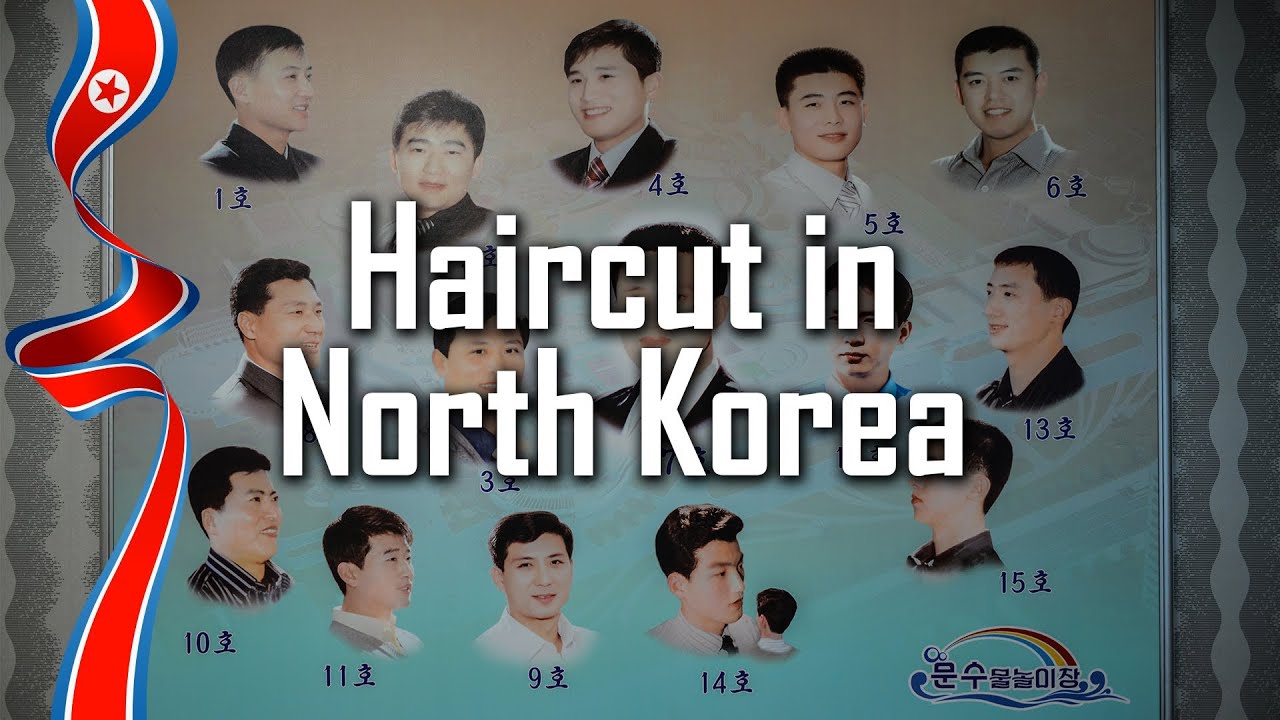
You've probably seen the viral photos. A poster on a salon wall in Pyongyang showing a grid of 15 or 28 "approved" styles. The internet loves a good "weird North Korea" story, and the idea of a government-mandated menu for your scalp fits the bill perfectly. But honestly? Most of that is a mix of half-truths and vintage propaganda that doesn't quite reflect how people actually live in the DPRK today.
Don't get me wrong. State control over personal appearance is very real. You aren't going to see a mohawk or neon pink dye jobs on the streets of the capital anytime soon. However, the reality of north korea acceptable haircuts is more about a strict social "vibe" and conservative grooming standards than a literal law that says you must choose "Style #4" or go to prison.
The "Mandatory" List: Fact vs. Fiction
The famous posters you see in travel vlogs are real, but they aren't menus. Think of them more like "recommended guidelines" or a visual aid for what is considered socialist-appropriate. They’ve been around for decades. In reality, North Koreans have a bit more wiggle room than a single poster suggests, provided they stay within the boundaries of "neatness."
For men, the standard is short. Really short.
Usually, the hair shouldn't be longer than five centimeters. If you're an older man, you might get away with seven centimeters on top. This isn't just a random whim; it's rooted in a state-sponsored campaign from the early 2000s titled "Let’s Trim Our Hair in Accordance with the Socialist Lifestyle." The state media at the time actually claimed that long hair "consumes nutrition" from the brain. It sounds wild to us, but that was the official line.
Women have it slightly different. Unmarried women are generally expected to keep their hair shorter—think bobs or simple cuts. Once a woman is married, the social "acceptable" look shifts toward perms. If you walk around Pyongyang, you’ll see an incredible number of women with varying degrees of permed hair. It’s a status symbol and a marker of adulthood.
The Kim Jong Un Effect
It’s a common myth that every man in North Korea is forced to copy Kim Jong Un’s specific haircut. You know the one—the "ambitious" look with the high-fade sides and the voluminous top.
Ironically, for a long time, people actually avoided it.
Copying the leader too closely can be seen as disrespectful or even a bit dangerous if you don't pull it off perfectly. However, in recent years, a modified version of his look has become more popular among the youth. It's essentially a variation of the Western "undercut." It looks modern. It looks sharp. And since the leader wears a version of it, it's inherently "safe" from the fashion police.
Then there’s the "Paehtu" style. This is a very specific, swept-back look that conveys a sense of revolutionary zeal. It’s what you see on high-ranking officials. If you’re a mid-level bureaucrat trying to climb the ladder, your north korea acceptable haircuts choice is going to be something conservative that screams "I follow the rules."
The "Fashion Police" are Real
While there might not be a cop on every corner measuring your bangs with a ruler, there are the Gyachal-dae. These are youth league members who patrol public spaces to check for "anti-socialist" behavior. This includes everything from wearing blue jeans to—you guessed it—having hair that’s too long or too "foreign."
If you’re caught with a "non-standard" look, you usually don't get arrested.
Instead, you get a stern lecture. Maybe your name gets reported to your workplace or school. In some cases, if the offense is repeated, you might be forced to get a haircut on the spot at a nearby state-run barber shop. It’s social pressure, not a gulag sentence, that keeps people in line.
The Rise of the Donju
Money changes everything. Even in North Korea.
The Donju, or "masters of money," are the new affluent class in the DPRK. They have access to foreign media through smuggled USB drives, and they want to look like the people they see in Chinese dramas or even South Korean K-dramas.
In the private markets (jangmadang), you can find hair dyes, though they are usually limited to shades of black or very dark brown. Bright colors are a total no-go. If a young person in a trendy district of Pyongyang wants to push the envelope, they might go for a slightly more voluminous cut or a subtle taper that mimics a Seoul style, but they have to be careful. It’s a constant dance between personal expression and state-mandated modesty.
Why the State Cares About Your Head
To understand north korea acceptable haircuts, you have to understand Songbun. This is the country's social credit system. Your appearance is a direct reflection of your loyalty to the state.
A "disorderly" haircut suggests a "disorderly" mind.
The government views fashion as a front in the war against "imperialist cultural infiltration." By keeping everyone’s hair neat, short, and uniform, they reinforce the idea of the collective over the individual. It’s hard to feel like a rebel when you look exactly like the thirty people standing next to you in the subway.
The Experience of a North Korean Barber Shop
Going to the barber in Pyongyang isn't like hitting up a trendy shop in Brooklyn. Most are state-run. They have a very functional, retro feel—lots of white tile, heavy manual clippers, and that specific smell of cheap soap and industrial disinfectant.
- Men: Usually get a dry cut followed by a vigorous scalp massage.
- Women: Spend hours in the "perm machines" which look like something out of a 1950s sci-fi movie.
- Price: It's incredibly cheap if you use the state-provided coupons, but "private" sessions in someone's home (which are technically illegal but common) cost more for better service.
Interestingly, many North Koreans take great pride in their grooming. Because there are so few ways to distinguish yourself, having a perfectly maintained, sharp haircut is a way to show you are "cultured" and "disciplined."
Real-World Nuance: What the News Misses
We often see North Korea as a monolithic block of robots. It's easier that way. But the reality of north korea acceptable haircuts shows there’s a bit of humanity under the surface. People complain about their hair. Teenagers try to grow their bangs just a half-inch longer than they should. Mothers gossip in the hair salons while their perms set.
The "approved" styles aren't just about oppression; for many, they are simply the cultural norm. If you grew up in a world where everyone had a bob or a crew cut, a mullet would look genuinely insane to you, regardless of what the government said.
Actionable Insights for the Curious
If you are researching this for a project, a trip (when they reopen), or just out of pure fascination, here is the breakdown of what actually dictates hair in the DPRK:
- Context is King: What’s acceptable for a student at Kim Il Sung University is different from what’s acceptable for a farmer in Ryanggang Province. The capital has higher standards but also more "modern" influences.
- Age Matters: Young children have more freedom. Elderly people almost always stick to the most traditional, conservative styles.
- The Perm is Queen: If you want to blend in as a woman in North Korea, get a perm. It is the undisputed champion of "respectable" female fashion.
- Avoid the Extremes: Any style that looks "Western" or "Japanese"—spiky hair, bleached tips, or long, unkempt man-buns—is effectively banned and will cause genuine trouble for the wearer.
The world of North Korean grooming is a fascinating look at how a state tries to physically mold its citizenry. It’s not just about hair; it’s about who has the power to define "normal." While the "15 approved haircuts" story might be an oversimplification, the pressure to conform is a daily reality for millions.
Next time you see a photo of a North Korean crowd, look past the uniforms. Look at the hairlines. You’ll see a population that is remarkably well-groomed, not because they have to be, but because in a society with so little individual agency, your appearance is one of the few things you can actually "polish"—even if you have to stay within the lines to do it.
Sources and References:
- Reports from Daily NK on local "fashion police" crackdowns.
- Archived footage from the 2004-2005 "Socialist Lifestyle" grooming campaign.
- Defector testimonies regarding the "Donju" influence on Pyongyang fashion.
- Travelogues from Koryo Tours and Young Pioneer Tours regarding salon visits.