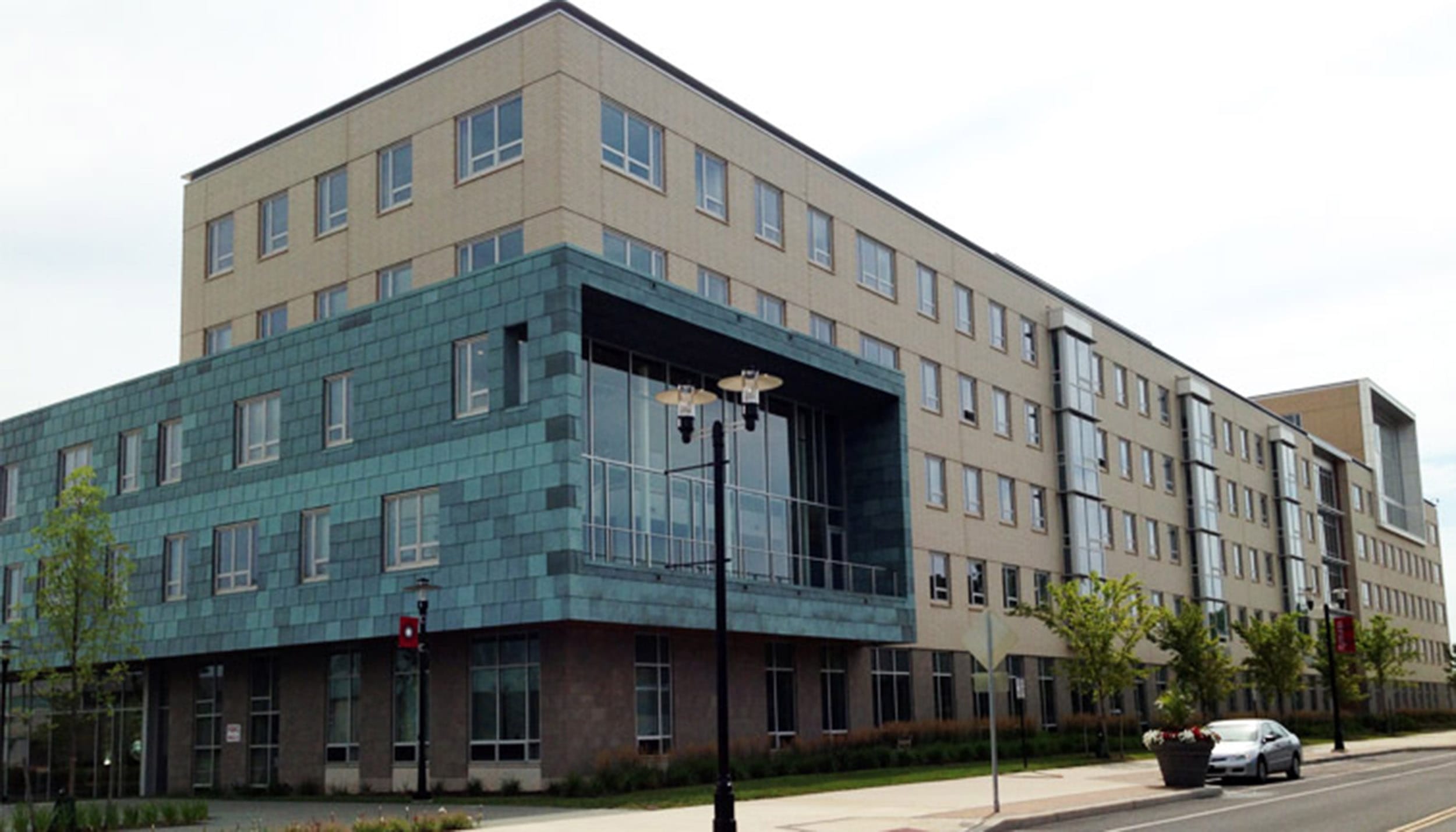
Walk onto Livingston Campus Rutgers University today and you'll see a sleek, modern mini-city. It’s got a massive cinema, high-end apartments, and a dining hall that people actually travel for. But ask an alum from the 1990s or early 2000s about "Livi," and they might shudder. Back then, it was the land of the "Livi Weeds." It was isolated. It was where the university put the buildings they didn't know what to do with. It felt like a concrete outpost in the middle of nowhere. Honestly, the transformation is one of the most drastic glow-ups in higher education history.
If you’re a prospective student or a parent trying to figure out which of the five New Brunswick/Piscataway campuses makes sense, you've probably heard the stereotypes. College Avenue is for the party scene. Cook/Douglass is for the hikers and the poets. Busch is for the engineers who forget what sunlight looks like. But Livingston? It has become the professional, social, and culinary hub of the entire system. It’s where the Rutgers Business School (RBS) looms over the landscape like a giant, glass Tetris piece.
Livingston isn't just a place where people go to class anymore. It’s a specific vibe. It’s arguably the most "metropolitan" of the campuses, despite being tucked away in Piscataway. You’ve got the Livingston Plaza, which feels more like a downtown shopping district than a college quad. It’s weirdly polished for a state school.
The Business School and the "Glass Fortress"
The centerpiece of Livingston Campus Rutgers University is undeniably the 153,000-square-foot Rutgers Business School building. If you’ve seen photos of Rutgers recently, you’ve seen this building. It literally arches over Rockefeller Road. It looks like it belongs in a sci-fi movie or a high-end corporate district in Tokyo. This isn't just about aesthetics, though. The building was a $85 million statement of intent. When it opened in 2013, it signaled that Livingston was no longer the "forgotten" campus.
Inside, it’s all glass and collaborative spaces. Students aren't just sitting in mahogany-row lecture halls; they’re in a high-tech environment that mimics the offices they hope to work in at JP Morgan or Deloitte.
The presence of the Business School changed the student demographic here. You see a lot more suits on Livingston than you do on Cook. It’s a professional energy. But that energy bleeds into the rest of the campus. There’s a sense of "getting things done" here. The James Dickson Carr Library (formerly Kilmer Library) is usually packed with people grinding through spreadsheets or case studies. It’s less of a "nap in the stacks" library and more of a "drink three espressos and finish this project" library.
Eating Your Way Through Livingston (It’s Not Just Pizza)
Let's talk about the Livingston Dining Commons. Most college food is a survival tactic. You eat because your body requires fuel. But the Livingston dining hall is a destination. People from other campuses take the LX or B bus specifically to eat here. Why? The burger bar and the made-to-order stir-fry are legendary, but it’s really about the atmosphere. It’s huge, bright, and actually feels like a restaurant.
But the real secret of Livingston Campus Rutgers University is the retail row in the Plaza. You’ve got options that aren't tied to a meal plan.
- Henry’s Diner: It’s a retro-style diner named after Henry Rutgers. The milkshakes are the real deal. It’s the kind of place where you go at 2:00 PM on a Tuesday when you’ve completely given up on your diet.
- Starbucks: It’s always crowded. Always. If you need a seat here during midterms, you basically have to fight for it.
- Hoja Asian Fusion: Great for when you can't stand the thought of another dining hall sandwich.
Then there’s the Livingston Movie Theater. Yes, a full-blown cinema on campus. It shows first-run movies for a fraction of the price of a standard AMC. It’s one of those perks that makes you realize how much money Rutgers poured into making this campus self-sufficient. You don't actually have to leave Livingston to have a social life, which is a far cry from the days when it was just a bunch of dorms and a patch of grass.
Housing: From Towers to Luxury Apartments
The housing situation on Livingston is a tale of two worlds. You have the "Quads" and you have the "Livingston Apartments."
The Quads are... an experience. Quad 1, 2, and 3 are the older, traditional dorms. They’re functional. They’re classic. They have that specific "built in the 70s" vibe where the walls are thick and the hallways feel a bit like a bunker. But for freshmen, the Quads are where the community is. Because they’re a bit more rugged, people tend to leave their doors open and actually talk to each other. It’s a rite of passage.
On the other end of the spectrum are the Livingston Apartments (Livi A, B, and C). These are essentially luxury condos. We’re talking about stainless steel appliances, private bathrooms, and floor-to-ceiling windows. They are some of the most competitive housing units in the entire Rutgers system. If you don't have a near-perfect lottery number, you can basically forget about living there.
Why the Location Matters
One thing people get wrong about Livingston is the "commute." Yes, it’s in Piscataway. Yes, you have to deal with the Rutgers bus system (the LX and the B are the lifelines here). But Livingston is actually the most accessible campus for people who don't want to be stuck in New Brunswick traffic. It’s right off Route 18 and close to the Edison border.
If you’re a commuter, the Yellow Lot is your home. It’s a massive expanse of asphalt that can feel like a desert in the winter, but it’s arguably the most organized parking situation on campus.
Sports and the "RAC" Energy
You can’t talk about Livingston Campus Rutgers University without talking about the Jersey Mike’s Arena. Most people still call it "The RAC" (Rutgers Athletic Center). It’s an oddly shaped building—sort of a truncated pyramid—that looks small from the outside.
But inside? It’s a nightmare for visiting teams.
The acoustics in the RAC are designed to trap sound. When the Rutgers men’s or women’s basketball teams are on a run, the floor literally vibrates. It’s loud. It’s intimate. It’s arguably one of the best atmospheres in Big Ten basketball. On game days, Livingston transforms. The buses are packed with fans in scarlet red, and the whole campus feels like the center of the university's spirit.
Next to the arena, you have the Louis Brown Athletic Center and the various practice facilities. It makes Livingston the unofficial "Sports Campus." Even if you aren't a D1 athlete, the Livingston Recreation Center is solid. It’s not as massive as the Werblin center on Busch, but it’s got everything you need for a workout without the intimidating "Olympic swimmer" vibe of the Busch facilities.
The Ecological Side You Didn't Expect
Despite all the glass and steel, Livingston has a weirdly beautiful natural side. The Rutgers Ecological Preserve is right there. It’s over 300 acres of woods and trails. You can go from a high-powered business lecture to a silent forest in about ten minutes.
It’s a massive resource for the ecology and anthropology departments. There are trails for mountain biking and hiking that most students don't even realize exist. It’s the lungs of the campus. If the stress of the Business School gets to be too much, walking into the preserve is the quickest way to decompress.
There's also the "Livingston Solar Field." It’s one of the largest campus solar installations in the country. It covers the parking lots, providing shade for cars while generating a massive amount of power for the university. It’s a cool mix of industrial utility and green energy that fits the Livingston "future-forward" brand.
What People Get Wrong About "Livi"
The biggest misconception is that Livingston is "boring" or "isolated." Sure, it’s not the heart of the New Brunswick bar scene like College Ave. You aren't going to walk out of your dorm and be on Easton Avenue. But that’s actually the draw.
Livingston is where you go when you want to actually live in a community that feels designed for humans, not just squeezed into a colonial-era city. It’s cleaner. It’s quieter at night. The air feels a bit fresher because you aren't surrounded by city buses and sirens.
Another myth? That it’s only for business majors. While the RBS dominates the skyline, the departments of Psychology, Computer Science (some labs), and Anthropology have a huge presence here. It’s a diverse academic hub. You’ll find people debating evolutionary biology in the same lounge where someone else is analyzing stock market trends.
Getting the Most Out of Your Time on Livingston
If you find yourself living or spending a lot of time on Livingston, don't just stay in your room. This campus is built for "third spaces"—places that aren't home and aren't work/class.
First, master the bus timing. Download the Transloc app or whatever the current Rutgers-approved tracker is. The LX bus to College Ave can be a nightmare during "change of class" times. If you have a class at 10:20 on College Ave, don't wait until 10:00 to get to the stop. You won't make it.
Second, use the movie theater. Seriously. It’s a great way to kill a Thursday night without spending $20.
Third, explore the Eco Preserve. Even if you aren't the "outdoorsy" type, having a spot to escape the noise is vital for your mental health.
Livingston Campus Rutgers University has moved past its "ugly duckling" phase. It is now the most balanced campus in the system. You get the high-tech academic buildings, the best food on campus, the intensity of Big Ten sports, and a literal forest all within walking distance. It’s a self-contained ecosystem that proves Rutgers can be modern, efficient, and actually pretty cool.
Actionable Steps for New Livingston Residents
- Check your lottery number early. If you want the Livingston Apartments, you need a high number and a full group of four. Start those conversations in the fall, not the spring.
- Visit the Dining Commons at "off-peak" hours. Going at 6:00 PM is a zoo. Try 5:15 PM or 7:30 PM for a much more relaxed experience.
- Walk the "Livi Loop." Spend an afternoon walking from the Business School, through the Plaza, past the Quads, and over to the RAC. Understanding the layout on foot makes the campus feel much smaller and more manageable.
- Join a Livingston-based organization. Many clubs meet in the Livingston Student Center. It’s a great way to meet people who actually live on your campus rather than just seeing them on the bus.
- Locate the Tillet Hall labs. If you need to print something or need a quiet computer space that isn't the main library, Tillet is often overlooked and less crowded.