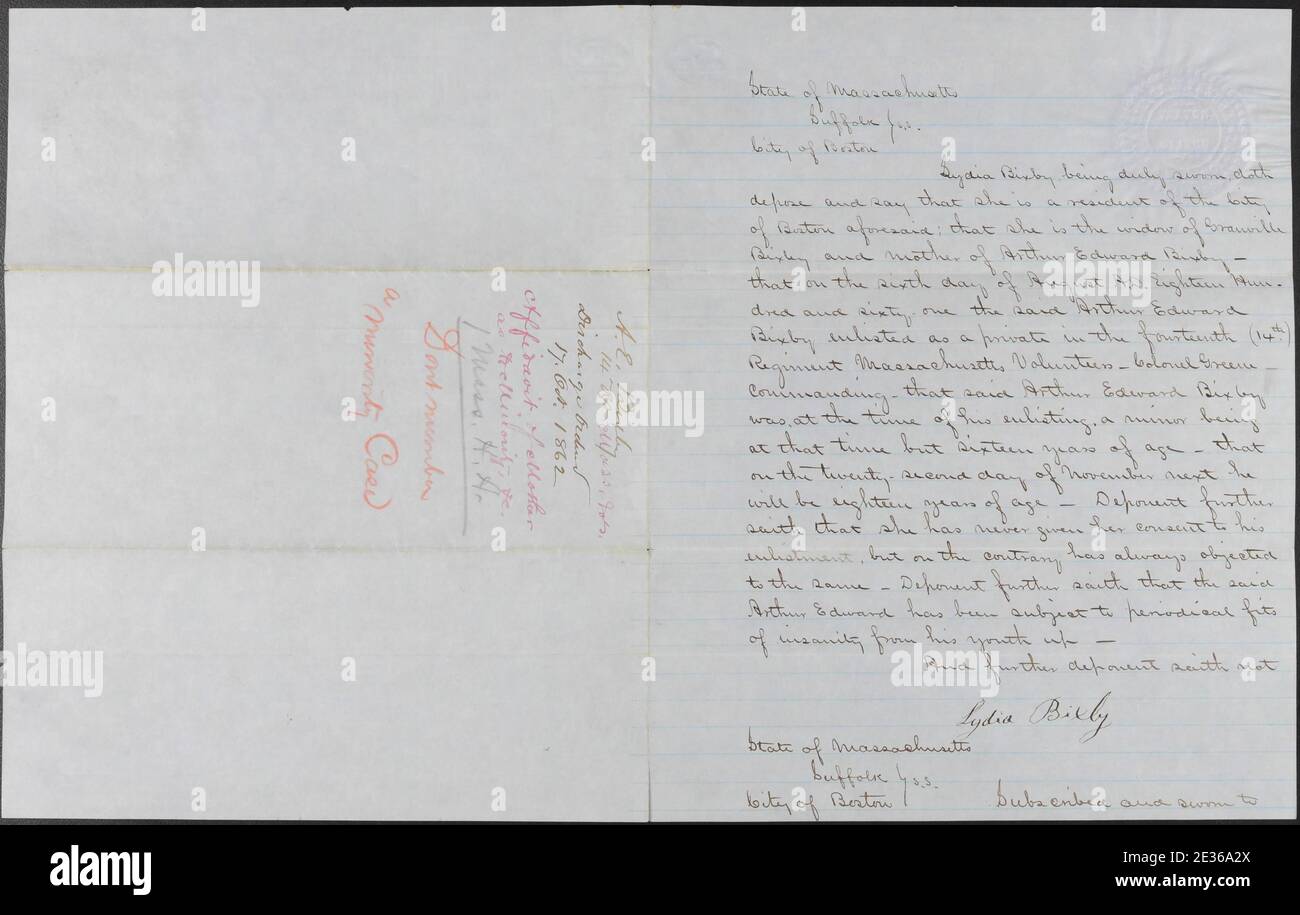
Abraham Lincoln was tired. By November 1864, the Civil War had been grinding on for over three years, and the sheer volume of death was staggering. Then, a letter landed on his desk via Adjutant General Lorenzo Thomas. It described a widow in Boston named Lydia Bixby who had supposedly lost five sons on the battlefield. Lincoln sat down and wrote what many consider the most beautiful piece of prose in the English language.
But here is the thing. Almost everything we think we know about Lincoln’s letter to Lydia Bixby is either a mystery, a mistake, or a flat-out lie.
The Five Sons Who Weren’t Quite What They Seemed
The story we usually hear is the Hollywood version. You might remember it from the opening scenes of Saving Private Ryan, where the letter is read aloud to justify a rescue mission. It’s a tear-jerker. Lincoln writes to a "mother who has laid so costly a sacrifice upon the altar of freedom."
He was misinformed.
Governor John Andrew of Massachusetts was the one who pushed the story up the chain of command. He wanted to highlight the patriotic sacrifice of the Bixby family. However, if you look at the actual military records, the "five fallen sons" narrative falls apart pretty fast.
- Arthur: He actually deserted. He didn't die for the Union; he ran away.
- Charles: He was killed at Fredericksburg. This one is true.
- Francis: He died at Fredericksburg too.
- Edward: He deserted and fled to Cuba.
- Oliver: He died at the Battle of the Crater.
So, while Mrs. Bixby certainly suffered—losing three sons is a nightmare no parent should endure—the "five heroes" story Lincoln was told was factually wrong. More awkwardly, modern historians like Michael Burlingame have pointed out that Lydia Bixby might not have even been the patriotic saint the Governor portrayed. There are rumors she was a Confederate sympathizer and that she may have even destroyed the original letter because she didn't like Lincoln.
Did Lincoln Even Write It?
This is the big controversy. If you walk into a history department at a major university today, you’ll find scholars who are convinced Lincoln didn't pen a single word of it.
The prime suspect? John Hay.
Hay was Lincoln’s assistant secretary. He was brilliant, young, and had a gift for mimicry. For decades, researchers have debated whether the "Bixby Letter" was actually Hay’s work. In the 1990s and early 2000s, "stylometric" analysis—basically using computers to look at word patterns—suggested the vocabulary and rhythm of the letter matched Hay’s writing style more closely than Lincoln’s.
Honestly, it’s a tough pill to swallow. We want it to be Lincoln. The "solemn pride" and the "cherished memory of the loved and lost" sound like the man who gave the Gettysburg Address. But Hay once told a friend that he wrote the letter himself. Then again, Hay was known to be a bit of a braggart.
Why the Bixby Letter Still Hits So Hard
Even if the facts are messy, the impact is undeniable. The letter was published in the Boston Evening Transcript on November 25, 1864. It went viral before "going viral" was a thing. People across the North read it and felt a sense of shared grief.
Lincoln (or Hay) managed to do something very difficult: he validated the pain of the individual while framing it within a larger, noble purpose. It wasn't just a political "thank you for your service." It was a deeply personal acknowledgment of a debt that can never be repaid.
"I feel how weak and fruitless must be any words of mine which should attempt to beguile you from the grief of a loss so overwhelming."
That line is perfect. It admits that words are useless. And yet, the letter itself became the most useful tool for a grieving nation to understand its own trauma.
The Mystery of the Missing Original
Where is the original document? No one knows.
There are "facsimiles" everywhere. You’ve probably seen them in gift shops or old textbooks. They look like old, yellowed parchment with Lincoln’s shaky handwriting. They are fakes. Every single one.
The original letter disappeared almost immediately after Lydia Bixby received it. Because she might have been a Southern sympathizer, some think she tore it up. Others think it was lost in a fire or simply thrown away. The handwritten copies you see today were created years later by forgers who wanted to capitalize on the letter's fame.
What We Can Learn from the Bixby Affair
History is rarely as clean as we want it to be. We want the grieving mother to be a hero. We want the President to be the sole author of his greatness. Instead, we get a messy reality involving desertion, political PR, and a ghostwriter.
But does that make the letter less important?
Not really. The Lincoln’s letter to Lydia Bixby remains a masterclass in empathy. It shows us how a leader can speak to the heart of a crisis. Even if the recipient didn't appreciate it, the world did.
How to Engage with This History
If you’re a history buff or just someone interested in the Civil War era, there are a few things you should do to get the full picture.
- Check the Archives: Look into the Massachusetts soldiers' records online. It’s fascinating to see how military records from the 1860s were kept and how easy it was for errors to slip through.
- Read John Hay’s Letters: Compare his personal correspondence to the Bixby letter. You’ll see the similarities in the phrasing and the way he handles emotional weight.
- Visit the Abraham Lincoln Presidential Library: They have extensive resources on Lincoln’s "lost" writings and the various forgeries that have popped up over the last 150 years.
- Listen to it Read Aloud: Find a recording of a professional actor reading the text. Even knowing the messy backstory, the rhythm of the prose is still incredibly powerful.
The story of Lydia Bixby and her sons serves as a reminder that the "official" version of history is often a polished stone hiding a lot of dirt underneath. Lincoln was a man under immense pressure, trying to hold a country together with ink and paper. Whether he held the pen or John Hay did, the sentiment helped a broken nation breathe for a moment. That’s enough to keep it relevant today.
Explore the Digital Lincoln collection at the Library of Congress to see more of his authentic wartime correspondence and compare the styles for yourself. It’s one of the best ways to understand the man behind the myth.