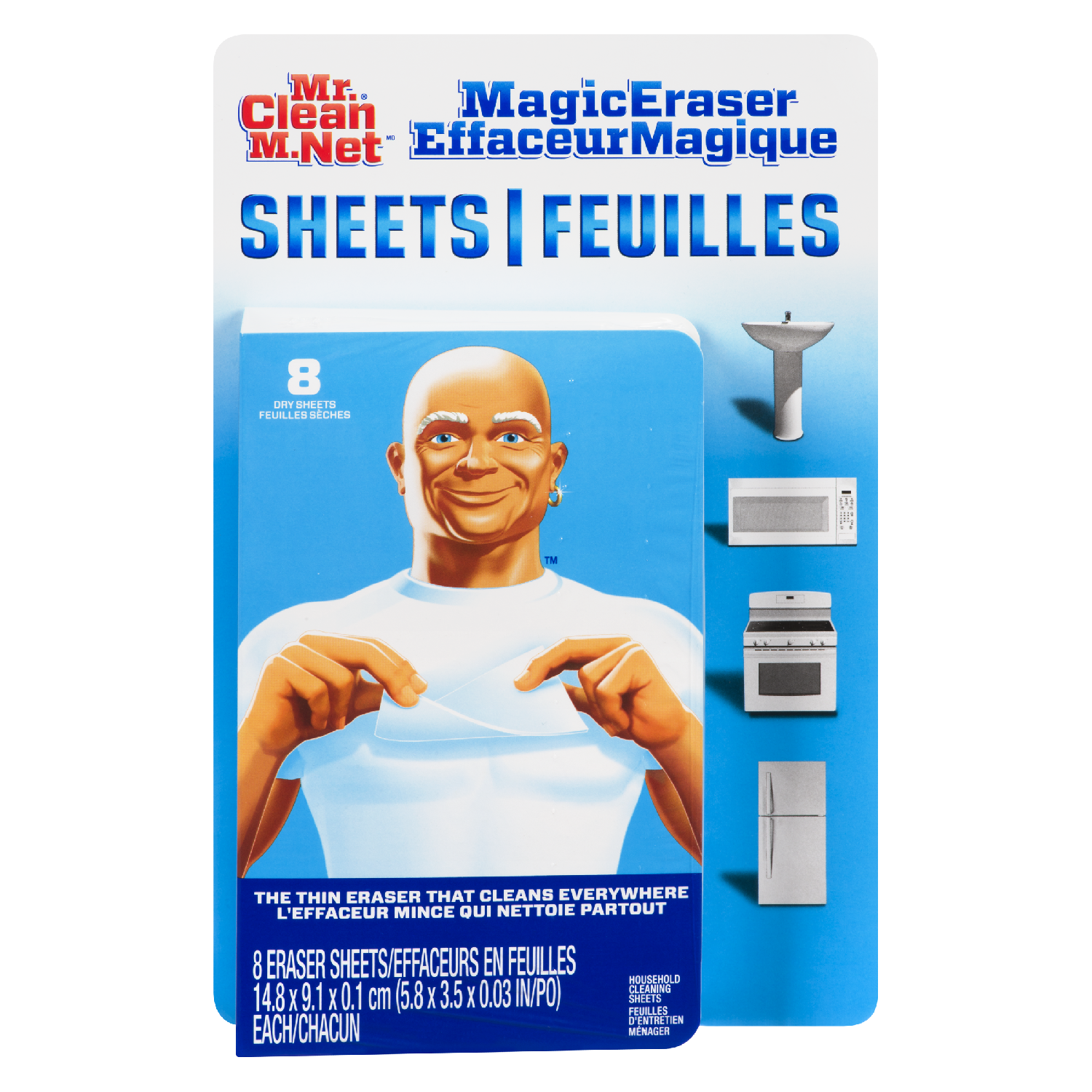
You probably have one under your sink right now. It’s that weird, crumbly white brick that seems to defy the laws of physics when it touches a scuff mark. But honestly, most people are using it all wrong. They treat it like a sponge. It’s not a sponge. Not even close.
If you understand how to use Mr Clean Magic Eraser properly, you can save yourself hours of scrubbing. If you don't? Well, you might end up sanding the finish right off your expensive dining table or leaving a dull, permanent "halo" on your matte-painted walls. It’s a tool of destruction just as much as it is a tool of cleaning.
The secret lies in what it actually is: melamine foam. Think of it as extremely fine, high-grit sandpaper. It doesn't use chemicals to lift dirt. It uses friction. It’s a microscopic abrasive that gets into the tiny pits and grooves of a surface and physically rips the stains out. This is why it works on things that soap and water can’t touch, like permanent markers or those gray streaks on your baseboards.
The First Rule of Magic Erasers: Water is Non-Negotiable
Stop using it dry. Seriously. I see people do this all the time, and it’s the fastest way to scratch your surfaces.
You need to soak it. Squeeze it. Make sure it’s damp but not dripping. The water acts as a lubricant. Without it, the melamine foam is too aggressive. It’s like trying to shave without shaving cream; things are going to get irritated. Once it’s wet, the foam structure becomes slightly more flexible, allowing it to glide over surfaces while the "micro-scrubbers" do their thing.
Don't go overboard with the pressure. You aren't trying to push the eraser through the wall. Light, circular motions are usually enough. Because the foam is abrasive, it wears down as you use it. It’s supposed to crumble. If it didn’t fall apart, it wouldn't be working. Think of it like a pencil eraser—it sacrifices itself to get the job done.
Where Most People Get Into Trouble
Let's talk about the "oops" moments. Because they happen a lot.
The biggest mistake is using a Magic Eraser on high-gloss paint or polished wood. Because it’s an abrasive, it will turn that shiny finish into a dull, matte mess in about four seconds. I once saw a friend try to get a water ring off a mahogany coffee table. The ring disappeared, sure, but so did the entire finish in a three-inch circle. It looked worse than the stain.
Never use it on:
- Your car’s exterior paint. You will ruin the clear coat.
- Stainless steel appliances (especially the "fingerprint-resistant" ones).
- Non-stick pans. You’ll end up eating the coating.
- Finished wood or antiques.
- Your skin. Yes, people try this to remove fake tan or ink. Don't. It’s basically a chemical-free sandpaper burn.
If you’re nervous about a surface, find a spot that nobody sees. Behind the couch. Inside the cabinet door. Give it a quick rub and wait for it to dry. If the light hits it and it looks duller than the surrounding area, put the eraser back in the cupboard and grab a microfiber cloth instead.
Surprising Ways to Use Mr Clean Magic Eraser
Beyond the obvious wall scuffs, there are some high-level uses that most people overlook.
Have you looked at your white sneakers lately? The rubber soles are a magnet for grass stains and oil. A damp Magic Eraser is arguably the best tool on the planet for restoring those soles to "fresh out of the box" white. It works better than bleach and it’s way faster than a toothbrush and soap.
Then there’s the kitchen.
Specifically, the glass stovetop. If you’ve ever boiled over a pot of pasta water and let it crust onto the burner, you know that stuff is basically concrete. A wet Magic Eraser can often lift that burnt-on residue without the need for harsh degreasers. Just make sure the stove is completely cold.
It's also a lifesaver for the "ring around the tub." Soap scum is basically a mixture of body oils and mineral deposits. It’s sticky. It’s gross. The abrasive nature of the melamine foam cuts through it like a hot knife through butter. You can clean an entire bathtub in about five minutes if you have a fresh eraser and a little elbow grease.
Why Does It Disintegrate So Fast?
It’s annoying, right? You start cleaning a door frame and by the time you’re done, you’re holding a tiny, shredded nub.
This is actually a feature, not a bug. Procter & Gamble (the folks behind Mr. Clean) designed the foam to be friable. If the foam were tougher, it would be too harsh on your surfaces. The crumbling is the foam breaking away as it gets clogged with the dirt it’s removing.
To make them last longer, I usually cut them in half or even thirds. You don't need the whole block for a small scuff on the wall. Using a smaller piece gives you more control and prevents you from wasting the entire sponge on one messy corner.
The Science of Melamine
It’s worth noting that there are no "added" cleaning chemicals in the original version. The "magic" is just the material. When melamine resin is cured into foam, its microstructure becomes almost as hard as glass, but because it’s a foam, it remains open-celled and flexible.
When you rub it against a surface, those glass-hard edges scrape away the dirt at a microscopic level. It’s why it’s so effective on textured surfaces where a flat cloth just slides over the top of the grime. The foam reaches into the "valleys" of the texture.
Keeping Your Home Safe
Even though there are no liquid chemicals involved, you still want to rinse surfaces after using a Magic Eraser, especially in the kitchen. The foam leaves behind tiny particles of melamine as it crumbles. You don't want those getting into your food.
Also, keep them away from pets and kids. They look like marshmallows or sponges, but if ingested, they can cause serious internal blockages or irritation. Store them up high with your other cleaning supplies.
Actionable Steps for Your Next Clean
- Cut the eraser into four pieces before you start. It’s more economical and easier to handle.
- Saturate with water and squeeze out the excess. Never use it bone-dry.
- Test an inconspicuous area first. This is the most skipped step, and the one people regret most.
- Use light pressure. Let the abrasive structure do the work; don't try to muscle it.
- Wipe the area with a damp microfiber cloth after you’re done to pick up any leftover foam dust.
- Discard the nub once it becomes thin. If you keep using a paper-thin piece, your fingers will end up doing the scrubbing, which isn't effective.
By treating the Magic Eraser as a precision abrasive tool rather than a generic sponge, you’ll get better results and avoid the heartbreak of a ruined paint job. It’s the most powerful tool in the cleaning closet, provided you respect the grit.