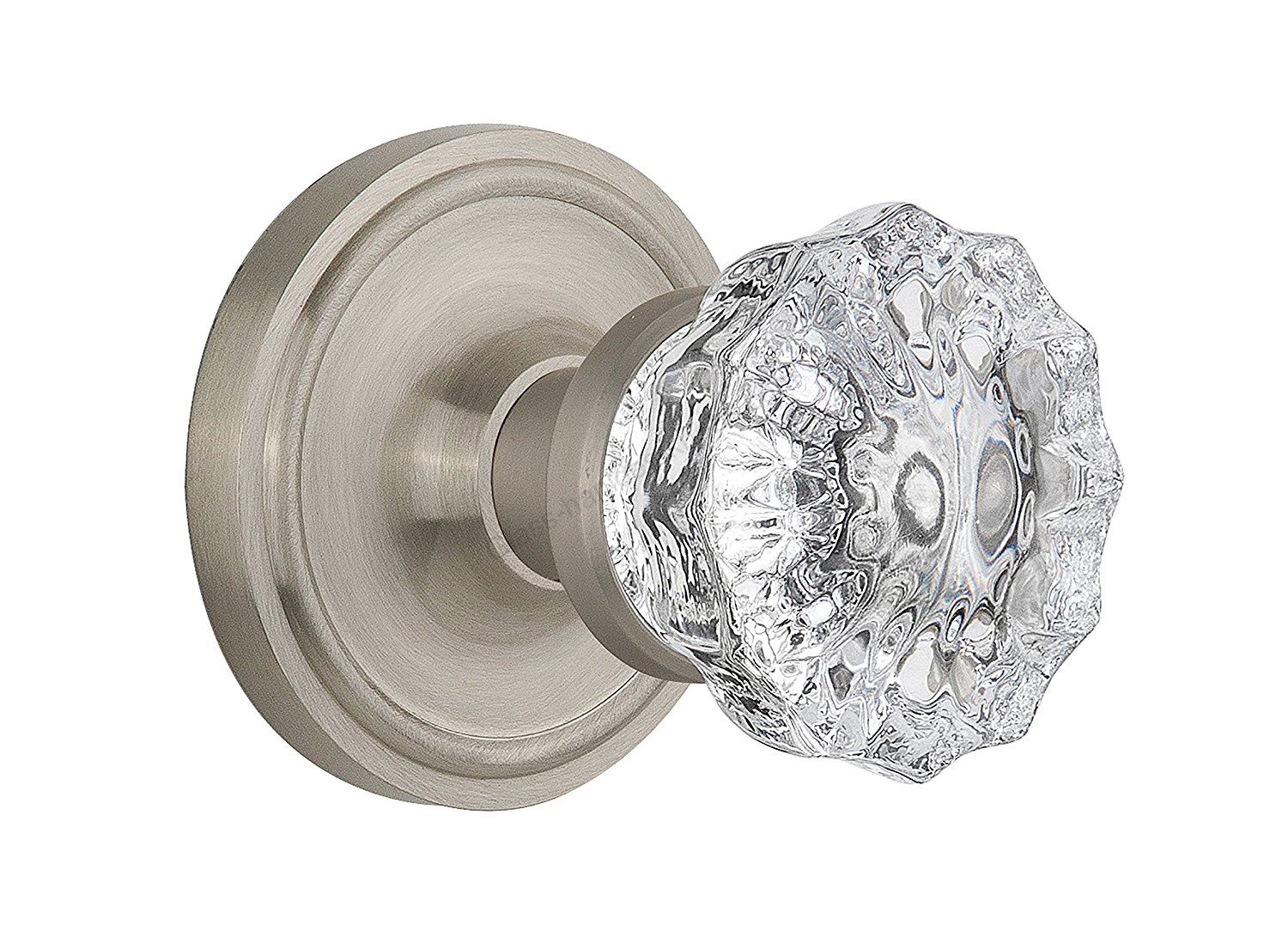
Getting locked out is a special kind of nightmare. You’re standing there, staring at a piece of hardware you’ve touched a thousand times, and suddenly it’s an impassable fortress. It usually happens at the worst possible moment—maybe you’ve got groceries melting on the porch or you’re late for a flight. Honestly, most people panic and immediately reach for a heavy object or call a locksmith who’s going to charge $200 just to show up. But knowing how to unlock a door knob without a key is one of those basic survival skills that actually comes in handy more often than you'd think.
It isn't just about being a "lock picker." It’s about understanding the mechanics of that little hunk of metal. Most interior doors, like those for bathrooms or bedrooms, use simple privacy locks that aren't exactly high-security. Exterior doors are a different beast entirely. We need to be clear: if you’re trying to get into a high-security deadbolt with a library card, you’re going to have a bad time. But for standard spring-latch knobs? There are ways.
The Reality of the Spring Latch
Before you start poking around, you’ve gotta know what you’re looking at. Most door knobs use a spring latch. This is the spring-loaded bolt that has one slanted side. When you close the door, that slant hits the strike plate on the door frame, pushes back into the door, and then snaps out into the hole. Because it’s spring-loaded, it’s vulnerable.
Compare this to a deadbolt. A deadbolt doesn’t have a slanted side and isn’t spring-loaded. You can’t "shim" a deadbolt. If you’re locked out of a front door with a deadbolt and no secondary access, your options are basically limited to picking the actual lock cylinder or drilling it out. But for that interior door where the cat locked itself in? That’s where the "credit card" trick actually lives up to the hype.
Why the Credit Card Method Usually Fails (And How to Fix It)
Everyone thinks they know this one. You’ve seen it in movies a hundred times. A spy slides a card in, the door pops open, and they’re in. In the real world, it’s clunky. You’ll probably ruin your card. Never use a card you actually need, like your driver's license or your primary debit card. Find an old loyalty card or a thick piece of flexible plastic from a milk jug.
The secret is the angle. You aren't just shoving the card straight in. You need to find the "sweet spot" where the card hits the slanted side of the latch bolt. If the slant is facing away from you, this method is almost impossible without a specialized tool like a "shovit." But if the slant is facing you—which it usually is if the door opens away from you—you’ve got a chance.
Wiggle the card. Push it in hard between the door and the frame right where the latch is. You want to tilt the card toward the knob and then lean your weight against the door. The pressure helps the latch retract. It’s a game of millimeters. Sometimes, you have to jiggle the handle while you do it to relieve some of the friction on the latch. If the door frame has a "stop" (that piece of wood trim that prevents the door from swinging through), you’ll have to bend the card around it. It’s frustrating. You’ll sweat. But when that latch finally clicks back, it feels like magic.
Dealing With Privacy Locks (The Tiny Hole)
Interior doors are usually "privacy sets." Look at the center of the knob. Is there a tiny little hole? Or maybe a small slot? These are designed for emergency access because, let’s face it, kids lock themselves in bathrooms all the time.
If it’s a hole, you need a heavy-duty paperclip. Straighten it out. Insert it into the hole and push straight back. You aren't "picking" anything; you’re literally just pushing a release button or a small lever inside the mechanism. You’ll feel a slight resistance, a "springy" push-back, and then—click. The door is open.
If it’s a slot, a small flathead screwdriver is your best friend. Even a butter knife or a thumbnail can work if the slot is wide enough. Turn it like you would a key. These are usually "turn-button" or "push-button" locks. They are incredibly simple by design because manufacturers know parents need to get into a bathroom quickly if there's an emergency.
The Bobby Pin Method: More Than Just a Cliche
If you’re dealing with a keyed entry knob and you don’t have a key, you’re looking at lock picking. This is where things get technical. Most household locks are "pin tumbler" locks. Inside, there are a series of small pins of varying lengths. To turn the lock, all those pins need to be pushed up to a specific height called the "shear line."
- Step One: Create a tension wrench. Bend a bobby pin into an "L" shape. This goes into the bottom of the keyway. You apply a tiny—and I mean tiny—amount of rotational pressure in the direction the key would turn.
- Step Two: Create a pick. Take a second bobby pin and bend the tip up slightly.
- Step Three: Feel the pins. Slide your pick into the top of the keyway and feel for the pins. They should feel springy. If one feels stiff or "bound up," that’s the one you need to lift.
As you apply tension with your first pin, you lift the bound pins one by one. When a pin reaches the shear line, the tension wrench will allow the plug to rotate just a fraction of a millimeter. You keep going until they’re all set. It takes practice. Professionals spend years mastering the "feel" of different security pins like spools or serrated pins. Most cheap Kwikset or Schlage entry knobs don't have these, making them relatively "easy" to rake open, but don't expect it to happen in five seconds like on TV.
When to Stop Before You Break Something
There is a point of no return. If you’ve been poking at a lock for thirty minutes and you’re starting to see metal shavings, stop. You are going to ruin the lock cylinder. Once the internal pins are deformed or the spring is crushed, even the original key won't work anymore. Now you’ve turned a "locked out" problem into a "replace the entire hardware" problem.
Also, be careful with the "Houdini" methods you see on social media. People love showing how to unlock a door with a soda can or a zip tie. While some of these "shimming" techniques work on padlocks (specifically cheap Master Locks), they rarely work on a properly installed deadlatch. A deadlatch is that tiny little extra "half-circle" pin next to the main latch. If your door is installed correctly, that little pin stays depressed when the door is closed, which deadlocks the main latch so it cannot be shimmed with a credit card. If your door has this and it's working right, stop trying to use plastic. You're just wasting time.
Removing the Hinges: The Backdoor Strategy
If the hinges are on your side of the door, you've hit the jackpot. This is common on doors that swing outward.
- Get a flathead screwdriver and a hammer.
- Place the screwdriver at the bottom of the hinge pin.
- Tap it upward until the pin pops out.
- Do this for all three hinges.
- Pull the door away from the frame from the hinge side.
It’s messy and the door is heavy, but it works every single time. It doesn't matter how expensive the lock is; if the hinges are gone, the door is coming off. Just make sure you have someone to help you hold the door so it doesn't fall and crack your floor or your toes.
Actionable Next Steps
If you find yourself frequently locked out or just want to be prepared, here is what you should actually do:
- Check your strike plate. If you can currently open your door with a credit card, your lock is insecure. Adjust the strike plate so the deadlatch (that little extra pin) isn't falling into the hole.
- Hide a "real" key. Electronic keypads are the best way to avoid this entire headache. They've become incredibly reliable and many now link to your phone.
- Buy a basic lock pick set. If you're a hobbyist, learning how a pin tumbler works is fascinating. It turns a stressful lockout into a 30-second puzzle.
- Stash a "paperclip tool" on top of the door frame of your bathroom or laundry room. You’ll thank yourself the next time a toddler pushes the button and slams the door shut.
Knowing how to handle these situations is about patience and mechanical sympathy. Most locks aren't actually that strong; they're just deterrents. Once you understand the physics of the latch and the pins, the door stops being a barrier and starts being a puzzle you can solve.