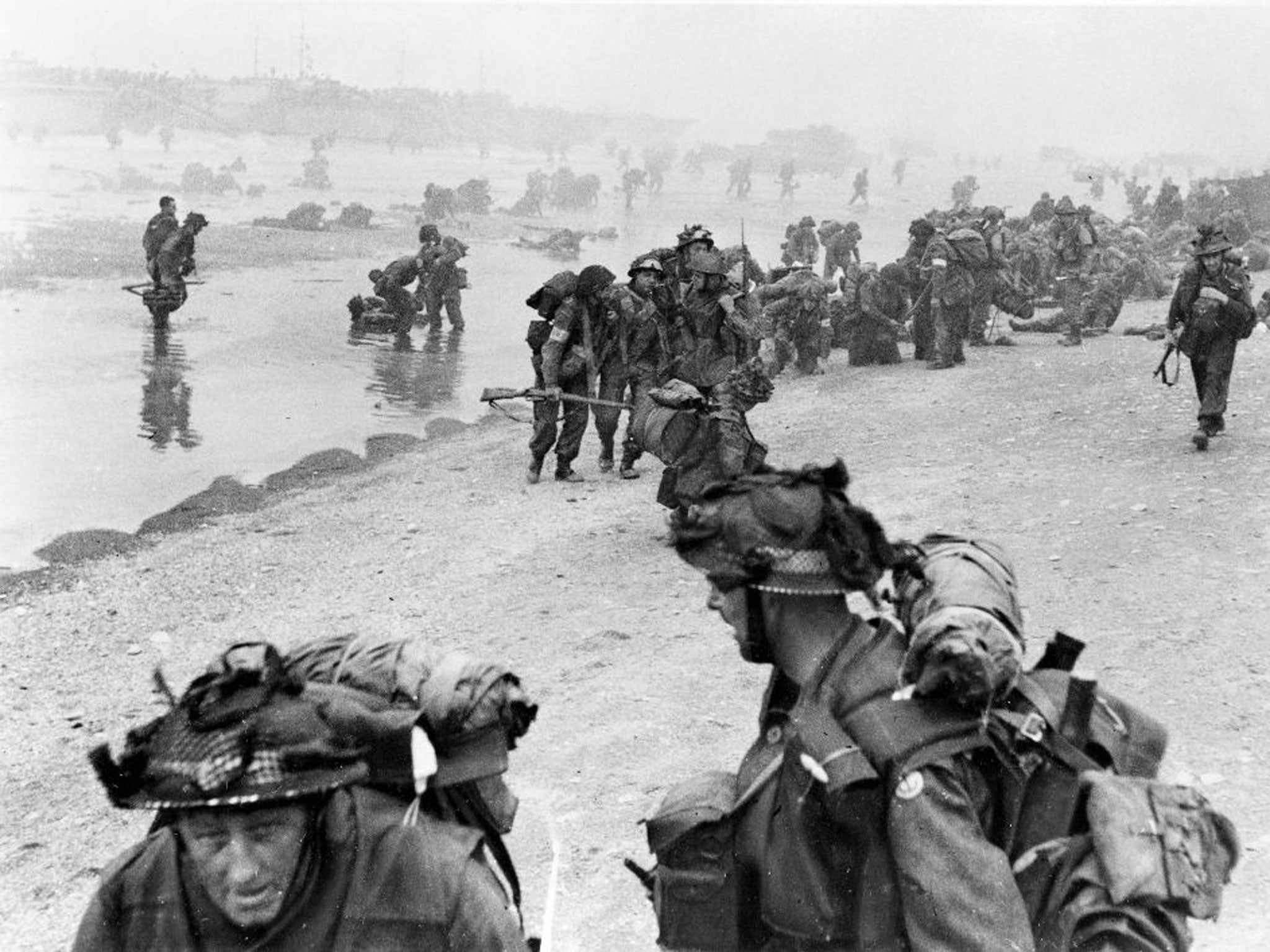
It was 6:30 AM on June 6, 1944. Cold water slapped against the sides of Higgins boats. Thousands of young men, most not even old enough to buy a beer today, stared at the gray bluffs of Normandy. They were about to change the world.
But that was over 80 years ago. Time is a brutal, unstoppable thief.
If you're looking for a hard number on how many D-Day veterans are still alive, the truth is a bit messy and honestly, a little heartbreaking. There isn't a giant digital ticker in Washington D.C. that counts down every time a hero passes away. However, we can look at the data from the U.S. Department of Veterans Affairs and the National WWII Museum to get a very clear, if sobering, picture of where we stand in 2026.
The shrinking ranks of the Normandy survivors
Let’s talk numbers. Out of the 16.4 million Americans who served in World War II, the VA estimates that as of early 2026, roughly 30,000 to 40,000 are still with us. That’s it. Less than 0.3% of the total force.
When you narrow that down specifically to D-Day—the men who actually set foot on those beaches or dropped from the sky into the dark French hedgerows—the number gets much, much smaller.
Experts and historians, like those at the Best Defense Foundation, suggest there are likely fewer than 1,000 D-Day veterans left worldwide.
Think about that.
One thousand people holding the first-hand memory of the day that broke the back of the Nazi empire. Just a few years ago, in 2024, nearly 60 veterans were able to make the trip back to France for the 80th anniversary. By the 2025 commemorations, that number had dropped significantly, with only about two dozen healthy enough to fly across the Atlantic.
The youngest D-Day veterans today are 98, maybe 99 years old. Most are well over 100. Biology is simply doing what it does.
Why is it so hard to get an exact count?
You'd think we'd have a master list. We don't.
Basically, the VA tracks veterans who receive benefits, but not every 19-year-old who stormed Omaha Beach stayed in the system for the next eight decades. Some went home, got jobs, never asked for a dime, and lived quiet lives. Privacy laws also make it kinda difficult for government agencies to just hand over a spreadsheet of names to historians.
Then you have the "international" factor. D-Day wasn't just an American show.
- The British: Estimates from the Royal British Legion suggest under 5,000 total WWII veterans remain in the UK, with D-Day survivors making up a tiny fraction of that.
- The Canadians: Veterans Affairs Canada reported about 25,000 WWII vets were alive a couple of years ago, but that number is plummeting.
- The French Resistance: Almost all the original "Maquis" fighters who aided the landings are gone.
Real faces, real stories
It isn't just about the stats. It's about guys like Reynolds Tomter.
He’s a name you might have seen in the news recently. A 108-year-old Merchant Marine veteran from Wisconsin who actually made it back to Normandy for the 80th anniversary. He was a baker and a back-up gunner. He describes the trip across the Atlantic as "white-knuckle" because of the U-boats. When he went back to France recently, people didn't just clap; they looked him in the eye and said "thank you" like they meant it.
Then there’s Les Schrenk, a former POW who became fast friends with Tomter. These men are living libraries. When they go, the books don't just close; they disappear.
We are currently losing about 100 to 130 WWII veterans every single day. By the time 2030 rolls around, the VA projects we may be down to fewer than 8,000 WWII veterans total. The "D-Day survivor" will, within our lifetime, become a figure of the past, much like the last Civil War veterans did in the 1950s.
What most people get wrong about "The Last Veteran"
There’s this obsession with finding the "last one."
People did it with World War I. Florence Green was the last verified WWI veteran, passing in 2012. But focusing on the "last" one sort of misses the point of the collective effort. D-Day wasn't a solo mission. It was a massive, clunky, terrifying piece of machinery made of millions of human parts.
When we ask how many D-Day veterans are still alive, we’re usually really asking: "How much time do we have left to say thank you?"
The answer is: Not much.
What you can actually do right now
If you care about this history, don't just look at the numbers and feel sad. Do something.
- Record the stories. If you have a relative who served—even if they weren't on the beaches—get a voice recorder app on your phone. Sit them down. Ask about the food, the smell of the ship, the fear. Don't wait for "next Thanksgiving."
- Support the Honor Flight Network. This is a non-profit that flies veterans to Washington D.C. to see their memorials for free. They are pivoting more toward Korean and Vietnam War vets now, but WWII vets are still the top priority.
- Visit the National WWII Museum. Based in New Orleans, they have been aggressively digitizing oral histories. They are the ones ensuring that when the last veteran passes, their voice stays in the room.
The "Greatest Generation" is moving from living memory into the history books. It’s happening right now, this morning, while you’re reading this. We can't stop the clock, but we can sure as hell make sure we don't forget what they did when the clock was at zero hour.