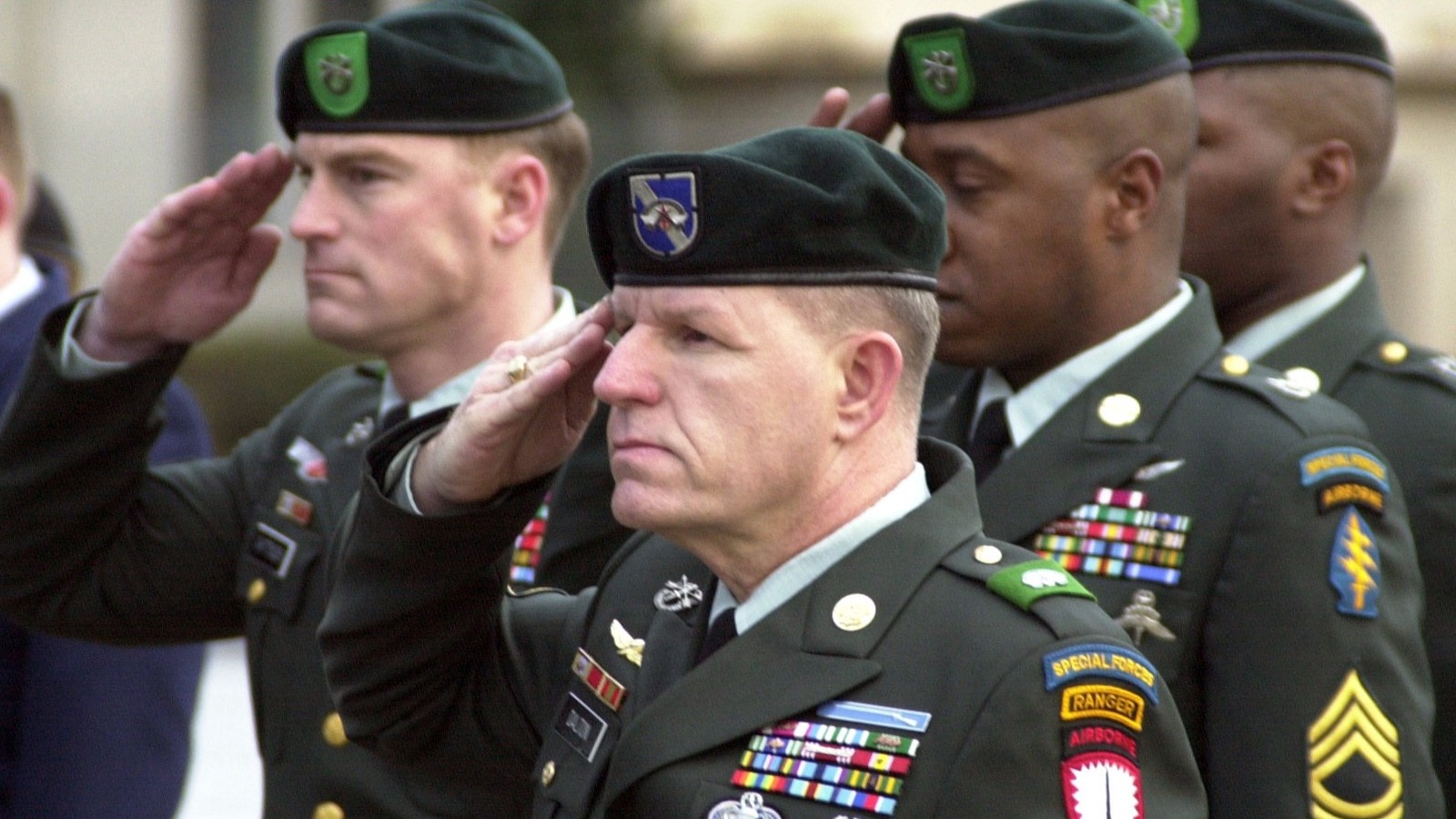
You've probably seen the movies. A handful of guys in beards and dusty flannels dropping into a remote valley to save the day. It’s a cool image, but it leaves most people wondering about the actual scale of the force. Honestly, if you try to look up how many active green berets are there, you’ll run into a wall of military jargon and "authorized strength" charts that make your head spin.
The short answer? It is a tiny, tiny fraction of the U.S. Army.
Right now, in early 2026, there are roughly 7,000 to 7,500 qualified Green Berets on active duty. Now, don't get that confused with the total size of the Special Forces Groups. If you count the mechanics, the intel analysts, and the support staff who keep the lights on, the "Special Forces" community is much bigger—closer to 22,000 people. But the guys actually wearing the Long Tab? They’re a rare breed.
Breaking Down the Active Duty Numbers
The Army doesn't just keep these guys in one big pile at Fort Liberty. They’re split into five active-duty Special Forces Groups. Each group has a specific part of the world they "own."
- 1st Group: Focused on the Indo-Pacific.
- 3rd Group: They handle sub-Saharan Africa.
- 5th Group: The Middle East experts.
- 7th Group: Central and South America.
- 10th Group: Europe and the 1st Battalion is actually based in Germany.
Basically, each group has about 1,100 actual Green Berets. When you do the math across the five groups, plus the instructors at the schoolhouse and the guys at various headquarters, you land on that 7,000-ish number.
It’s important to remember that the "Green Beret" isn't just a hat; it’s a job description. To be counted in that number, you have to be a graduate of the Special Forces Qualification Course (SFQC). You’ve gotta have that 18-series MOS (Military Occupational Specialty). If you’re a radio repairman assigned to a Special Forces Group, you’re essential, but you aren't a Green Beret.
The 12-Man Reality: The ODA
When we talk about how many active green berets are there, we’re really talking about the ODA—the Operational Detachment Alpha. This is the "A-Team."
Every ODA is supposed to have 12 men. In reality, because of injuries, schools, or guys moving to different assignments, a team might only have 9 or 10 available at any given time. Each guy is a specialist. You have two medics, two weapons guys, two engineers, two comms experts, an intel sergeant, an operations sergeant, a warrant officer, and a captain.
The math is pretty tight. There are roughly 72 ODAs per Special Forces Group. With five active groups, that’s about 360 teams. When you think about the fact that these 360 teams are responsible for the entire world, you realize how thin the "Quiet Professionals" are actually spread.
Why the Numbers Shift
The number of active Green Berets isn't a static stat. It fluctuates. Recruitment has been a massive challenge for the entire military lately. While 2025 saw a bit of a "rebound" in general Army recruiting, the pipeline for Special Forces is notoriously brutal.
You might start a selection class with 400 guys and only see 50 of them make it to the end. Some years, the "production" of new Green Berets barely keeps up with the number of guys retiring or "aging out" of the teams. Special Forces is a young man’s game, but it requires an old man’s wisdom. Finding that balance is tough.
The National Guard Factor
We can't talk about active numbers without mentioning the "Part-Time" Berets. There are two National Guard Special Forces Groups: the 19th and the 20th.
They add about another 1,100 to 1,500 qualified operators to the total pool. While they aren't "active duty" in the traditional sense, these guys are constantly being activated for missions. Honestly, in places like South America or the Pacific, you might find a National Guard team doing the exact same work as the active-duty guys.
The Mission Has Changed
A few years ago, everyone was focused on "Direct Action"—kicking down doors in Iraq and Afghanistan. Today, the focus has shifted back to "Unconventional Warfare" and "Foreign Internal Defense."
This means the 7,000 active Green Berets are spending more time teaching partner nations how to defend themselves. It’s less about the "Rambo" stuff and more about being a teacher, a diplomat, and a linguist. That’s why the number stays small. You can't mass-produce people who can speak fluent Arabic or Tagalog while also being able to call in an airstrike and perform field surgery.
What This Means for You
If you're looking at these numbers because you're thinking about joining, or just because you’re a fan of military history, the takeaway is the same: Quality over quantity. The U.S. has over 445,000 active-duty soldiers, but only about 1.6% of them are Green Berets.
If you want to keep track of these numbers or understand the force better, here are a few things you can do:
- Follow USASOC updates: The U.S. Army Special Operations Command (USASOC) regularly releases "fact sheets" that, while dry, give you the most accurate authorized strength numbers.
- Look at the Budget: The annual NDAA (National Defense Authorization Act) usually spells out exactly how many "slots" the Army is allowed to fund for Special Forces.
- Check the "18X" Program: If you see the Army ramping up 18X (direct enlistment) contracts, it usually means the active-duty numbers are dipping below that 7,000 mark and they’re desperate for new blood.
The number of active Green Berets will likely stay around this level for the foreseeable future. The Army has learned the hard way that you can't just "make more" without breaking the very thing that makes them special.
To stay truly informed on the status of the force, keep an eye on official Department of the Army personnel reports and the annual posture statements from the Commander of USSOCOM. These documents provide the most granular look at the personnel shifts between active and reserve components.