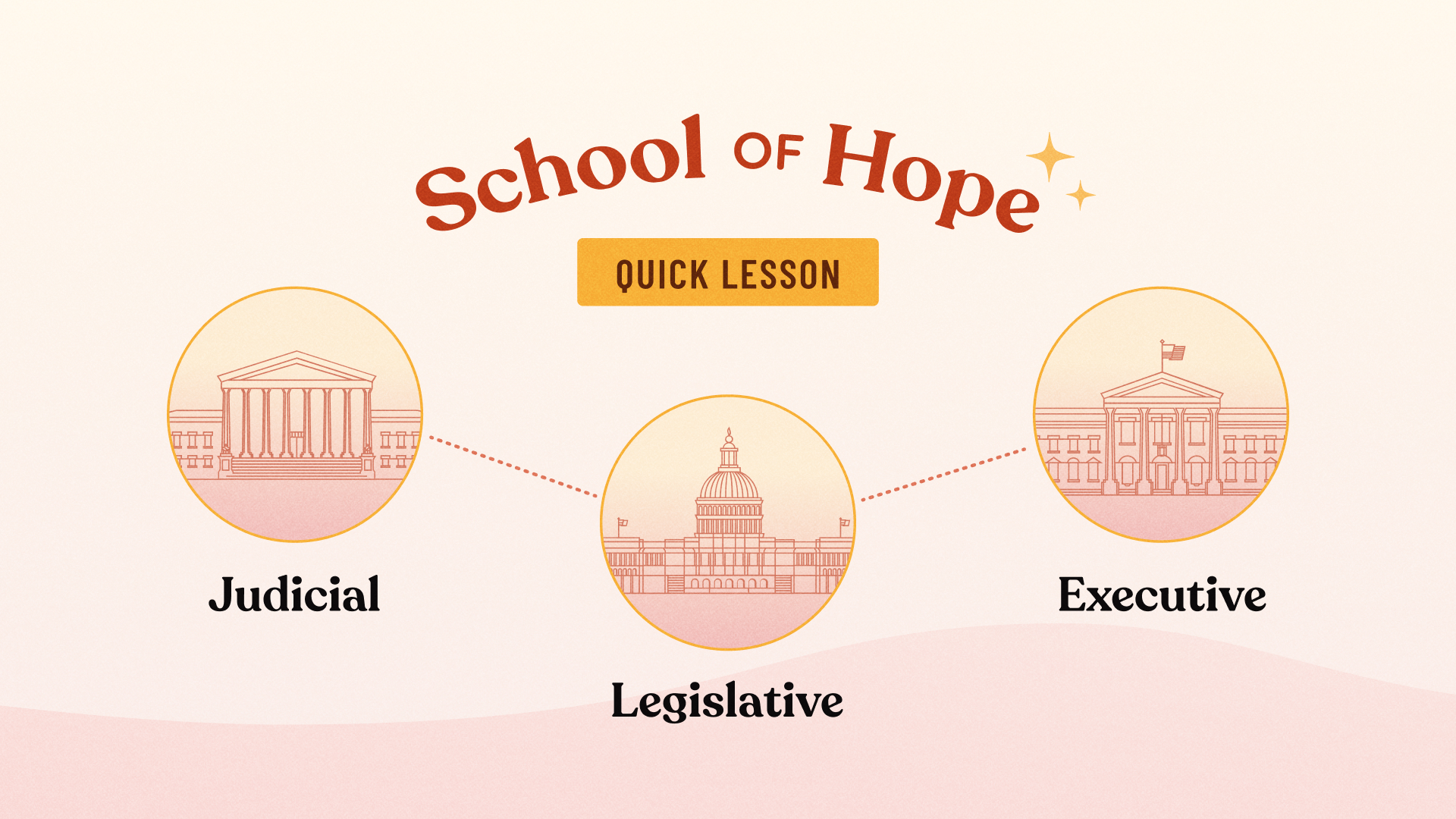
You hear it every election cycle. People panic. Or they celebrate. They talk about a "clean sweep" as if the winning party just grabbed the keys to a kingdom where they can pass any law they want without anyone saying no. But if you’re asking has one party ever controlled all three branches, you’re actually touching on a bit of a constitutional misunderstanding.
Strictly speaking? No. It has never happened.
That might sound like a technicality, but it’s a big one. In the United States, we have the Legislative, the Executive, and the Judicial branches. While a single party can—and often does—win the White House and both houses of Congress, the Judicial branch is designed to be non-partisan. Judges aren't elected on a party ticket. They don't run as Democrats or Republicans. Of course, we all know that presidents appoint judges who share their legal philosophy, but that’s not the same as "controlling" the branch in a political sense.
The Supreme Court operates on its own timeline. Justices serve for life. A party might win the "political" branches (the presidency and Congress) today, but they could be facing a Supreme Court dominated by appointees from a president who served thirty years ago.
The "Political" Trifecta: When Two Out of Three Is Plenty
When people ask this question, they usually mean the "political" branches. They want to know if one party has ever held the Presidency, the House of Representatives, and the Senate all at once.
This happens way more often than you’d think.
In fact, for the first half of the 20th century, it was almost the norm. Between 1900 and 1954, one party held this triple-threat power about 75% of the time. It’s only in our modern, hyper-polarized era that "divided government" became the standard expectation.
Look at the New Deal era. Franklin D. Roosevelt didn't just have a majority; he had a landslide. In 1936, Democrats held 76 out of 96 Senate seats. Imagine that today. It’s basically unthinkable. Because he had such overwhelming control of the legislative and executive arms, he could reshape the American economy in ways that still affect us today. But—and this is a huge "but"—he still ran into a wall with the Judicial branch. The Supreme Court kept striking down his programs, leading to his infamous (and failed) "court-packing" plan.
Even with "control," he didn't really have control.
Recent Eras of Single-Party Power
You don't have to go back to the Great Depression to find examples of this.
- The Obama Years (2009–2011): For a brief two-year window, Democrats held the White House and significant majorities in both the House and Senate. This is how the Affordable Care Act (Obamacare) got passed. Without that unified control, a bill that massive likely never survives.
- The Trump Years (2017–2019): Republicans held all the political levers during the first two years of Donald Trump's presidency. This paved the way for the Tax Cuts and Jobs Act of 2017.
- The Biden Years (2021–2023): Democrats again held a unified government, though the Senate was split 50-50, relying on the Vice President as the tie-breaker. This allowed for the passage of the Inflation Reduction Act.
It feels like total power. It isn't.
The Senate filibuster is the Great Wall of American politics. Unless a party has 60 seats in the Senate, the "minority" party can basically stop almost any major piece of legislation in its tracks. So, even when we answer "yes" to the question of has one party ever controlled all three branches (in the political sense), the reality is usually a lot messier. They have the seats, but they don't always have the "clout" to move the needle without a fight.
Why the Judicial Branch is the "Wild Card"
Let's talk about the courts again because that’s where the "three branches" idea usually falls apart.
If a party wins the House, Senate, and White House, they have a "trifecta." But the Supreme Court is a legacy institution.
Take the current landscape. Even when Democrats held the political trifecta under Biden, the Supreme Court had a solid 6-3 conservative majority. That majority was built over decades of appointments from Reagan, Bush 41, Bush 43, and Trump.
So, did one party control all three branches? Absolutely not. In fact, the Judicial branch acted as a massive brake on the other two. We saw this with rulings on student loan forgiveness and environmental regulations. The "controlled" branches wanted to go one way; the "uncontrolled" branch said, "No."
The only way a party could truly be said to "control" the Judicial branch is if they held power long enough to replace a majority of the justices with like-minded individuals. Even then, justices have a weird habit of becoming independent once they have life tenure. Earl Warren was appointed by a conservative Republican (Eisenhower) and ended up leading one of the most liberal, activist courts in history. Eisenhower later called that appointment "the biggest damn fool mistake" he ever made.
The Myth of Absolute Control
Power in D.C. is fleeting.
Usually, when a party gets that "trifecta," they get about 18 months to get things done. After that, the "midterm effect" kicks in. Voters get nervous about one party having too much power and they almost always swing the hammer the other direction, taking away the House or the Senate.
Since the end of World War II, it has been incredibly rare for a party to hold a trifecta for more than four years. Voters in the U.S. seem to have a natural instinct for divided government. We say we want efficiency, but our voting patterns suggest we actually prefer it when the two sides have to argue.
How to Track Power Shifts Yourself
If you’re trying to figure out who actually holds the cards right now, don't just look at the White House. You have to look at the "choke points."
- Check the Senate Margin: Is it a "simple majority" or a "filibuster-proof majority" (60 seats)? If it's under 60, the party in power is basically stuck using a process called "reconciliation" to pass anything, which only works for budget-related items.
- Look at the Judicial Vacancies: The real "control" of the third branch happens slowly. Watch the Administrative Office of the U.S. Courts to see how many judges are being confirmed.
- Watch the "Blue Dogs" and "Mavericks": Party control is only as strong as the most moderate member of that party. In a 51-49 Senate, one person (like a Joe Manchin or a John McCain in years past) effectively holds more power than the President.
The Bottom Line on Unified Government
So, has one party ever controlled all three branches?
If you mean the Presidency, the House, and the Senate: Yes, many times.
If you mean the Presidency, the House, the Senate, and the Supreme Court: Technically no, and practically, almost never.
The U.S. system was built by people who were terrified of "factions" (what we call parties) having total control. They baked friction into the recipe. They wanted the branches to fight. They wanted the process to be slow, frustrating, and difficult.
When you see one party winning big, remember that the Judicial branch is a slow-moving ocean liner that doesn't turn just because an election happened. And remember that the Senate's rules are designed to make "total control" feel a lot more like a constant, grinding negotiation.
Actionable Next Steps:
- Identify the current "Trifecta" status: Check the current makeup of the 119th Congress to see if any party holds both chambers alongside the Presidency.
- Review the Filibuster: Understand that "control" of the Senate is often an illusion without 60 votes; research the "cloture" rule to see why.
- Monitor Judicial Appointments: Follow the Senate Judiciary Committee's schedule to see how the "third branch" is being shaped for the next generation, regardless of who won the last election.