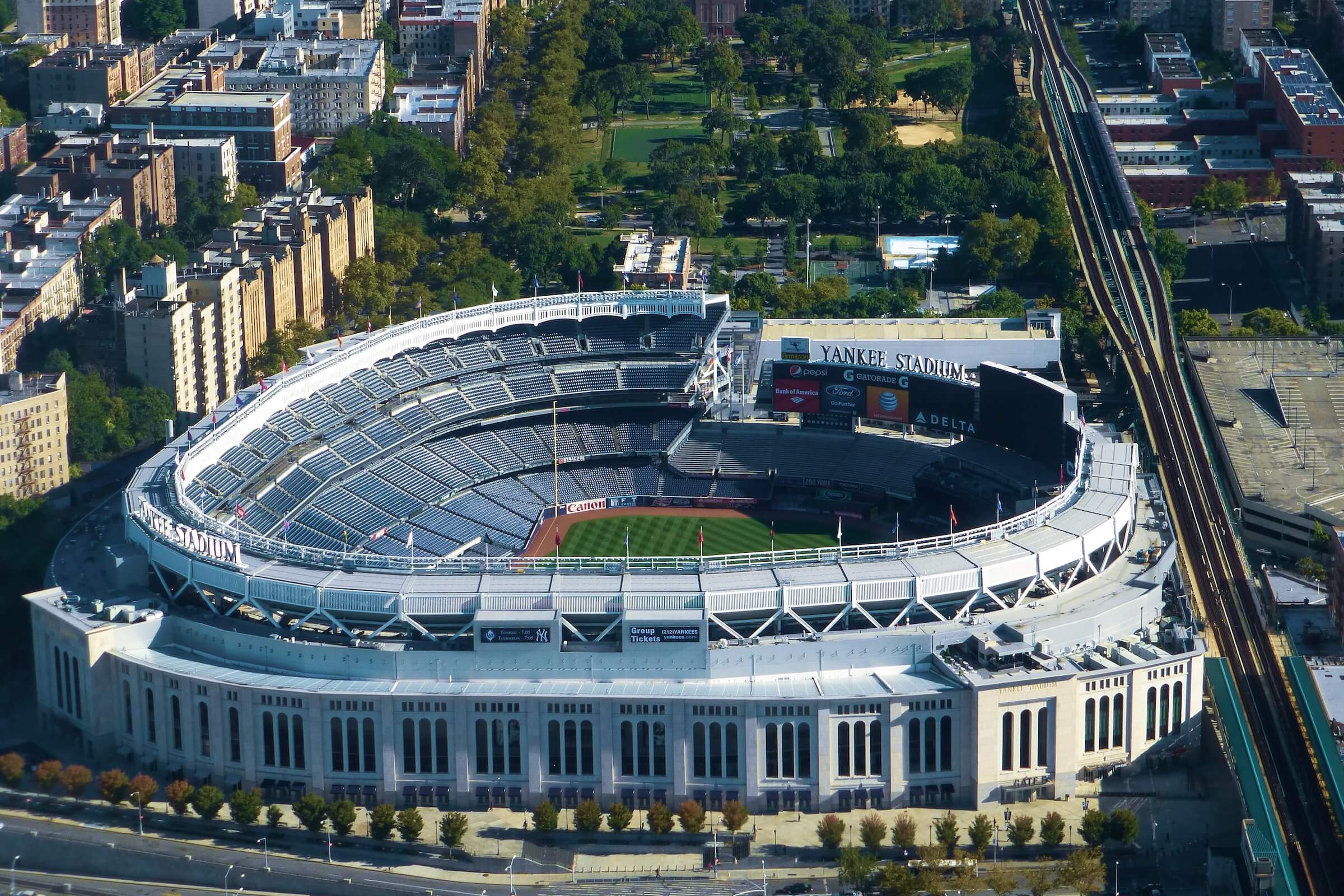
You're standing on a crowded platform in Midtown, the air is humid, and the rhythmic clack of the tracks is vibrating through your shoes. You’ve got a choice. Do you take the 4 train or the D? If you're heading to the Bronx, figuring out the best trains to Yankee Stadium is basically a rite of passage for New Yorkers and tourists alike. Most people just blindly follow the crowd, but there is a science to avoiding the sardine-can experience when the Red Sox are in town.
Honestly, the subway is the heartbeat of the stadium experience. It’s loud. It’s gritty. It's the only way to travel if you don't want to spend $50 on parking or sit in two hours of gridlock on the Major Deegan Expressway.
The Big Three: Which Line Should You Actually Take?
The Metropolitan Transportation Authority (MTA) funnels most of the stadium traffic through the 161st St-Yankee Stadium station. It’s an elevated station for the 4 train and an underground one for the B and D lines.
The 4 train is the classic. It runs along the Lexington Avenue Line, hitting the East Side of Manhattan. If you’re coming from Grand Central, this is your ride. It’s fast, but it’s almost always the most packed. You’ll be shoulder-to-shoulder with people in pinstripes before you even leave 42nd Street.
Then you have the D train. It’s the sleeper hit. Because the D runs express through much of Manhattan and the Bronx, it often feels like a smoother ride. It cuts through the West Side and hits the stadium from a different angle. The B train is there too, but keep in mind that the B only runs during weekdays. If it’s a Saturday afternoon game, don’t stand on the platform waiting for a B train that isn't coming. You'll just look like a rookie.
The Metro-North Secret Weapon
If you’re coming from Westchester, Connecticut, or even parts of the Upper East Side, the subway isn't your only option. The Metro-North Railroad has its own dedicated "Yankees–E. 153rd St" station.
It’s cleaner. There’s air conditioning that actually works. Most importantly, it’s a direct shot on the Hudson, Harlem, and New Haven lines during game days. The MTA runs "Game Day" specials. These are dedicated trains that skip the fluff and get you right to the gates. The walk from the Metro-North station to the stadium is about ten minutes, crossing over a pedestrian bridge that gives you a great view of the stadium's exterior. It's a vibe.
Trains to Yankee Stadium: Timing the Rush
You can’t just show up 20 minutes before first pitch. That’s how you miss the first two innings while stuck in a turnstile bottleneck.
The MTA usually ramps up service about two to three hours before the game starts. If you’re a real fan, you want to be on the trains to Yankee Stadium at least 90 minutes before the national anthem. This gives you time to clear security, grab a overpriced bucket of chicken sliders, and actually watch batting practice.
Post-game is where the real chaos happens.
The 161st St station becomes a sea of humanity. Here is a pro tip: don’t just run to the first train car you see. Walk further down the platform. People are lazy. They cluster at the entrances. If you walk to the very end of the platform, you’re much more likely to find a sliver of personal space.
Why the D Train Wins for West Siders
If you’re coming from the Upper West Side or Chelsea, the D is objectively superior. Why? Because the 4 train requires a transfer to the East Side, which is a nightmare during rush hour. The D train picks you up at Columbus Circle or 47th-50th Sts-Rockefeller Center and zips you north.
There’s also the "Express" factor. During peak hours, the D skips a lot of stops that the 4 train doesn't.
Hidden Logistics and Navigating the Station
The 161st St-Yankee Stadium complex is huge. It’s multi-level. If you take the 4 train, you’ll be on the upper level looking down at the street. If you take the B or D, you’re coming up from the basement.
The signage is actually pretty good, but the crowds can be disorienting. Follow the jerseys. Seriously. If you see five hundred people wearing Aaron Judge shirts, just go where they go.
Things to watch out for:
- Construction: The MTA loves weekend track work. Always check the MYmta app before you leave. There’s nothing worse than expecting a D train and finding out it’s being replaced by a shuttle bus.
- OMNY vs. MetroCard: Don't wait in line at the vending machines. Just tap your credit card or phone at the turnstile. It saves you ten minutes of frustration behind someone who doesn't know how to swipe a card.
- The "Special" Trains: Sometimes the MTA runs vintage "Train of Many Colors" cars for opening day or the playoffs. If you see one, hop on. It’s a piece of history.
What Most People Get Wrong About the Commute
People assume the train is dangerous or too dirty. It’s not. On game day, it’s essentially a rolling pep rally. You’ll hear "Let’s Go Yankees" chants starting at 14th Street.
Another misconception is that the subway is the only way. If you’re coming from Queens, taking the 7 train to Grand Central and then switching to the 4 is the move. But if you’re in Long Island City, you might actually find it faster to take a ferry to 34th Street and then grab the train.
Actually, let's talk about the 4 train's speed. It feels fast, but it makes a lot of stops in the Bronx before it hits 161st. The D train feels more like a bullet.
Actionable Tips for Your Next Trip
- Download the TrainTime App: This is for Metro-North specifically. You can buy your tickets on your phone. If you buy them on the train, the conductor will charge you a "step-up" fee that's basically a penalty for being unprepared.
- Check the "Last Train": If the game goes into extra innings, don't panic. The subway runs 24/7. However, the specialized Metro-North "Game Day" trains have a cutoff. Usually, they leave about 20 to 45 minutes after the final out. If you're staying for a 15-inning marathon, you might be taking the subway back to Grand Central.
- Use the 161st St - River Ave Exit: If you're on the 4 train, try to exit at the south end of the station. It puts you right across the street from the historic Babe Ruth Plaza.
- Avoid 149th St-Grand Concourse Transfer if Possible: It's a long, dingy tunnel walk. If you can stay on your original line, do it.
Taking the trains to Yankee Stadium is part of the New York experience. It’s loud, it’s a bit sweaty, and it’s perfectly efficient in its own chaotic way. Leave the car at home, tap your phone at the gate, and enjoy the ride through the boroughs.
Before you head out, double-check the MTA's "Planned Service Changes" website. There is nothing worse than a redirected train when you've got a first-pitch deadline. Grab your jersey, keep your head on a swivel, and get ready for the Bronx.
Practical Next Steps
- Check the Schedule: Visit the official MTA website or use the MYmta app to see if there are any service diversions on the 4 or D lines for your specific game date.
- Load Your Wallet: Ensure your digital wallet or OMNY-compatible card is ready to go to avoid the bottleneck at the ticket machines.
- Plan Your Buffer: Aim to arrive at the 161st St station at least 60 minutes before the scheduled start time to account for heavy pedestrian traffic outside the stadium.