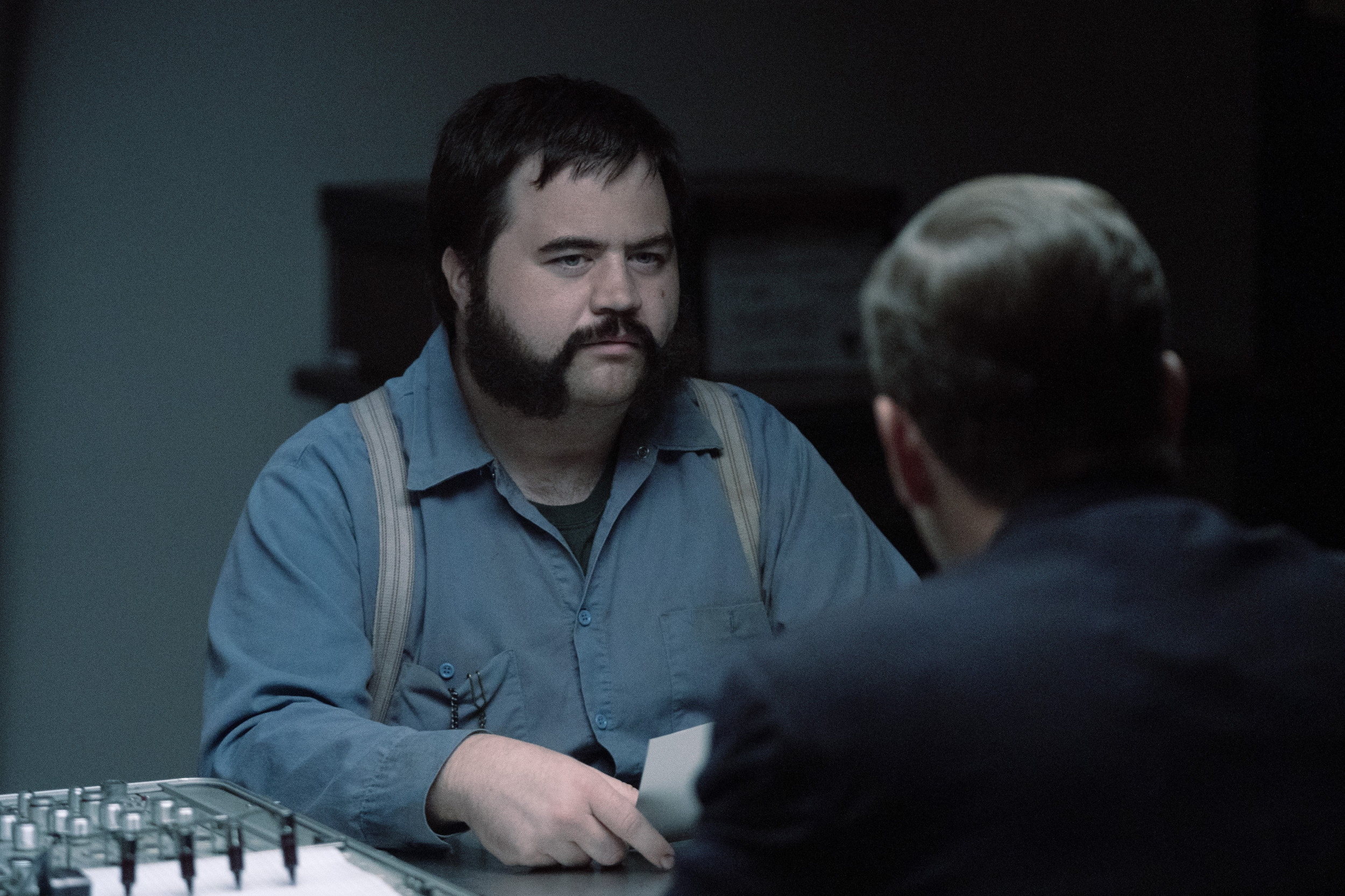
If you’ve watched the Apple TV+ hit Black Bird, you probably think you know the story of Larry Hall. You saw the sideburns. You saw the quiet, high-pitched voice. You saw the chilling way he talked about "dreams" that sounded suspiciously like murders. But the TV show, as good as it is, focuses heavily on the undercover mission of Jimmy Keene. It doesn't always show the weird, co-dependent, and ultimately tragic dynamic between the twins, Gary and Larry Hall.
Honestly, the real-life story is messier. It’s a story about a "dominant" twin and a "weak" twin, a father who made his kids dig graves in a cemetery, and a trail of missing women that stretches across the Midwest.
The Graveyard Beginnings in Wabash
The Hall twins were born on December 11, 1962, in Wabash, Indiana. From the very first second, there was a literal struggle for survival. Larry always claimed that Gary "fed on him" in the womb, depriving him of oxygen. Whether that's medically precise or just family lore, it set the stage for their entire lives. Gary was the "normal" one—outgoing, athletic, and eventually the one who tried to look out for his brother. Larry? Larry was different.
He had a low IQ. He struggled with a speech impediment and bedwetting well into his teens. He was the target of every bully in town.
Their father, Robert Hall, was the sexton at Falls Cemetery. This meant the boys didn't just play in the cemetery; they worked there. By age 12, Gary and Larry Hall were out there in the dirt, helping their father dig graves. Larry eventually admitted that being around dead bodies so young desensitized him. He even started robbing the graves, taking jewelry or trinkets from the coffins before they were covered.
Think about that for a second. While other kids were playing baseball or riding bikes, these two were standing in six-foot holes, surrounded by the reality of death every single day.
When the "Dreams" Became Reality
As they got older, the twins' paths diverged, but they stayed close. Gary tried to live a standard life. Larry, meanwhile, became obsessed with historical reenactments—Civil War and Revolutionary War battles. He’d drive his tan Dodge van all over the country, dressed in wool uniforms, carrying muskets.
It was the perfect cover.
Because Larry was traveling constantly, nobody thought twice about his van being in a specific town right when a girl went missing. But back home, Larry was telling Gary things. Strange things. He’d talk about these "dreams" he had. He’d describe hurting girls, but then he’d laugh it off and say it was just a nightmare.
Gary Hall, for a long time, wanted to believe his brother. He was his twin, after all. But the stories got more specific. The details got more gruesome. In 1993, 15-year-old Jessica Roach vanished from Georgetown, Illinois. When her body was found in an Indiana cornfield, the local investigator, Gary Miller (played by Greg Kinnear in the show), started looking at a weird guy in a van who had been stalking girls in the area.
That guy was Larry.
The Moment Gary Hall Flipped
This is where the story gets heavy. Gary Hall eventually realized that his brother wasn't just a "serial confessor" or a guy with a dark imagination. He was a monster.
Initially, when Larry was arrested for the kidnapping of Jessica Roach, Gary defended him. But as investigators started showing Gary the evidence—and as Larry’s own "fantasies" began to match up with cold cases across several states—the denial broke. Gary actually helped the police. He went into the interrogation room to talk to his brother. He tried to get Larry to tell the truth, not just for the sake of the law, but for the families of the missing girls.
It’s easy to look at the twins and see a "good one" and a "bad one," but Gary carried the weight of Larry’s crimes for years. He even admitted later that he suspected Larry might have been involved in the disappearance of Tricia Reitler, a 19-year-old student who vanished in 1993.
Why Larry Hall is Still a Mystery
Even though Larry Hall is currently serving life without parole at a federal prison in North Carolina, we still don't know the full count. He’s the ultimate "serial confessor." He has confessed to more than 35 murders. Then, he recants. Then, he confesses again.
The FBI believes the real number could be closer to 40 or 50.
The problem is the lack of bodies. Larry was a gravedigger. He knew how to hide things in the earth. He knew how to make sure something stayed buried. In the Black Bird series, the climax involves Jimmy Keene trying to get a map from Larry that shows where the bodies are buried. In real life, that map existed, but it was destroyed or lost before it could lead to any recoveries.
Actionable Insights: Lessons from the Hall Case
The saga of Gary and Larry Hall isn't just a true crime curiosity; it changed how the FBI looks at "nomadic" offenders.
- The Van Factor: Larry’s ability to move between states using his hobby (reenacting) as a cover is a classic example of how serial offenders exploit "blind spots" in local jurisdiction.
- The Power of Family: Gary Hall’s eventual cooperation shows that in many serial cases, the family holds the key. They see the "quirks" that neighbors miss.
- False Confession vs. Real Guilt: Larry’s case is studied because he mixes truth with lies so effectively. He uses "it was a dream" as a legal shield, a tactic that nearly worked during his appeals.
If you’re looking to dig deeper into the actual transcripts or the legal fallout of the Roach case, you can look up the Seventh Circuit Court of Appeals records (United States v. Hall). It’s a dry read, but it shows exactly how close Larry came to walking free on a technicality regarding his confessions.
To truly understand the Hall legacy, keep an eye on Midwestern cold cases from the 80s and early 90s. Every few years, a new identification is made through DNA that links back to the man in the tan van. The story of Gary and Larry Hall isn't over yet; there are still too many families waiting for their daughters to come home from the fields of Indiana and Illinois.