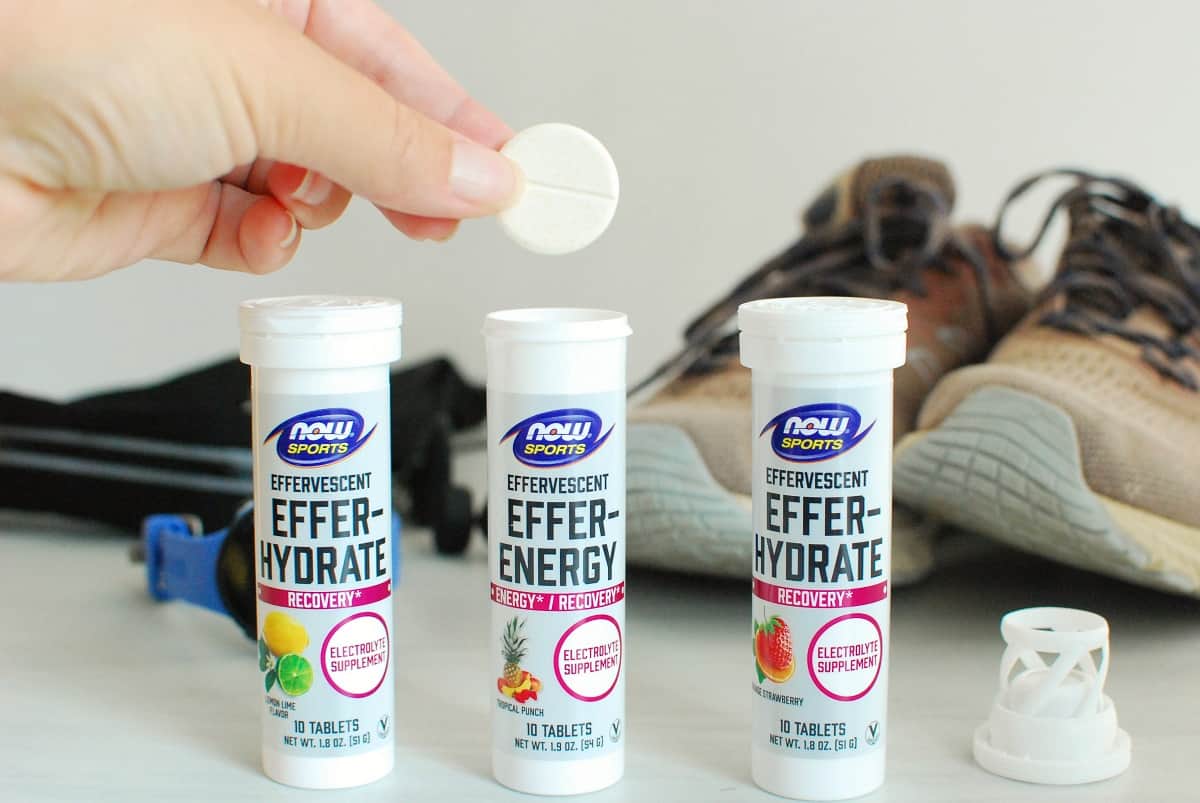
You’re five miles into a long run. The sun is aggressive. Your singlet is plastered to your chest, and suddenly, your calves start to twitch. It’s that familiar, creeping dread of a cramp. Most people reach for a neon-colored sports drink from a gas station and assume they’re fixed. But honestly? You might just be drinking salty sugar water that isn't doing what you think it is.
The world of electrolyte drinks for runners is surprisingly messy. We’ve been told for decades that "water isn't enough," which is true—sort of. If you’re jogging three miles in cool weather, water is perfectly fine. But when you start pushing into 90-minute efforts or high-intensity intervals, the chemistry of your blood changes. You aren't just losing fluid; you’re losing the electrical conductors that keep your muscles firing.
The big sodium lie
Most runners worry about potassium. They eat a banana and think they’re bulletproof. In reality, the primary electrolyte lost in sweat is sodium. By a landslide.
According to research published in the Journal of the International Society of Sports Nutrition, sweat sodium concentrations can vary wildly—from 200 mg to over 2,000 mg per liter of sweat. If you’re a "salty sweater" (you know who you are—you’re the one with white crust on your hat after a run), a standard Gatorade with its 270 mg of sodium isn't going to cut it. You’re essentially trying to put out a forest fire with a squirt gun.
This is where things get tricky. If you drink massive amounts of plain water without replacing sodium, you risk hyponatremia. This is a legitimate medical emergency where your blood sodium levels drop so low that your cells start to swell. It can be fatal. It's actually more common in back-of-the-pack marathoners who spend six hours on the course drinking water at every single station than it is in elite athletes.
Why osmolality actually matters for your stomach
Ever felt that "slosh" in your stomach? That heavy, nauseating feeling where the liquid just won't go down? That’s an osmolality issue.
Basically, your gut can only absorb fluids at a certain rate. If a drink is too concentrated with sugar (hypertonic), your body actually has to pull water out of your bloodstream and into your gut to dilute the drink before it can be absorbed. This dehydrates you faster. This is why many traditional sports drinks make runners feel bloated.
Expert-tier brands like Precision Fuel & Hydration or LMNT focus on higher sodium and lower sugar. They aim for a "hypotonic" or "isotonic" mix. These are absorbed much faster. It’s the difference between a liquid that sits in your stomach like a brick and one that actually enters your system to help your heart pump and your muscles contract.
Forget the "balanced" electrolyte profile
You see it on the labels all the time: "Balanced electrolytes with Magnesium, Calcium, and Potassium!"
It sounds great. It’s mostly marketing fluff for runners.
While you do lose those minerals, the amounts are negligible compared to sodium. If you’re taking a supplement that’s 10% of your daily magnesium but only has 100 mg of sodium, you’re prioritizing the wrong thing during the activity. Magnesium is great for recovery and sleep. During a run? Focus on the salt.
Dr. Sandra Fowkes Godek, a renowned expert in heat illness and hydration, has spent years tracking professional athletes. Her work often highlights that "prescriptive hydration"—meaning drinking based on your specific sweat rate rather than a generic guideline—is the only way to avoid performance decrements.
How to test your own sweat at home
You don't need a lab. Just do a "sweat test."
- Weigh yourself naked before a one-hour run.
- Run at your goal pace.
- Don't drink anything.
- Towel off and weigh yourself again.
Every pound lost is roughly 16 ounces of fluid. If you lost two pounds, you have a 32-ounce-per-hour sweat rate. Now, look at your clothes. Is there salt? If so, you need a high-sodium electrolyte drink for runners, likely in the 500-1000 mg range per liter.
The sugar debate: Fuel vs. Hydration
There is a massive trend right now toward sugar-free electrolytes. Brands like LMNT have built empires on this. And for a lot of people, it's great. If you’re out for a 45-minute easy jog, you don’t need the calories.
However, sugar (glucose) actually helps you hydrate faster. There’s a mechanism in your small intestine called the SGLT1 transporter. It essentially acts as a pump that grabs a molecule of sodium and a molecule of glucose and pulls them through the intestinal wall, bringing water along with them.
Without a little bit of sugar, hydration is slower.
If you’re racing, you want the sugar. If you’re just trying to stay hydrated during a hot workday or a short recovery run, skip it. Context is everything. Nuun tablets are a middle ground—they have a tiny bit of carbohydrate but are mostly about the minerals.
Flavor fatigue is a real performance killer
It’s easy to ignore, but if your drink tastes like chemical grapes, you won't drink it. Period.
By mile 18 of a marathon, your palate changes. Sweet things often become repulsive. This is why many ultra-runners switch to savory options or even plain water with salt pills (like SaltStick). When choosing electrolyte drinks for runners, consider how the flavor profile will sit with you when your heart rate is at 160 bpm and your stomach is sensitive.
I’ve seen runners DNF (Did Not Finish) simply because they couldn't stomach their hydration plan anymore. They got "flavor fatigue." The brain just says no more.
Natural vs. Synthetic: Does it matter?
Coconut water is often cited as nature’s sports drink. It’s high in potassium. That’s the problem. It’s actually quite low in sodium compared to what a runner needs. If you love the taste, you’ll need to add a pinch of sea salt to it to make it a functional electrolyte drink for runners.
Then you have the "clean" brands like Skratch Labs. They use real fruit for flavoring. Honestly, the difference in absorption between "natural" sugar and "synthetic" dextrose is minimal, but the difference in how your stomach feels is huge. Real fruit flavors tend to be less cloying, which helps you keep drinking when the effort gets hard.
Misconceptions about cramping
We need to clear this up: electrolytes might not actually stop your cramps.
There is a growing body of evidence, including work by Dr. Kevin Miller, suggesting that many cramps are neurological—essentially, your nerves are just over-excited from fatigue. This is why some runners swear by "pickle juice" or "HotShot." These pungent liquids stimulate receptors in the back of the throat that send a signal to the nervous system to "reset," stopping the cramp almost instantly.
Does this mean electrolytes are useless? No. If your muscles are dehydrated and sodium-depleted, they are much more prone to that neurological misfiring. Think of electrolytes as the floor of the house—they provide the foundation so the "electrical" system can work.
Practical steps for your next run
Stop guessing.
Start by checking your sweat rate with the scale method mentioned above. If you're losing more than 2% of your body weight during a run, you're under-hydrating, and your performance is likely tanking. Your heart has to work harder to pump thicker, dehydrated blood.
When shopping for electrolyte drinks for runners, look at the back of the package. If it has less than 200 mg of sodium per serving, it’s probably just a flavored beverage, not a performance tool. For long efforts, aim for 400 mg to 800 mg per 24 ounces of water.
Don't try a new drink on race day. Your gut needs to be trained to handle the salt and sugar concentrations just like your legs need to be trained for the mileage.
Actionable Hydration Protocol
- Pre-run: Drink 16 ounces of a high-sodium mix about 90 minutes before a hard effort. This "pre-loads" your plasma volume.
- During: Sip 4–8 ounces every 20 minutes. Don't chug. Chugging causes gastric distress.
- Post-run: Replace 150% of the weight you lost. If you lost one pound, drink 24 ounces of fluid.
- The "Pee Test": It’s old school, but it works. If your urine looks like apple juice, you’re behind. Aim for light lemonade. If it’s clear, you might actually be over-drinking and flushing out your minerals.
Hydration isn't a one-size-fits-all thing. Your friend might thrive on plain water, while you might need 1,500 mg of sodium just to finish a half-marathon without a headache. Listen to your body, look for the salt on your skin, and don't be afraid of the sodium. It’s the fuel for your internal wiring.