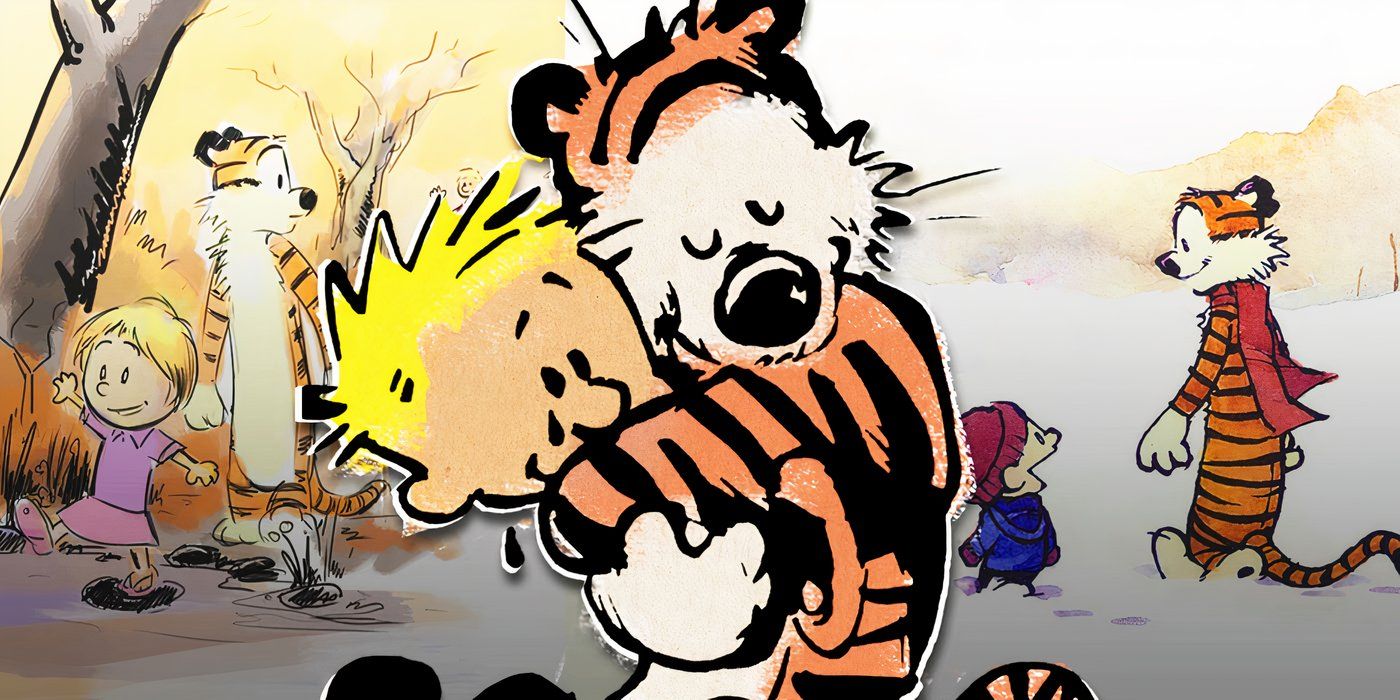
Bill Watterson didn't just walk away. He vanished. On December 31, 1995, the man responsible for the most beloved comic strip in history sent a final, simple note to newspapers: he was done. No spin-off shows. No plush tiger toys at Walmart. No "Calvin and Hobbes" cinematic universe.
It’s been over three decades, yet Calvin and Hobbes today remains more relevant than almost anything currently populating our social media feeds. That’s weird, right? We live in an era where "content" is churned out like fast food, but a strip about a six-year-old and his stuffed tiger still feels fresher than 90% of what’s on Netflix.
The secret isn't just nostalgia. It’s the integrity. Watterson famously fought Universal Press Syndicate for years to prevent licensing. He saw his characters as more than just intellectual property. They were his soul. If you see a decal on the back of a truck featuring Calvin doing something crude, just know it’s bootleg. Watterson never saw a dime of that, and he never wanted to.
The Philosophical Weight of a 1980s Comic Strip
Most people remember the "Spaceman Spiff" adventures or the "Calvinball" games where the rules changed every two seconds. But looking at Calvin and Hobbes today, you realize Watterson was sneaking high-level philosophy into the funny pages.
He was grappling with the Big Stuff. Nihilism. Environmental collapse. The absurdity of corporate culture.
Take the "wagon" scenes. Calvin and Hobbes would go hurtling down a steep, wooded hill, contemplating the meaning of existence while narrowly avoiding a fatal crash. It was a metaphor for life. We’re all in that wagon. We’re all screaming. Watterson just gave us a way to laugh at the cliff edge.
I recently re-read a strip from 1992 where Calvin complains that "nothing is new anymore." He’s bored. He wants instant gratification. It sounds exactly like a Gen Z kid scrolling TikTok in 2026. Watterson saw the attention economy coming before the internet even had a name for it. He understood that our brains were being wired for distraction.
Why the Art Still Holds Up
Look at the Sunday strips from the early 90s. Watterson eventually won a battle with his syndicate to have more freedom over the layout. Before that, every comic strip had to be a series of uniform boxes so newspapers could chop them up to save space.
Watterson hated that. He thought it killed the storytelling.
Once he got his way, the art exploded. We got massive, panoramic vistas of prehistoric jungles and surrealist landscapes where Calvin’s house turned into a Cubist nightmare. The watercolor work was—and still is—breathtaking. No one is doing this in modern newspapers. Honestly, most "webcomics" don't even come close to the technical draftsmanship Watterson displayed with a nib pen and a brush.
The Mystery of Bill Watterson in 2026
Where is he? That’s the question everyone asks about Calvin and Hobbes today.
He’s in Ohio. Probably painting. He’s the Salinger of the cartooning world, but without the weird obsession with teenagers. He just wants to be left alone.
In 2023, he surprised everyone by releasing The Mysteries, a "fable for adults" created with caricaturist John Kascht. It wasn't Calvin. It was dark, experimental, and sorta unsettling. People were confused. They wanted the tiger. But Watterson doesn't owe us the tiger. That’s the hardest lesson for fans to learn.
Watterson’s refusal to sell out is arguably his greatest legacy. In a world where every IP is milked until it’s a dry husk, he kept his creation pure. You can’t buy a licensed Hobbes doll. You have to make one. There is something incredibly beautiful about that. It forces the fans to be creators rather than just consumers.
The Evolution of the Fanbase
The way we engage with Calvin and Hobbes today has changed. It used to be something you read over breakfast. Now, it’s a shared language on Reddit and Instagram.
- You see "C&H" tattoos on people in their 40s who grew up with the books.
- Teachers use the strips to explain logic and debate to elementary students.
- Scientists have named actual asteroids after the characters.
There’s a nuance to the characters that survives the jump between generations. Calvin isn't just a "brat." He’s a highly articulate, lonely, imaginative kid trying to make sense of a world that values conformity. Hobbes isn't just an "imaginary friend." He’s Calvin’s better half—the pragmatic, predatory, yet loyal side of his psyche.
The "Snowman" Meta-Commentary
If you want to understand why Watterson is a genius, look at the snowmen.
Calvin’s "Snowman House of Horrors" strips were a brutal critique of the art world. He would build these grotesque, melting figures and explain to his mom that he was making a statement on the "transitory nature of human existence."
It was hilarious because it was a six-year-old talking like a snobby gallery owner. But it was also Watterson poking fun at himself. He knew he was creating "high art" in a medium that most people discarded with the Sunday trash.
Today, those strips read like a prophecy about the "dead internet theory" and the rise of AI-generated sludge. Calvin’s snowmen were weird and human and messy. They had soul. That’s why we’re still talking about them.
The Cultural Vacuum Left Behind
Since 1995, there hasn't been a "prestige" daily comic strip. Sure, we have Pearls Before Swine or Get Fuzzy, and they’re great. But they don't have the same gravitational pull.
The industry changed.
Digital killed the newspaper star. Most cartoonists now have to rely on Patreon or Substack to survive. This means they have to cater to a specific "niche." Watterson was the last of a breed that spoke to everyone—from the CEO in the penthouse to the kid in the suburbs.
The loss of that shared cultural touchstone is a bummer. But maybe it’s for the best. Calvin and Hobbes today exists in a vacuum. It isn't dated by references to 90s celebrities or tech. It’s timeless because it’s about the human condition, which hasn't changed much since the Pleistocene.
Lessons for Creators in 2026
What can we actually learn from Watterson?
- Say no to the money. If Watterson had signed that licensing deal, we’d have a "Calvin and Hobbes" movie voiced by Chris Pratt right now. It would be terrible. It would have ruined the magic. Sometimes, the most powerful thing you can do is refuse to scale.
- Respect the audience. Watterson never talked down to kids. He used words like "entropy" and "ubiquitous." He assumed his readers were smart enough to keep up.
- Know when to quit. He left at the absolute peak. He didn't let the strip decline into a repetitive, ghostly version of itself (looking at you, Garfield).
How to Reconnect with the Series
If you want to experience Calvin and Hobbes today, don't just scroll through Pinterest quotes. Get the physical books. There’s a tactile joy in flipping through The Complete Calvin and Hobbes—that massive, three-volume slipcase that weighs about as much as a small toddler.
There is a specific rhythm to reading a strip on a physical page that you lose on a screen. The "beat" of the panels, the way your eye moves to the punchline—it’s a masterclass in timing.
Watterson once said that the purpose of the strip was to "explore the world." He did that. He explored the backyard, the woods, and the deep recesses of a child’s mind.
We don't need a reboot. We don't need a "gritty" HBO adaptation. We just need to keep reading the original panels. In a world that feels increasingly loud and fake, Calvin and his tiger remain one of the few things that feel completely, unapologetically real.
Actionable Steps for the Modern Fan
- Audit Your Collection: If you only have the small paperbacks, look for the "Treasury" editions like The Indispensable Calvin and Hobbes. They contain Watterson’s original poems and longer stories that didn't appear in the standard collections.
- Support Original Art: If you love the style, look into the work of contemporary cartoonists who carry the torch, like Richard Thompson (Cul de Sac). Watterson himself called Thompson’s work "a breath of fresh air."
- DIY Your Fandom: Instead of looking for merchandise that doesn't exist, try drawing your own adventures. Watterson’s greatest wish was to inspire creativity, not just consumption.
- Introduce a New Generation: The "hook" for kids hasn't changed. Give a seven-year-old a copy of Scientific Progress Goes "Boink" and watch what happens. They’ll be building a transmogrifier out of a cardboard box within twenty minutes.
The legacy of Bill Watterson isn't just a comic strip. It’s a blueprint for how to live a creative life with your dignity intact. In 2026, that’s more valuable than ever.
Source References:
- Watterson, B. (2005). The Complete Calvin and Hobbes. Andrews McMeel Publishing.
- Watterson, B. (1990). Some Thoughts on the Real World by One Who Glimpsed It and Fled. Kenyon College Commencement Speech.
- Martell, N. (2010). Looking for Calvin and Hobbes: The Unconventional Story of Bill Watterson and His Revolutionary Comic Strip. Continuum.
Next Steps:
Go find your old collection in the attic. If you don't have one, visit a local used bookstore—there is almost always a worn-out copy of Yukon Ho! waiting for a new home. Read it without your phone in the room. Observe how long it takes for you to start seeing the world through Calvin's eyes again. It won't take long.